SendTech Times
Analysis
CAPACITY TEST:

Alphabet’s $85 Billion AI Financing Push Tests Data Center Investor Appetite

Article summary

Alphabet is seeking $85 billion in equity financing after raising its capex outlook to as high as $190 billion. The company is presenting Google Cloud growth, AI adoption and lower Gemini serving costs as evidence that its data center spending can support long-term AI demand.

Alphabet’s $85 Billion AI Financing Push Tests Data Center Investor Appetite
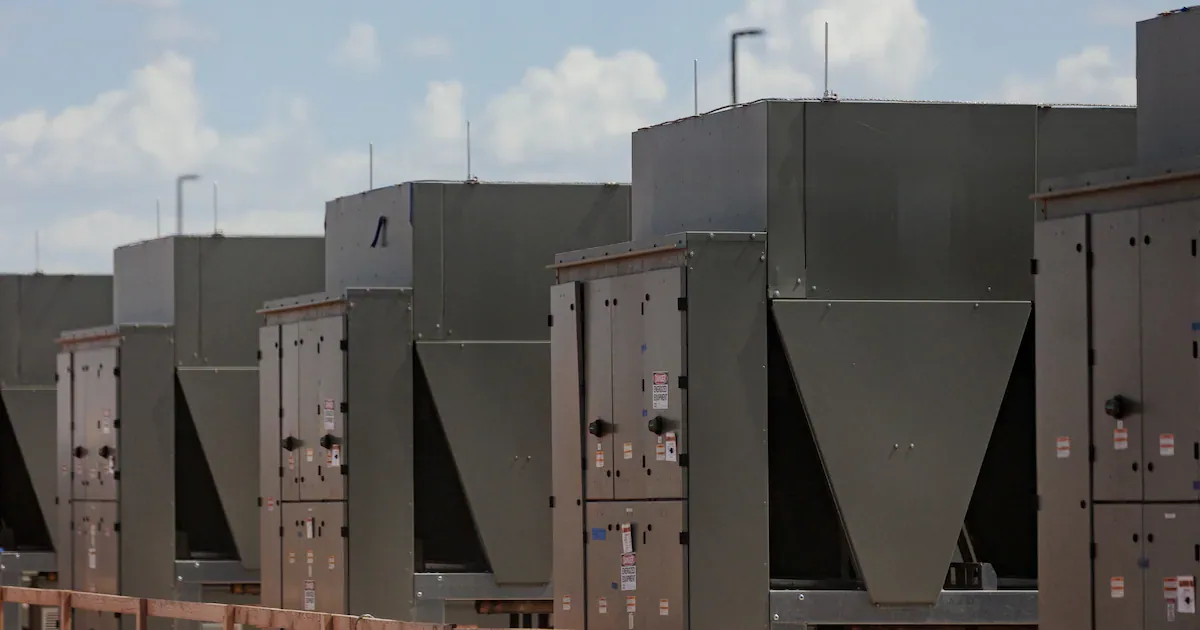
Image source: Bloomberg / Getty Images via CNBC

Alphabet asks investors to share the AI build-out bill

Alphabet is going back to equity markets for $85 billion while its shares are coming off a fourth consecutive weekly decline.

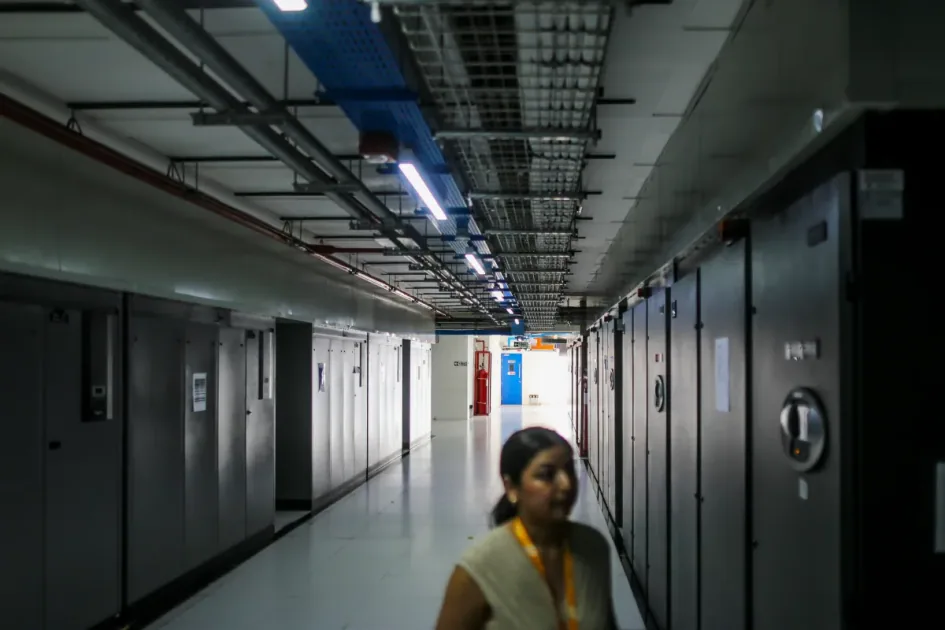
The raise is tied to the infrastructure load behind Google’s AI models, cloud services and data center expansion, not to a lack of existing scale.

The financing plan moved quickly.

Alphabet first outlined an $80 billion equity sale that included a $10 billion investment from Berkshire Hathaway on Monday, then lifted the target to $85 billion on Wednesday.

The company had also secured more than $55 billion in fresh debt since November, putting several layers of financing behind the same AI infrastructure cycle.

Capex pressure is becoming a cloud strategy question

Capital spending is the clearest pressure point.

In April, Alphabet raised its full-year capex guide to as high as $190 billion from $185 billion.

CEO Sundar Pichai said enterprise and consumer demand is “meaningfully exceeding” available supply, and said serving users, enterprises and developers at scale requires “massive compute investments.”

That framing matters because Alphabet is not only funding model training.

Pichai said capex should “significantly increase” again in 2027, with technical infrastructure receiving the overwhelming majority of that spending.

Melius Research expects Google’s free cash flow to be negative for the next few years as AI capex increases.

Cloud growth gives the raise its business case

Alphabet’s strongest defense is that the AI spend is already visible inside Google Cloud.

The company is pointing to revenue, backlog, customer adoption and cost efficiency rather than asking investors to accept the capex story on future promises alone.

The source-backed figures are concentrated in Google Cloud and AI product usage:

  • Google Cloud first-quarter revenue reached a record $20 billion, up 63% year over year.
  • Google Cloud backlog was more than $460 billion and nearly doubled from the prior quarter.
  • 75% of cloud customers were using Alphabet AI products.
  • Gemini serving costs were down 78% since 2025.
  • Core AI response costs were more than 30% lower since Gemini 3 launched.
  • AI Overviews had more than 2.5 billion monthly users.
  • AI Mode had more than 1 billion monthly users after one year.

CFO Anat Ashkenazi described the equity offering as “a strategic proactive move” aimed at financial flexibility and long-term shareholder value.

The operational test is whether those efficiency gains can offset the rising cost of inference, training, AI coding tools and the data center capacity behind them.

Market timing adds another constraint

Alphabet is seeking capital before investors face a crowded calendar of large technology offerings.

The source names SpaceX, Anthropic and OpenAI as upcoming or expected IPO candidates, with SpaceX aiming to raise $75 billion next week and Anthropic already filing confidentially.

That timing turns Alphabet’s deal into a broader market check for AI infrastructure funding.

Goldman Sachs CEO David Solomon called the offering the “first actual concrete data point” for large AI share sales.

The next signal is not only whether Alphabet completes the raise, but whether investors keep rewarding AI infrastructure plans as more companies ask for capital at the same time.
Share this article
inXf

Related articles

More
Google Compute Lease Turns SpaceX Data Centers Into an AI Capacity Test
Cloud & Data Centers

Google Compute Lease Turns SpaceX Data Centers Into an AI Capacity Test

SpaceX lined up a Google compute agreement that gives Google access to about 110,000 NVIDIA GPUs and related components. The filing-based terms call for $920 million a month from October 2026 through June 2029, with delivery protections if GPU access is not ready by September 30, 2026. The next signal is whether SpaceX can turn AI data-center capacity into reliable third-party infrastructure before Google's bridge-capacity need changes.

AI Data-Centre Spending Turns Energy Costs Into an Inflation Test
Cloud & Data Centers

AI Data-Centre Spending Turns Energy Costs Into an Inflation Test

AI infrastructure spending is pushing data-centre power demand, construction costs and debt issuance into the inflation debate. Pew Research Centre counted more than 3,000 operational US data centres and about 1,500 more under construction or in early development. The practical test is whether productivity gains arrive before power, construction and financing costs spread further through the economy.

AirTrunk Makes India a Bigger Test Case for AI Data Center Buildouts
Cloud & Data Centers

AirTrunk Makes India a Bigger Test Case for AI Data Center Buildouts

AirTrunk said it would invest $30 billion in India by 2030 to develop 5GW of new AI data center capacity. Bernstein’s forecast puts the country’s data center market at up to 8GW in 2030, compared with about 1.5GW today. The practical test is whether land, power and water availability can support the proposed buildout.

AI Infrastructure Borrowing Pushes Big Tech Deeper Into Global Bond Markets
Cloud & Data Centers

AI Infrastructure Borrowing Pushes Big Tech Deeper Into Global Bond Markets

Alphabet and Amazon are using non-U.S. corporate bond markets to broaden funding for AI infrastructure and data center investment. Amazon raised 14.5 billion euros in March, while Morgan Stanley expects about 50 billion euros of hyperscaler euro debt this year. The practical test is whether international bond markets can absorb more AI-linked technology issuance without taking on greater sector volatility.

Keep Reading

More Stories

Latest
Amazon-Corning Fiber Deal Puts Optics Inside The AI Data Center BottleneckCloud & Data CentersJun 9, 2026Amazon-Corning Fiber Deal Puts Optics Inside The AI Data Center BottleneckAmazon has reached a multi-year optical fiber and networking agreement with Corning, adding North Carolina manufacturing jobs and highlighting fiber capacity as a practical constraint in AI data center expansion.Check Point VPN Exploitation Puts Legacy IKEv1 Access In The Ransomware SpotlightCybersecurityJun 8, 2026Check Point VPN Exploitation Puts Legacy IKEv1 Access In The Ransomware SpotlightA critical Check Point VPN flaw, CVE-2026-50751, is being exploited against legacy IKEv1 remote-access configurations, with activity tied in one case to a Qilin ransomware affiliate and a second related VPN issue also disclosed.Silent Ransom Group Uses Fake IT Support Calls to Pressure Law FirmsCybersecurityJun 8, 2026Silent Ransom Group Uses Fake IT Support Calls to Pressure Law FirmsSilent Ransom Group is targeting U.S. law firms and professional services organizations with fake IT support calls, remote access tools and rapid data-theft extortion. Mandiant links the activity to UNC3753, Luna Moth and Chatty Spider, while the FBI has warned of related social engineering and in-person theft attempts.Apple WWDC 2026 Turns Siri Into the Test of Its AI CredibilityAIJun 8, 2026Apple WWDC 2026 Turns Siri Into the Test of Its AI CredibilityApple is expected to put Siri back at the center of WWDC 2026 after delays to its promised Apple Intelligence assistant. The event is likely to test whether Apple can turn contextual awareness, chatbot-style interaction and agentic voice tasks into reliable platform features.ChatGPT Lockdown Mode Narrows AI Data Exfiltration PathsCybersecurityJun 8, 2026ChatGPT Lockdown Mode Narrows AI Data Exfiltration PathsOpenAI is rolling out Lockdown Mode for eligible ChatGPT users to reduce data exfiltration risk from prompt injection. The optional setting limits outbound web and tool capabilities, trading some product flexibility for stronger containment around sensitive workflows.Smart TV Proxy SDKs Turn Free Apps Into a Hidden AI Scraping Supply ChainCybersecurityJun 7, 2026Smart TV Proxy SDKs Turn Free Apps Into a Hidden AI Scraping Supply ChainBright Data's SDK has been reverse-engineered in research showing how free apps can turn consumer devices, including smart TVs, into residential proxy nodes for web-scraping traffic. The issue matters because AI data harvesting is increasing demand for residential IPs, while consent screens and background network behavior may not be clear to users or IT teams.Stratos Data Center Cuts Utah Plan as Water Backlash Tests AI Infrastructure GrowthAIJun 7, 2026Stratos Data Center Cuts Utah Plan as Water Backlash Tests AI Infrastructure GrowthA Kevin O'Leary-backed Utah data center plan has been cut back after water and transparency objections, showing how local resistance can reshape AI infrastructure projects.Dubai Hotels Turn to Residents as Tourism Shock Tests Luxury DemandEconomyJun 7, 2026Dubai Hotels Turn to Residents as Tourism Shock Tests Luxury DemandDubai luxury hotels are using resident staycation discounts to offset weaker international tourism, but the source shows weekend demand cannot fully replace longer foreign stays.Ciena's $50 Billion AI Network Target Puts Optical Capacity on the Hyperscaler ClockChips & SemiconductorsJun 7, 2026Ciena's $50 Billion AI Network Target Puts Optical Capacity on the Hyperscaler ClockCiena says AI demand could roughly double its addressable market to about $50 billion by 2029 as hyperscalers and service providers invest in optical networking. It cited RLS Hyper Rail, DCOM, coherent modules and 400G/800G pluggable optics as demand areas while planning $250 million to $275 million in capex this year. The practical test is whether AI compute buildouts convert into durable network orders.liko.ai Funding Turns Edge AI Into a Smart-Home Hardware TestAIJun 7, 2026liko.ai Funding Turns Edge AI Into a Smart-Home Hardware Testliko.ai completed its first-round financing to fund edge-side vision-language models, AI-native hardware and multi-modal home terminals. The investor group includes Shangtang Guoxiang Capital, Orient Fortune Capital, iFlytek Venture Capital, Hongtai Fund, Zhengxuan Investment and Mianbi Intelligence. The practical test is whether the startup can turn camera-based edge AI into a consumer smart-home hub without relying on cloud processing.Impact Circle Turns Impact Finance Into a Japan Fintech Measurement TestFintech & Digital PaymentsJun 7, 2026Impact Circle Turns Impact Finance Into a Japan Fintech Measurement TestTokyo-based Impact Circle is building a fintech model that measures social impact through its own lending and visualization businesses. The company won the Tokyo Financial Award 2025 financial innovation category and raised 335 million yen in a November 2024 Series A round. The next signal is whether Impact Cloud IC can turn impact measurement into a repeatable workflow for investors and Japanese corporations.ByteDance Raises Volcano Engine AI Revenue Target on Seedance 2.0 DemandAIJun 7, 2026ByteDance Raises Volcano Engine AI Revenue Target on Seedance 2.0 DemandByteDance’s Volcano Engine raised its full-year MaaS revenue target to RMB 15 billion after Seedance 2.0 became a larger AI revenue contributor. Seedance 2.0 is described as generating more than RMB 1 billion in monthly revenue, while average daily token consumption has grown by nearly 40% month-on-month. The practical test is whether Volcano Engine can keep video-generation usage converting into paid token consumption beyond high-usage content segments.