Microsoft Says AI Datacentres Drove 25 Percent Emissions Rise
Microsoft said total Scope 1, Scope 2 and Scope 3 emissions rose 25 percent year over year in FY25, driven primarily by datacentre infrastructure expansion. The company matched 100 percent of annual global electricity consumption with renewable energy, but said AI infrastructure demand for energy, water, land and materials is still outpacing sustainability solutions.
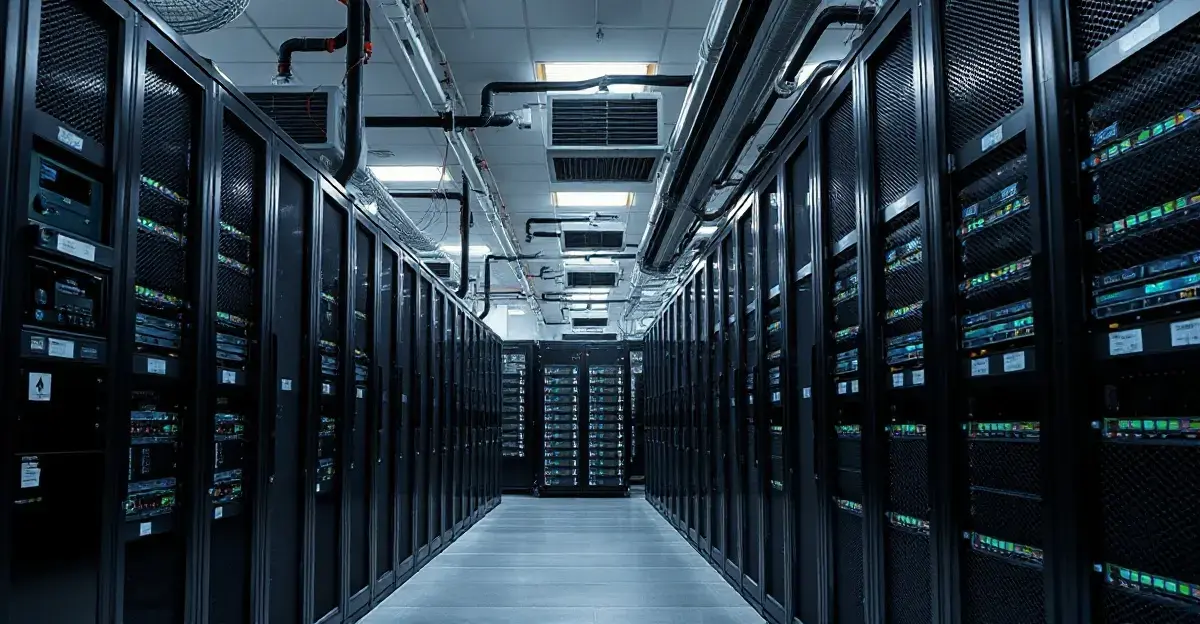
Microsoft reported that its total Scope 1, Scope 2 and Scope 3 emissions rose 25 percent year over year in FY25, and it identified datacentre infrastructure expansion as the main driver.
The company's 2026 Environmental Sustainability Report says AI infrastructure is increasing demand for energy, water, land and materials, while sustainability solutions are not scaling fast enough to meet demand.
The report frames hyperscale AI datacentre growth as a resource constraint for cleaner power, cooling systems and lower-carbon construction materials.
Microsoft Reported A 25 Percent Emissions Increase In FY25
Microsoft said total emissions across Scopes 1, 2 and 3 increased 25 percent year over year.
The company attributed the increase primarily to the expansion of its datacentre infrastructure and to pausing its use of non-additional, unbundled renewable energy certificates.
The report listed 20 million metric tons of actual reported greenhouse-gas emissions for FY25 and showed an estimated 34 million metric tons without selected interventions.
Microsoft said the selected interventions included carbon-free electricity, sustainable fuels, Xbox console efficiency and Surface device decarbonisation.
Microsoft said Scope 3 remained the largest share of its overall footprint.
The company's report separately said purchased electricity had become a larger part of the footprint as datacentre demand grew.
AI Datacentre Growth Pushed Energy And Water Demand Higher
Microsoft said every cloud and AI interaction relies on physical infrastructure, including datacentres, servers, networking equipment and the systems that make digital services possible.
The report described AI adoption as one of the defining resource challenges of the decade because it increases demand for electricity, water, land, materials and supply-chain capacity.
Microsoft said it matched 100 percent of annual global electricity consumption with renewable energy in FY25.
The company also said it would keep focusing on adding carbon-free electricity to grids where it operates rather than relying only on renewable certificates.
The company framed the certificate change as a near-term reporting pressure rather than a reduction in ambition.
Microsoft said the decision increased reported emissions in the near term but was intended to support new carbon-free electricity development over time.
Microsoft Listed Water Replenishment And Cooling Targets
Microsoft said it replenished more water globally than it withdrew in FY25, amounting to more than 14 million cubic metres.
The company also said global replenishment is not enough by itself and that the next phase of its work will focus more on watersheds where it operates.
For datacentre cooling, Microsoft said it introduced a liquid-cooling system design in 2024 that brings liquid coolants directly to server chips and avoids evaporative cooling by circulating liquid in a closed loop.
The report said Microsoft expects that design to avoid the need for more than 125 million litres of water per year, per datacentre.
Microsoft also said it continued work in 2025 on microfluidics, a chip-level cooling approach that uses silicon-etched channels to move cooling liquid to a chip's warmest areas.
The company said it uses AI to optimise the channel pattern according to chip type.
Construction Measures Include LEED And Lower-Carbon Materials
Microsoft said it designs new datacentres worldwide to achieve LEED Gold certification.
The report said 25 Microsoft datacentre projects achieved LEED Gold certification in 2025, bringing the company's global total to 80 certified projects.
The report said Microsoft is working to cut the embodied carbon of each datacentre project design by 30 percent from its baseline design.
Microsoft also said multi-storey datacentres can reduce embodied carbon by 15 percent to 25 percent, and that hybrid mass-timber datacentres have demonstrated up to 35 percent lower structural embodied carbon compared with conventional steel-frame designs.
Microsoft said its construction and demolition waste diversion rate reached 90.5 percent in FY25.
The report said the company also achieved 92 percent reuse and recycling of decommissioned servers and components for the second consecutive year and expanded its Circular Centers to seven facilities globally.
Microsoft Has Not Published Site-Level Energy And Water Figures Yet
Microsoft said it is expanding transparency by adding metro-level datacentre energy and water use, but the report does not include the full site-level figures, local grid-impact calculations, project-by-project power demand, datacentre construction pipeline, or an audited date for when AI infrastructure growth will align with the company's 2030 carbon-negative target.
Summary version for Medium
Microsoft Says AI Datacentres Drove 25 Percent Emissions Rise
Why Microsoft Says AI Datacentres matter now for cloud infrastructure teams
Quick Summary: Microsoft said total Scope 1, Scope 2 and Scope 3 emissions rose 25 percent year over year in FY25, driven primarily by datacentre infrastructure expansion. The company matched 100 percent of annual global electricity consumption with renewable energy, but said AI infrastructure demand for energy, water, land and materials is still outpacing sustainability...
Microsoft Reported A 25 Percent Emissions Increase In FY25
Microsoft said total emissions across Scopes 1, 2 and 3 increased 25 percent year over year. The company attributed the increase primarily to the expansion of its datacentre infrastructure and to pausing its use of non-additional, unbundled renewable energy certificates.
AI Datacentre Growth Pushed Energy And Water Demand Higher
Microsoft said every cloud and AI interaction relies on physical infrastructure, including datacentres, servers, networking equipment and the systems that make digital services possible.
- Point 1: The central topic is cloud-data-centers, with the announcement framed around concrete operating detail.
- Point 2: The report described AI adoption as one of the defining resource challenges of the decade because it increases demand for electricity, water, land, materials and supply-chain...
The important shift is not the AI label, but the operating boundary it creates for teams.
Microsoft Listed Water Replenishment And Cooling Targets
Microsoft said it replenished more water globally than it withdrew in FY25, amounting to more than 14 million cubic metres. The company also said global replenishment is not enough by itself and that the next phase of its work will focus more on watersheds where it operates.
Read the Full Deep Dive
Want to explore the complete technical analysis, enterprise trade-offs, and detailed metrics?
Read the full article originally published at SendTech Times