Pax Silica Adds UAE And Qatar To 35-Country AI Supply Chain Push
Pax Silica expanded to 35 countries including the UAE and Qatar, while a planned Pax Pass would use cargo verification and AI risk assessment for high-value AI supply-chain goods moving through Panama.
UAE And Qatar Join A Wider AI Supply Chain Bloc
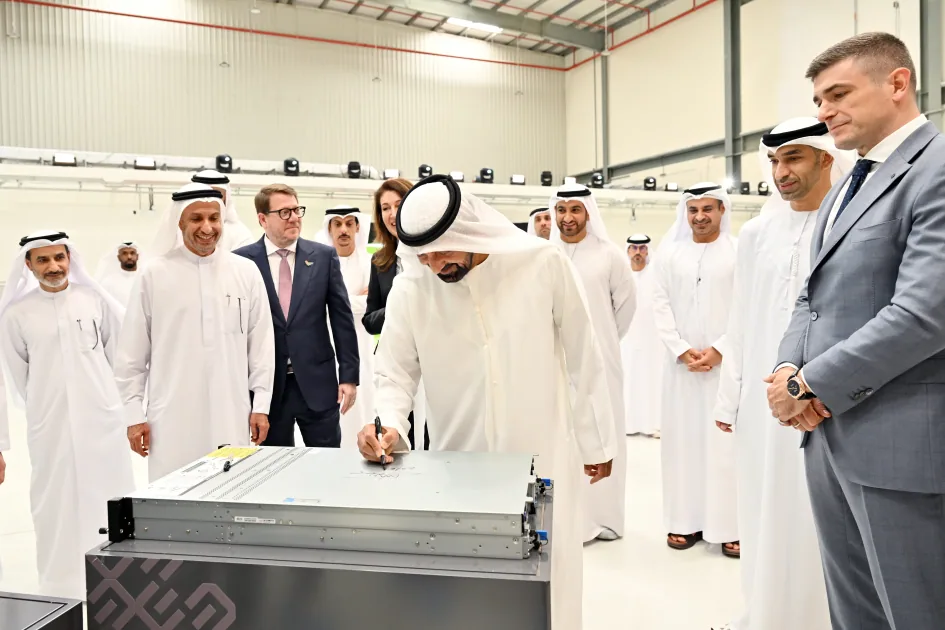
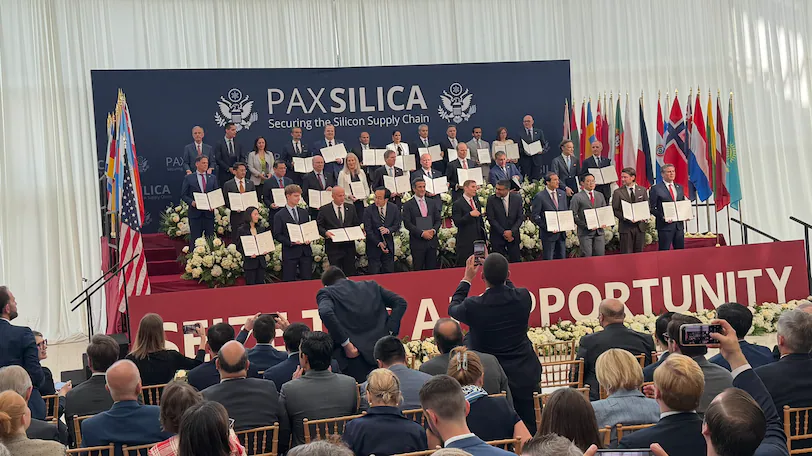
Pax Silica, the US initiative aimed at securing technology supplies for artificial intelligence, expanded its footprint with 35 countries signing a declaration on AI opportunity.
The membership list includes the UAE and Qatar alongside the US, UK, EU, India, Japan, South Korea, Singapore and other partners.
The initiative is framed around the physical inputs behind AI rather than only model development.
The source material points to semiconductors, critical minerals and high levels of energy as the supply chain elements that make large AI systems possible.
Jacob Helberg, the US undersecretary of state for economic affairs, said governments should approach AI through opportunity rather than mainly through restriction.
He also said innovation, entrepreneurship, investment and technological leadership remain the path to broad-based prosperity.
For Gulf AI policy, the concrete signal is membership.
The UAE and Qatar are inside a coalition that links AI development to chips, minerals, energy, logistics and trusted supply routes, not only software regulation.
Pax Pass Targets Panama Shipments
Helberg said the consortium would soon start Pax Pass for partners moving high-value AI supply-chain goods through Panama.
He described a platform built around advance clearance, cargo checks and AI risk scoring to reduce friction in shipping technology goods.
That logistics layer gives the initiative a route-security angle.
The same event referenced recent disruption in the Strait of Hormuz, where ship traffic came to a halt for several weeks and put global supply chains at risk.
Helberg had previously described chokepoints, corridors, cables and ports as places where physical infrastructure can become a battlefield.
The US has also linked the effort to its AI Acceleration Partnership with the UAE.
Helberg said the US would reaffirm how much it values the bilateral relationship with the UAE and the courage it had shown during the difficult period.
Anthropic Restrictions Show The Policy Tension
The coalition’s opportunity message sits beside tighter US controls on advanced AI models.
The US Department of Commerce forced Anthropic to cut off foreign-national access to its latest AI models, Fable 5 and Mythos 5, inside and outside the US.
Anthropic said Commerce officials warned that the models might be compromised or reach the wrong hands.
A State Department representative said American technology dominance and protection of critical technologies are not mutually exclusive, adding that Pax Silica was built on that understanding.
Helberg said the US views AI danger through threats to critical infrastructure and cybersecurity.
He also said Washington is taking a careful approach to managing the release of its most advanced models so partners do not get attacked or compromised in unintended ways.
Pax Silica now has a broader country list and a planned Panama processing project, but the source material does not provide shipment volumes, implementation dates for Pax Pass or binding supply-chain commitments by the UAE or Qatar.
Those missing details leave the coalition’s next test at the operating level: whether declarations become faster verified movement of AI hardware, minerals and infrastructure components through named routes.