SendTech Times
Cloud & Data CentersPolicy|June 2, 2026 at 12:08 AM
REGULATION WATCH:

India’s UAE-backed AI compute deal tests sovereign cloud alternatives

Article summary

G42 and Cerebras plan to deploy 64 supercomputers in India under a May 15 agreement aimed at sovereign AI infrastructure. The arrangement gives India another route beyond AI capacity rented from Amazon, Microsoft and Google, while keeping data under Indian governance rules. The next test is whether the G42-Cerebras model can match the software, services and support offered by major U.S. cloud platforms.

India’s UAE-backed AI compute deal tests sovereign cloud alternatives
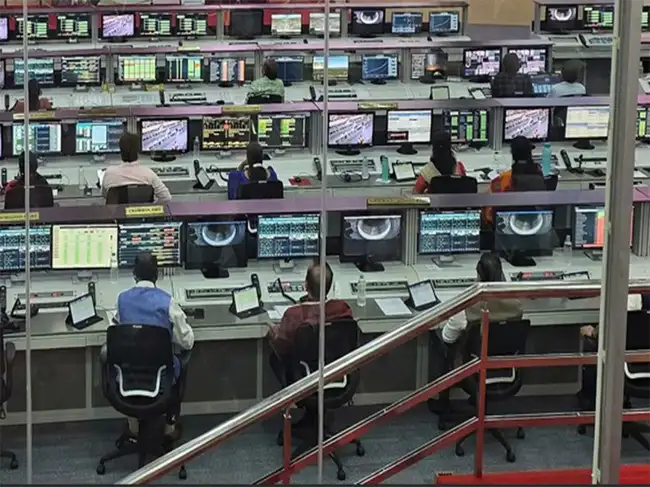
Image source: Rest of World

What happened

India is adding a UAE-backed route to sovereign AI infrastructure through a May 15 agreement with G42 and Cerebras.

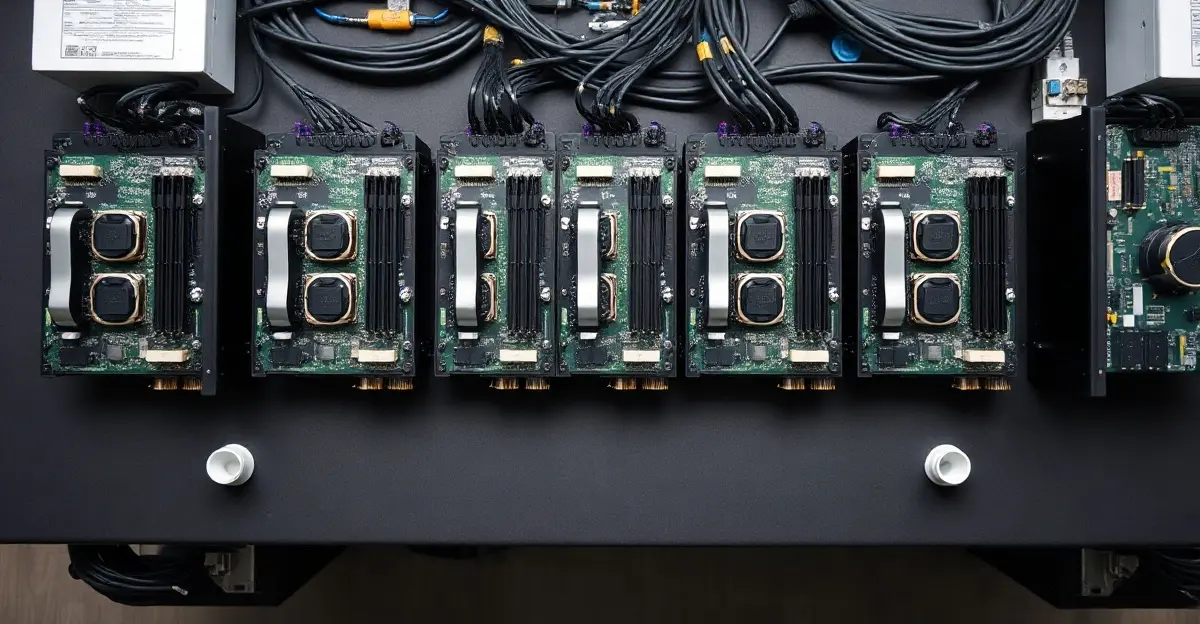
The plan calls for 64 Cerebras supercomputers to be deployed in India, with a G42 unit handling installation, operations and maintenance, and Cerebras providing technical support.

The arrangement gives India an option beyond renting AI computing capacity from Amazon, Microsoft or Google.

India already has at least 45 billion dollars in commitments from those three cloud companies, while its 1.25 billion dollar national AI program runs on Nvidia processors and has 34,000 chips available to researchers and businesses, with a target of 100,000 by year-end.

Why it matters

The deal is a market signal for governments seeking more control over AI infrastructure without building every layer alone.

G42 is backed by Abu Dhabi sovereign wealth fund Mubadala and has been developing an Intelligence Grid model for government AI facilities.

India is the first named customer for that approach, which could test whether sovereign AI buyers want dedicated systems rather than only hyperscale cloud capacity.

For cloud and AI infrastructure providers, the agreement shows how sovereign AI demand could create openings for non-U.S. partners.

The challenge is not only hardware deployment.

Chris Miller of Tufts University said newcomers must compete with the integrated hardware, software, developer tools and support offered by Amazon, Microsoft and Google.

Who is affected

India’s Centre for Development of Advanced Computing will work with G42’s Core42 unit, with data remaining under Indian governance rules.

G42 has not disclosed the financial terms or confirmed who will own the hardware after installation.

That leaves ownership and control details as important points for government and enterprise users watching the project.

Cerebras is central to the signal.

Founded in 2016, it makes AI chips and supercomputer systems.

G42 became its largest customer in 2021, and the companies later built Condor Galaxy facilities in California, Texas and Minnesota.

Cerebras went public on Nasdaq on May 14 and raised 5.55 billion dollars, while G42 and the UAE’s Mohamed bin Zayed University of Artificial Intelligence accounted for 86% of its 2025 revenue.

What to watch next

The key question is whether the G42-Cerebras model can offer software and services strong enough for India’s data-center customers.

Readers should also watch whether other governments join the Intelligence Grid, and whether U.S. cloud providers respond with sovereign AI offerings that give customers more local control.

Share this article
inXf

Related articles

More
Acronis Targets Japan Post-VMware Cloud Gap With Partner-Led HCI Push
Cloud & Data Centers

Acronis Targets Japan Post-VMware Cloud Gap With Partner-Led HCI Push

Acronis Japan introduced Acronis Cyber Frame, an HCI-based IaaS platform aimed at service providers and hosting partners. The move is positioned around demand for VMware alternatives, data sovereignty, local hosting options and stronger managed security services. Acronis also outlined AI automation, MDR, identity-threat detection and GenAI protection plans for Japanese partners and mid-market customers.

CAS Star’s Photonics Bet Turns Into an AI Infrastructure Test
Cloud & Data Centers

CAS Star’s Photonics Bet Turns Into an AI Infrastructure Test

CAS Star founder Mi Lei says the AI boom has validated a decade-long investment thesis around photonics and other hard-tech fields. The firm has more than 200 photonics-related companies among roughly 600 portfolio companies, spanning sensing, communications, computing, storage and display. The next test is whether optical links, laser chips and photonic computing companies can turn AI data-centre demand into durable commercial scale.

SoftBank’s €75 Billion France Plan Signals Europe’s AI Infrastructure Race
Cloud & Data Centers

SoftBank’s €75 Billion France Plan Signals Europe’s AI Infrastructure Race

SoftBank plans to invest up to €75 billion in AI data centres in France, with initial sites expected to come online in five years. The first phase includes €45 billion for 3.1 GW of capacity in Hauts-de-France by 2031, including locations in Dunkirk’s Loon-Plage, Bosquel and Bouchain. The plan could strengthen Europe’s AI infrastructure base, but questions remain over financing, regulatory approvals and what technological sovereignty means when a Japanese group leads the buildout.

Lenovo opens Japan liquid cooling lab as AI data centers face power pressure
Cloud & Data Centers

Lenovo opens Japan liquid cooling lab as AI data centers face power pressure

Lenovo Japan opened Neptune Lab for liquid cooled AI infrastructure testing inside MC Digital Realty NRT12 data center in Chiba. The project targets rising AI power density and cooling constraints as Japan AI investment and data center electricity demand grow. The lab lets customers test servers, coolant distribution, racks, networking and monitoring before production deployments.

Keep Reading

More Stories

Latest
Romania’s 5G reset puts consolidation, spectrum and cloud latency under scrutinyTelco & ConnectivityJun 1, 2026Romania’s 5G reset puts consolidation, spectrum and cloud latency under scrutinyRomania’s first full quarter after the Telekom Romania Mobile split showed a three-operator market still lagging Central and Eastern European peers on mobile performance and 5G coverage. Ookla data showed 39% national 5G Availability in Q1 2026, with Orange leading on footprint, Vodafone leading on median 5G download speed, and DIGI leading on 5G upload and cloud latency. The next test is whether Vodafone, DIGI and Orange can convert consolidation, spectrum refarming and network integration into better real-world mobile quality.Salesforce opens Headless 360 as AI agents push enterprise software beyond the browserAIJun 1, 2026Salesforce opens Headless 360 as AI agents push enterprise software beyond the browserSalesforce Japan described Headless 360 as a way for external interfaces and AI agents to directly access Salesforce assets through APIs, MCP and CLI tools. The briefing connected Headless 360 with prior Agentforce 360 customer uptake. In Japan, the key test may be whether IT service vendors and partners treat the platform as a preferred toolkit.Mercari Moves AI Leadership Into HR as It Tests AI-Native WorkflowsAIJun 1, 2026Mercari Moves AI Leadership Into HR as It Tests AI-Native WorkflowsMercari's Japan business CTO Toshiya Kimura is becoming CHRO and CAIO as the company links AI adoption with organizational redesign. The company has tested smaller AI Pods and found faster decisions, but also limits around design, compliance and cross-functional work. Mercari plans to make HR itself AI-first while using governance across legal, privacy, security, public policy and AI expertise.Nvidia and Foxconn Push Agentic AI Into Taiwan HospitalsAIJun 1, 2026Nvidia and Foxconn Push Agentic AI Into Taiwan HospitalsNvidia and Foxconn are working with Taiwanese medical centers on agentic AI systems for clinical and hospital operations. The effort is tied to Healthy Taiwan and a USD 1.5 billion sovereign AI healthcare investment. CoDoctor, CoDoClaw, Scrub Bot and Nurabot show healthcare AI moving toward multi-agent and physical AI workflows.Starlink Business Opportunity Narrows Around Coverage Gaps and Backup ConnectivityTelco & ConnectivityJun 1, 2026Starlink Business Opportunity Narrows Around Coverage Gaps and Backup ConnectivityStarlink strongest business role appears to be coverage gaps and backup connectivity. Recon Analytics found 72% of large businesses would consider ISP coverage extended with Starlink. Carrier offers from T-Mobile and Comcast Business may scale the model but keep Starlink in an infrastructure role.MiniMax M3 turns long-context AI into an agent platform testAIJun 1, 2026MiniMax M3 turns long-context AI into an agent platform testMiniMax launched M3 on June 1, 2026, combining long-context, agentic, coding and native multimodal capabilities in one model line. The API supports up to 1 million tokens of context, with a guaranteed minimum of 512K tokens, and includes M3 and M3-highspeed versions. MiniMax plans to open-source M3 on HuggingFace and GitHub, while early pricing offers a 50% discount for the first seven days.Japan’s AI Suitcase Turns Assistive Mobility Into a Robotics Test CaseAIJun 1, 2026Japan’s AI Suitcase Turns Assistive Mobility Into a Robotics Test CaseCAAMP, a consortium that includes university research institutes and IBM Japan, has developed the AI Suitcase to guide visually impaired users with sensors, cameras, motors and AI. The suitcase is being tested at locations including Miraikan, New Chitose Airport and Tokyo’s Nihonbashi district, where 39 visually impaired participants completed a monthlong indoor trial without collisions. An updated indoor-and-outdoor model is planned for Expo 2025 in Osaka, with CAAMP aiming to collect feedback from 2,000 to 3,000 people without visual disabilities.Anthropic’s Conway Points Claude Toward Always-On AI AgentsAIJun 1, 2026Anthropic’s Conway Points Claude Toward Always-On AI AgentsAnthropic is preparing a Claude expansion that includes Conway, Orbit, Operon, memory upgrades and multilingual voice mode. The move signals a shift from chat-based AI toward persistent assistants that can connect with external services and manage workspaces. Enterprises, developers and research teams could be affected if Claude becomes a broader agent platform.Huawei's Tau scaling puts architecture at the center of China's AI-chip pushChips & SemiconductorsJun 1, 2026Huawei's Tau scaling puts architecture at the center of China's AI-chip pushHuawei proposed Tau scaling, a framework focused on shorter signal paths rather than only smaller transistors. LogicFolding is planned for Kirin chips in fall and winter 2026, with Huawei claiming a density jump to 238 million transistors per square millimeter. The test is whether architecture-led gains can be validated in commercial chips amid export-control limits on advanced tools.FuriosaAI and Broadcom Target the Next Layer of AI Inference InfrastructureChips & SemiconductorsJun 1, 2026FuriosaAI and Broadcom Target the Next Layer of AI Inference InfrastructureFuriosaAI said it will work with Broadcom on a next-generation AI inference platform built around its TCP architecture and Broadcom networking and packaging technologies. The planned third-generation accelerator will use a 2-nanometer compute die, HBM4/HBM4E memory and multi-die packaging, with sampling planned for the first half of 2028. The deal points to AI infrastructure competition shifting from single-chip performance toward memory, networking, power efficiency and rack-level system design.AIVEX Brings Physical AI Into Korean Battery-Plant Packaging WorkAIJun 1, 2026AIVEX Brings Physical AI Into Korean Battery-Plant Packaging WorkAIVEX said its AIbot platform automated a crucible packaging-removal process at a leading Korean battery-materials company. The system combines AI vision, 3D optics, 6D pose estimation and automatic path planning to handle irregular ropes and wrapping film. The deployment points to physical AI moving into factory tasks that are repetitive but too variable for simple fixed automation.Dubai RTA Digital Revenue Shows Smart Mobility Moving Into Daily UseEconomyJun 1, 2026Dubai RTA Digital Revenue Shows Smart Mobility Moving Into Daily UseRTA said digital-channel revenue reached AED5.3 billion in 2025, up 20.6 percent from 2024. The authority reported more than 628 million digital transactions and 96 percent digital adoption. The next test is whether AI, WhatsApp and government-platform integrations make mobility services simpler.