Israel eyes Philippines as a key partner in 'Pax Silica' initiative
Israel’s ambassador to the Philippines said the country could be a key partner in the US-led Pax Silica initiative for AI and semiconductor supply chains. The proposed fit combines Philippine critical minerals, including nickel, with Israeli capabilities in AI, chip design and cybersecurity. Officials are also discussing a critical minerals memorandum, while a separate cybersecurity MOU is being finalized.
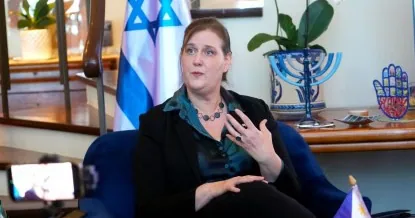
Israel is looking to the Philippines as a key partner in the US-led Pax Silica initiative, which is focused on securing supply chains for artificial intelligence, semiconductors and other silicon-based technologies.
Israel’s Ambassador to the Philippines Dana Kursh said the potential partnership could be “tremendous,” pointing to the Philippines’ reserves of nickel and other minerals and Israel’s strength in high technology.
Speaking in a Bagong Pilipinas interview on the state-owned PTV network, Kursh said: “You have plenty of nickel and other different important minerals.
What Israel has to offer is the tech side.
We are advanced when it comes to AI and cybersecurity and other technological solutions.”
Critical minerals and tech cooperation
According to the US State Department, Pax Silica was launched in December 2025 to build resilient, innovation-driven supply chains for silicon-based technologies, covering critical minerals, advanced manufacturing, chips and AI infrastructure.
The Philippines joined in April 2026 as one of the newer signatories.
Kursh said the two countries are exploring deeper cooperation in mineral processing, research and development, and AI, including a possible memorandum of understanding on critical minerals.
She said she could not discuss the specifics of the MOU, but described it as a partnership involving “technological solutions in AI, in cybersecurity and in other avenues as well.”
The Philippines is the world’s largest exporter of raw nickel ore, accounting for over a third of global shipments, according to the Organisation of Economic Complexity.
The source text also cites USGS data listing the country’s primary mineral resources as gold, copper, nickel, cobalt, chromite, iron, and non-metallic minerals including limestone, silica, clay and marble.
Pax Silica members and related plans
The initiative is described by the US State Department under President Donald Trump as a “positive-sum” partnership of trusted allies meant to reduce coercive dependencies and support economic security in the AI era.
Original and subsequent members include the US, Japan, South Korea, Israel, Australia, Singapore, the UK and others.
The Philippines also has plans with the United States to develop a 4,000-acre AI-native industrial acceleration hub in New Clark City within the Luzon Economic Corridor.
Kursh said a recent visit to Central Luzon showed potential for a high-tech industry across the corridor from Clark and Subic to Batangas.
Broader bilateral discussions
Kursh said the partnership rests on three pillars: leadership, academia and the private sector.
“If we will connect both ecosystems we will find innovative solutions when it comes to how do we have a better usage of all that AI can offer us and other innovative ideas,” she said.
She also said Israel is working with the Department of Information and Communications Technology to finalize a separate cybersecurity MOU.
No immediate details were released on timelines for specific Israel-Philippines projects under Pax Silica.
Summary version for Medium
Israel eyes Philippines as a key partner in 'Pax Silica' initiative
Why this hardware shift matters for AI and compute buyers
Quick Summary: Israel’s ambassador to the Philippines said the country could be a key partner in the US-led Pax Silica initiative for AI and semiconductor supply chains. The proposed fit combines Philippine critical minerals, including nickel, with Israeli capabilities in AI, chip design and cybersecurity.
Critical minerals and tech cooperation
According to the US State Department, Pax Silica was launched in December 2025 to build resilient, innovation-driven supply chains for silicon-based technologies, covering critical minerals, advanced manufacturing, chips and AI infrastructure. The Philippines joined in April 2026 as one of the newer signatories.
Pax Silica members and related plans
The initiative is described by the US State Department under President Donald Trump as a “positive-sum” partnership of trusted allies meant to reduce coercive dependencies and support economic security in the AI era.
- Point 1: The central topic is chips-semiconductors, with the announcement framed around concrete operating detail.
- Point 2: Original and subsequent members include the US, Japan, South Korea, Israel, Australia, Singapore, the UK and others.
The important shift is not the AI label, but the operating boundary it creates for teams.
Broader bilateral discussions
Kursh said the partnership rests on three pillars: leadership, academia and the private sector. “If we will connect both ecosystems we will find innovative solutions when it comes to how do we have a better usage of all that AI can offer us and other innovative ideas,” she said.
Read the Full Deep Dive
Want to explore the complete technical analysis, enterprise trade-offs, and detailed metrics?
Read the full article originally published at SendTech Times