Intel Commits 5 Billion Euros To Irish Fab 34 Expansion
A 5 billion euro Leixlip investment puts Fab 34 back at the centre of Intel's European manufacturing plan for AI and high-performance computing processors. Most of the spending is due by the end of 2027, while a large external foundry customer for the Irish capacity remains unnamed, according to TNW.

Intel is committing 5 billion euros to its Leixlip campus in Ireland, with the spending aimed at data-centre processors used in AI and high-performance computing systems, according to TNW.
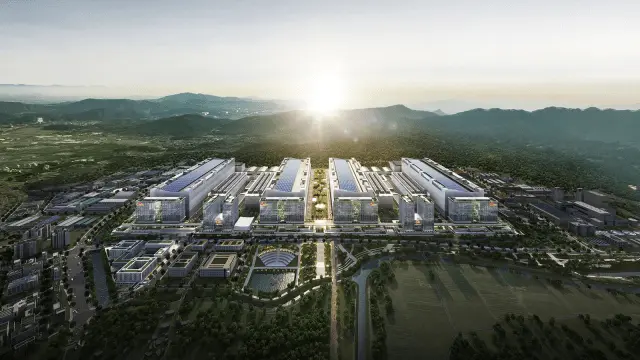
According to TNW, the investment, around $5.7bn, centres on Fab 34, one of the few European facilities running extreme ultraviolet lithography.
The programme represents roughly 30% of Intel's planned $17bn capital expenditure for 2026, with most of the money due to be deployed by the end of 2027.
Leixlip Fab 34 Gets Capital, Equipment And Track Upgrades
The capital work covers fab upgrades, equipment additions and a longer automated track linking production modules.
Several hundred jobs are expected to be added to the company's Irish workforce of about 4,900.
According to TNW, Fab 34 opened in 2023 and currently produces Xeon 6 processors and next-generation parts.
The expansion is described as a capacity move for the company's own server processor line rather than a direct accelerator challenge to Nvidia.
The source separated Xeon server CPUs from AI accelerators in its description of the Leixlip expansion.
The chips sit alongside GPUs in AI racks, but the spending was not described as a Nvidia GPU replacement programme.
Xeon 6 Capacity Remains An AI-Adjacent Bet
The Irish plan targets processors used with GPUs as AI and high-performance computing demand increases.
The source framed the investment as AI-adjacent capacity, not as proof that the company has cracked the accelerator market.
The spending also sits inside a broader manufacturing turnaround.
Annual fab capital spending above $20bn has left free cash flow deeply negative, while the 18A process has reached high-volume manufacturing and yields have been climbing.
The foundry challenge remains separate from the Irish expansion.
According to TNW, Intel has still not landed a major external customer taking meaningful volume, with the company itself and the US Department of Defense doing most of the consuming.
Talks with Apple have helped the foundry story, but whether Apple wants a second source and whether Intel is that source remain unsettled.
European Chip Policy Gets Capacity, Not Control
According to TNW, the Leixlip investment adds leading-edge production capacity on European soil while remaining an expansion by an American company.
That structure leaves capacity local but corporate control outside Europe.
The expansion also sits inside Europe's chip-policy debate.
The EU Chips Act mobilised billions towards a goal of producing 20% of the world's semiconductors by 2030, a target many analysts consider unreachable, according to TNW.
Brussels has since moved towards a technology-sovereignty package and a Chips Act 2.0 that leans on demand rather than only funding fabs.
The Intel investment arrives while that policy argument remains open.
Large External Foundry Customer Remains Unnamed
The source record gives Intel a manufacturing investment, a named site and a deployment timetable for capital spending.
A large external foundry customer, customer volume commitments and a separate buyer contract for the new Fab 34 capacity remain outside the public record.
Summary version for Medium
Intel Commits 5 Billion Euros To Irish Fab 34 Expansion
Why this hardware shift matters for AI and compute buyers
Quick Summary: A 5 billion euro Leixlip investment puts Fab 34 back at the centre of Intel's European manufacturing plan for AI and high-performance computing processors. Most of the spending is due by the end of 2027, while a large external foundry customer for the Irish capacity remains unnamed, according to TNW.
Leixlip Fab 34 Gets Capital, Equipment And Track Upgrades
The capital work covers fab upgrades, equipment additions and a longer automated track linking production modules. Several hundred jobs are expected to be added to the company's Irish workforce of about 4,900.
Xeon 6 Capacity Remains An AI-Adjacent Bet
The Irish plan targets processors used with GPUs as AI and high-performance computing demand increases.
- Point 1: The central topic is chips-semiconductors, with the announcement framed around concrete operating detail.
- Point 2: The source framed the investment as AI-adjacent capacity, not as proof that the company has cracked the accelerator market.
The important shift is not the AI label, but the operating boundary it creates for teams.
European Chip Policy Gets Capacity, Not Control
According to TNW, the Leixlip investment adds leading-edge production capacity on European soil while remaining an expansion by an American company. That structure leaves capacity local but corporate control outside Europe.
Read the Full Deep Dive
Want to explore the complete technical analysis, enterprise trade-offs, and detailed metrics?
Read the full article originally published at SendTech Times