stc group says Eid Al-Adha demand lifted Hajj network traffic and support activity
stc group said data and voice usage rose sharply on the first day of Eid Al-Adha 1447 AH under its Hajj operational plan. Peak-period data traffic increased 44% from a year earlier, while 5G traffic rose 60% and about 15,000 autonomous actions were executed each hour. The group said more than 550 field staff and 149 sales points supported pilgrims, along with over 1,000 sales representatives and 200 translators.
Network demand on Eid Al-Adha
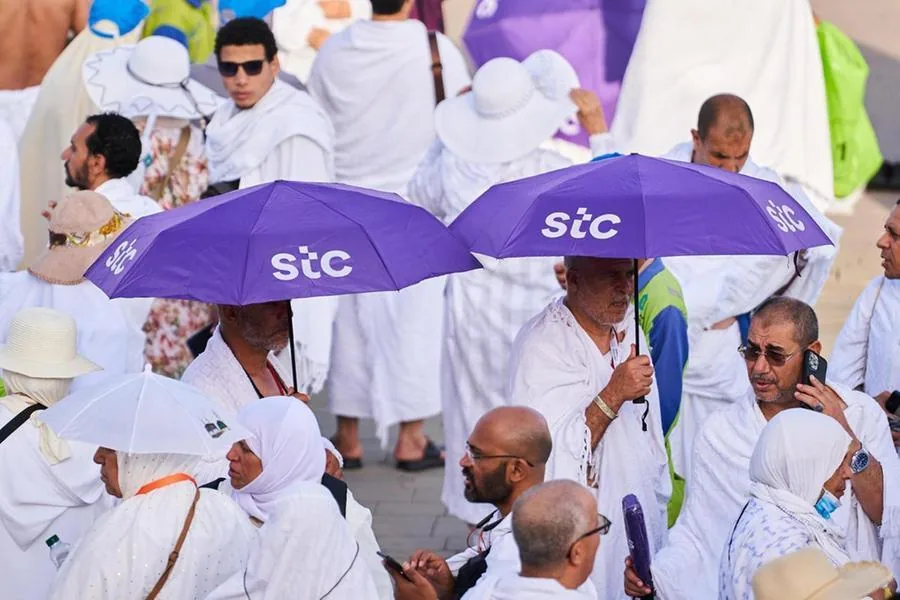
stc group said the first day of Eid Al-Adha 1447 AH brought a notable rise in data and voice usage on its network during the Hajj season.
The company linked that performance to an integrated operational plan designed to handle heavier demand as pilgrims increasingly used digital services and smart applications.
During peak periods, the group said overall data traffic was 44% higher than in the corresponding period last year.
It also reported a 60% increase in 5G traffic, indicating stronger use of high-speed mobile connectivity at one of the busiest points of the pilgrimage.
The company said it also relied on automation and monitoring tools to manage the surge.
According to stc group, around 15,000 autonomous actions were executed every hour, while advanced solutions were deployed to improve connectivity efficiency during high-demand periods.
Intelligent systems were also used to follow network performance and oversee operations with precision.
Field teams and entry-point services
stc group said field and logistics support were important to sustaining service quality across the Hajj season.
More than 550 trained field staff were deployed at key locations to support rapid emergency response and help keep services available without disruption.
The group also said it expanded direct support for arriving pilgrims through 149 sales points across land, sea, and air entry points.
These locations were backed by more than 1,000 sales representatives and 200 specialized translators offering services in multiple languages.
According to the company, this combination of field deployment, logistics support, and customer-facing access points was intended to improve the experience for pilgrims entering the Kingdom.
The measures also supported continuity during periods of concentrated traffic and operational pressure.
Digital infrastructure and broader footprint
stc group said the results reflect its investment in digital infrastructure and future technologies.
It said the outcome reinforces the Kingdom's position as a global digital hub for serving pilgrims and supports the objectives of Saudi Vision 2030 for a smart, secure, and seamlessly connected Hajj experience.
The company described itself as a digital enabler with services spanning digital infrastructure, cloud computing, cybersecurity, Internet of Things, digital payments, digital media, and digital entertainment.
It also said the group includes 13 subsidiaries across The Kingdom of Saudi Arabia, the Middle East, North Africa, and Europe.
Taken together, the first-day usage increases, automated network actions, field staffing, and entry-point service coverage show how stc group said it addressed elevated Hajj demand on Eid Al-Adha.
The company presented the figures as evidence that its operational planning, digital systems, and on-the-ground support helped maintain network performance and pilgrim services during a peak period.
Summary version for Medium
stc group says Eid Al-Adha demand lifted Hajj network traffic and support activity
What the announcement means beyond the headline
Quick Summary: stc group said data and voice usage rose sharply on the first day of Eid Al-Adha 1447 AH under its Hajj operational plan. Peak-period data traffic increased 44% from a year earlier, while 5G traffic rose 60% and about 15,000 autonomous actions were executed each hour.
Network demand on Eid Al-Adha
stc group said the first day of Eid Al-Adha 1447 AH brought a notable rise in data and voice usage on its network during the Hajj season. The company linked that performance to an integrated operational plan designed to handle heavier demand as pilgrims increasingly used digital services and smart applications.
Field teams and entry-point services
stc group said field and logistics support were important to sustaining service quality across the Hajj season.
- Point 1: The central topic is telco-connectivity, with the announcement framed around concrete operating detail.
- Point 2: More than 550 trained field staff were deployed at key locations to support rapid emergency response and help keep services available without disruption.
The important shift is not the AI label, but the operating boundary it creates for teams.
Digital infrastructure and broader footprint
stc group said the results reflect its investment in digital infrastructure and future technologies. It said the outcome reinforces the Kingdom's position as a global digital hub for serving pilgrims and supports the objectives of Saudi Vision 2030 for a smart, secure, and seamlessly connected Hajj experience.
Read the Full Deep Dive
Want to explore the complete technical analysis, enterprise trade-offs, and detailed metrics?
Read the full article originally published at SendTech Times