UAE Puts AI And Hydrogen Inside BRICS Energy Cooperation
The UAE used the BRICS Energy Ministers’ Meeting to back smart-grid, storage, AI and hydrogen cooperation, while pointing to a 5.2-gigawatt solar project with 19-gigawatt-hour battery storage.
UAE Links Energy Security To Digital Grid Cooperation
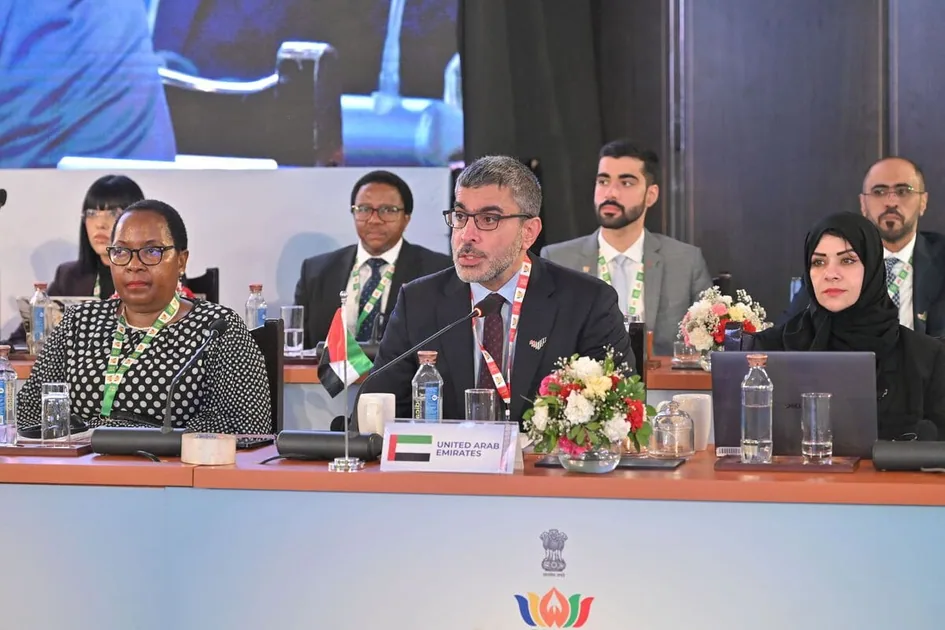
The UAE used the BRICS Energy Ministers' Meeting in India to place artificial intelligence, smart grids, hydrogen and energy storage inside a broader energy-security agenda.
Eng.
Sharif Al Olama led the delegation for the UAE Ministry of Energy and Infrastructure and delivered the national statement in his role as undersecretary for energy and petroleum affairs.
The meeting gave the UAE a policy venue rather than a single project launch.
Energy ministers and senior officials discussed sustainable energy development, digitalization, hydrogen, smart grids and resilient energy systems.
Al Olama also took part as BRICS opened its Digital Centre of Excellence focused on smart grids and energy storage.
The new BRICS centre is meant to support digital energy technologies, storage, capacity building and knowledge exchange among member states.
For the UAE, the useful signal is that energy diplomacy is being tied to grid software, storage systems and artificial intelligence applications, not only to fuel supply.
Al Olama said modern energy security increasingly depends on resilient infrastructure able to integrate digital technologies, artificial intelligence and advanced storage solutions.
The UAE did not announce a new domestic AI-grid procurement plan at the meeting, so the immediate output is multilateral coordination and technical cooperation rather than a named deployment contract.
Storage Capacity Gives The Policy A Physical Anchor
The UAE highlighted an Abu Dhabi renewable energy project with two large components: a 5.2-gigawatt solar facility and a 19-gigawatt-hour battery energy storage system.
Officials described the project as the world's largest planned 24/7 renewable energy project and said it is designed to provide continuous clean electricity while strengthening energy security.
Those figures give the statement a more concrete infrastructure base.
Smart grids and artificial intelligence need physical capacity, storage and operational data if they are to help balance electricity systems.
Economy Middle East describes the Abu Dhabi project as under development, while the UAE statement leaves out a commissioning date, financing terms and any named grid-integration contract.
The UAE also welcomed several BRICS outcomes: smart-grid and storage guidelines, the energy research platform's terms of reference, the BRICS Hydrogen Value Chains Report and the BRICS Energy Ministerial Communique.
Al Olama said these initiatives provide mechanisms for technical cooperation, research partnerships, expertise sharing and deployment of energy technologies among BRICS members.
The policy package keeps the UAE's energy agenda close to the infrastructure constraints that matter for AI and digital services.
More renewable capacity, more storage and smarter grids can support electricity reliability, but the article does not claim that the BRICS work will reserve power for data centers or AI compute sites.
Hydrogen Strategy Remains A Long-Term Export Play
The meeting also launched the BRICS Hydrogen Value Chains Report, with UAE input through the BRICS Energy Working Group.
The report was developed under India's BRICS Presidency and sets out a shared vision for hydrogen investment, innovation and integrated low-emission hydrogen value chains.
Al Olama linked the report to the National Hydrogen Strategy 2050.
The strategy covers production, transportation, storage, distribution and industrial applications, and is intended to position the UAE as a global producer and exporter of low-emission hydrogen.
He also referenced UAE Consensus targets to triple global renewable energy capacity by 2030.
A second target would lift annual energy efficiency improvements to more than 4 percent.
The Hydrogen Declaration endorsed by 39 countries during COP28 was presented as a step toward harmonizing certification frameworks, encouraging investment and supporting cross-border trade in low-emission hydrogen.
The UAE's BRICS message therefore combines digital grids, storage and hydrogen diplomacy.
The remaining operating gap is specific: the article names cooperation platforms and capacity figures, but it does not identify the first BRICS smart-grid deployment, the commissioning date for the Abu Dhabi storage project or a hydrogen export contract tied to the meeting.