SendTech Times
Analysis
AI SHIFT:

Japan’s Gennai AI Push Tests Public-Sector Guardrails For Diet Answers

Article summary

Japan’s government is using its in-house generative AI system Gennai to help prepare Diet answer documents as officials defend the workflow against criticism. Digital Minister Matsumoto said Gennai can identify related systems and past answers, while staff still revise outputs and check facts before material reaches the minister. The practical test is whether the tool reduces late-night bureaucratic work without turning parliamentary answers into unchecked AI output.

Japan’s Gennai AI Push Tests Public-Sector Guardrails For Diet Answers
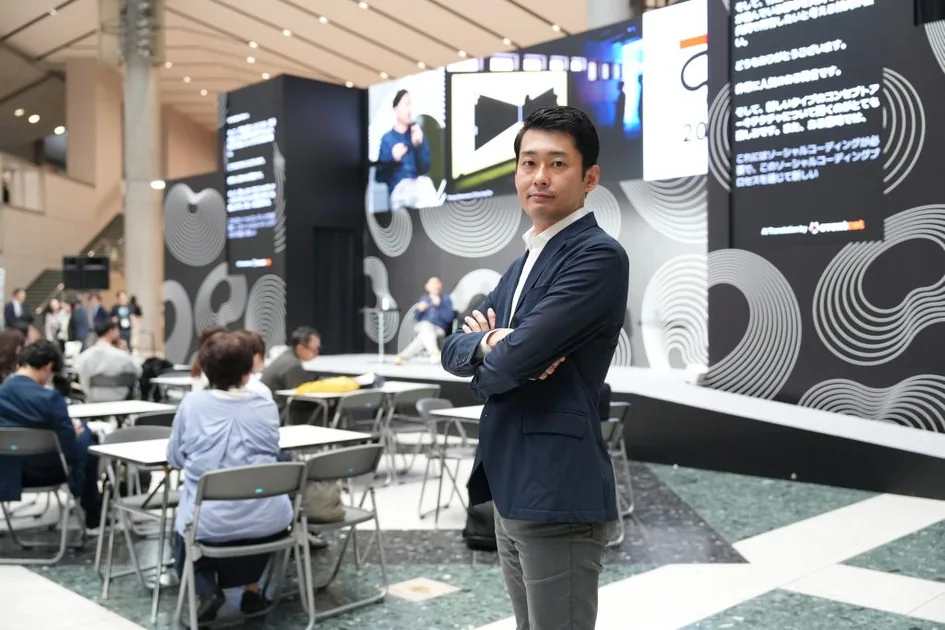
Image source: CNET Japan

Japan’s government is moving generative AI deeper into parliamentary administration, using its in-house system Gennai to support the preparation of Diet answer documents while insisting that ministers and officials remain accountable for the final response.

Digital Minister Matsumoto explained the approach at a June 2 press conference after criticism of the plan appeared in a May 31 editorial.

He said the government is using Gennai, a generative AI system built internally by the Digital Agency for government use, to reduce the workload on national public servants.

Gennai Moves From Back-Office Tool To Answer Drafting

The work includes Diet answer preparation.

Matsumoto said the Digital Agency is actively using Gennai not only for supporting information searches but also for the output stage of answer-document creation.

He said the system had already been used to prepare answers for recent committee and plenary sessions.

Gennai’s role is to identify systems related to a question, surface past answers and, in some cases, create the structure of a draft answer.

The government also plans to strengthen the system by collecting and organizing large shared government datasets, including official gazettes, laws, white papers and statistics.

Matsumoto pushed back against the idea that Gennai simply produces answers from public internet material.

He said that, as a general statement, generative AI can be based on existing internet information, but Gennai is not creating its output only from the internet.

Human Review Remains The Policy Boundary

The minister’s core defense was procedural rather than promotional.

After Gennai produces output, staff do not pass it directly to the minister.

They revise the draft, check detailed facts and then deliver the material for ministerial use.

Matsumoto said, “AIが作ったものをそのままアウトプットすることはできる限り控える,” explaining that the government should avoid outputting material created by AI as-is wherever possible.

He also said that if material created by Gennai were to be used directly, it would need even more detailed checking.

He drew a distinction between reading prepared answers in plenary sessions and speaking in committee meetings.

In committees, he said, he does not simply read out material but speaks in his own words.

Workload Pressure Keeps The System In Play

The controversy also points to a practical pressure inside the bureaucracy.

Matsumoto welcomed the editorial’s argument that officials’ burden should be reduced by having lawmakers submit questions earlier.

He said questions sometimes arrive at around 6 p.m. to 7 p.m., after which officials must prepare answer documents.

Even with Gennai, the work can continue until late at night.

Matsumoto also agreed with the concern that parliamentary debate would lose meaning if both the questioner and the answering side relied on AI.

His position is that Gennai should become accurate enough to support answer preparation, while ministers should still avoid presenting AI output unchanged and answer in their own words.

For public-sector technology buyers, the article-specific signal is governance rather than model capability.

The next signal is whether Gennai’s use becomes a controlled workload tool, supported by verified government data and human review, or becomes a flashpoint over accountability in parliamentary debate.

Share this article
inXf

Related articles

More
Mercari Moves AI Leadership Into HR as It Tests AI-Native Workflows
AI

Mercari Moves AI Leadership Into HR as It Tests AI-Native Workflows

Mercari's Japan business CTO Toshiya Kimura is becoming CHRO and CAIO as the company links AI adoption with organizational redesign. The company has tested smaller AI Pods and found faster decisions, but also limits around design, compliance and cross-functional work. Mercari plans to make HR itself AI-first while using governance across legal, privacy, security, public policy and AI expertise.

Amazon Tests Conversational Warehouse Robots as Europe Rollout Looms
AI

Amazon Tests Conversational Warehouse Robots as Europe Rollout Looms

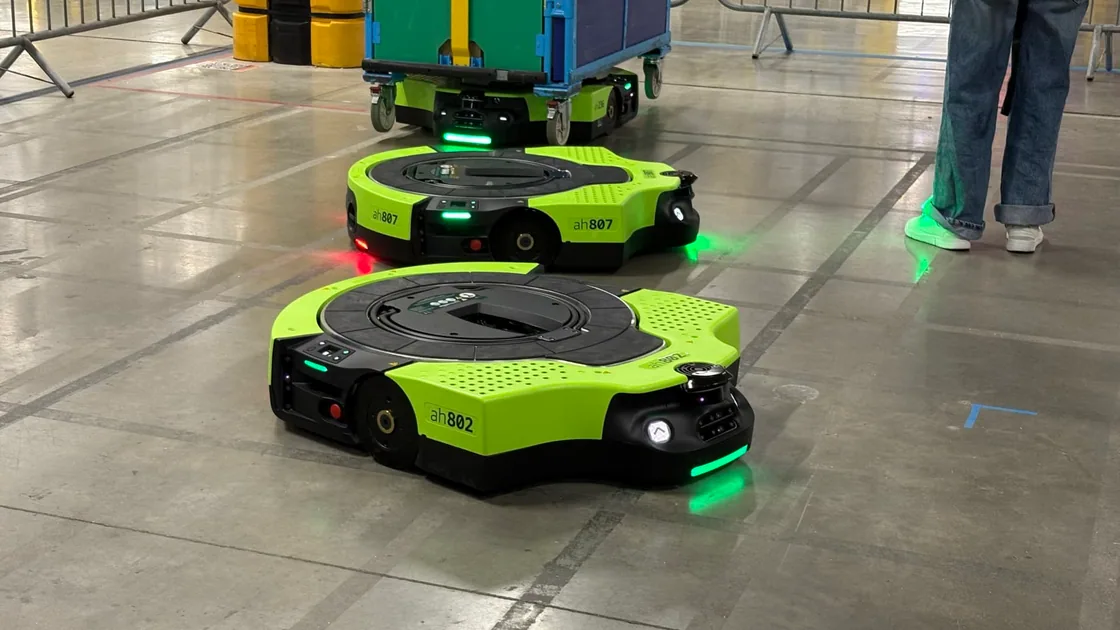
Amazon unveiled a next-generation Proteus warehouse robot that can follow plain-language worker commands. The original Proteus is used in 25 U.S. fulfillment centers, and Amazon plans a Europe rollout in the first half of 2027. The practical test is whether Amazon can expand warehouse robotics while matching automation gains with skilled fulfillment roles.

AI Token Costs Push Enterprises Toward a New Spend-Control Layer
AI

AI Token Costs Push Enterprises Toward a New Spend-Control Layer

Companies are moving from broad AI adoption to stricter control of token spending as agentic tools raise internal usage and budget pressure. The Linux Foundation unveiled plans for the Tokenomics Foundation, while Faros and Jellyfish data point to higher developer output alongside bugs, rewrites and sharply higher token consumption. The next signal is whether common token standards and spend-management tools can give enterprises enough visibility before AI budgets tighten further.

Google Tests Local AI Demand With Gemma 4 12B Release
AI

Google Tests Local AI Demand With Gemma 4 12B Release

Google released Gemma 4 12B as an open-weights multimodal AI model designed to run locally on a standard enterprise laptop. The model is described as an 11.95-billion-parameter system with an Apache 2.0 license, 16GB memory target, 256K context window and immediate availability through Google AI Edge Gallery. The practical test is whether enterprises use local multimodal inference when cloud access, latency or data handling are constraints.

Keep Reading

More Stories

Latest
Amazon-Corning Fiber Deal Puts Optics Inside The AI Data Center BottleneckCloud & Data CentersJun 9, 2026Amazon-Corning Fiber Deal Puts Optics Inside The AI Data Center BottleneckAmazon has reached a multi-year optical fiber and networking agreement with Corning, adding North Carolina manufacturing jobs and highlighting fiber capacity as a practical constraint in AI data center expansion.Check Point VPN Exploitation Puts Legacy IKEv1 Access In The Ransomware SpotlightCybersecurityJun 8, 2026Check Point VPN Exploitation Puts Legacy IKEv1 Access In The Ransomware SpotlightA critical Check Point VPN flaw, CVE-2026-50751, is being exploited against legacy IKEv1 remote-access configurations, with activity tied in one case to a Qilin ransomware affiliate and a second related VPN issue also disclosed.Silent Ransom Group Uses Fake IT Support Calls to Pressure Law FirmsCybersecurityJun 8, 2026Silent Ransom Group Uses Fake IT Support Calls to Pressure Law FirmsSilent Ransom Group is targeting U.S. law firms and professional services organizations with fake IT support calls, remote access tools and rapid data-theft extortion. Mandiant links the activity to UNC3753, Luna Moth and Chatty Spider, while the FBI has warned of related social engineering and in-person theft attempts.Alphabet’s $85 Billion AI Financing Push Tests Data Center Investor AppetiteCloud & Data CentersJun 8, 2026Alphabet’s $85 Billion AI Financing Push Tests Data Center Investor AppetiteAlphabet is seeking $85 billion in equity financing after raising its capex outlook to as high as $190 billion. The company is presenting Google Cloud growth, AI adoption and lower Gemini serving costs as evidence that its data center spending can support long-term AI demand.Apple WWDC 2026 Turns Siri Into the Test of Its AI CredibilityAIJun 8, 2026Apple WWDC 2026 Turns Siri Into the Test of Its AI CredibilityApple is expected to put Siri back at the center of WWDC 2026 after delays to its promised Apple Intelligence assistant. The event is likely to test whether Apple can turn contextual awareness, chatbot-style interaction and agentic voice tasks into reliable platform features.ChatGPT Lockdown Mode Narrows AI Data Exfiltration PathsCybersecurityJun 8, 2026ChatGPT Lockdown Mode Narrows AI Data Exfiltration PathsOpenAI is rolling out Lockdown Mode for eligible ChatGPT users to reduce data exfiltration risk from prompt injection. The optional setting limits outbound web and tool capabilities, trading some product flexibility for stronger containment around sensitive workflows.Smart TV Proxy SDKs Turn Free Apps Into a Hidden AI Scraping Supply ChainCybersecurityJun 7, 2026Smart TV Proxy SDKs Turn Free Apps Into a Hidden AI Scraping Supply ChainBright Data's SDK has been reverse-engineered in research showing how free apps can turn consumer devices, including smart TVs, into residential proxy nodes for web-scraping traffic. The issue matters because AI data harvesting is increasing demand for residential IPs, while consent screens and background network behavior may not be clear to users or IT teams.Stratos Data Center Cuts Utah Plan as Water Backlash Tests AI Infrastructure GrowthAIJun 7, 2026Stratos Data Center Cuts Utah Plan as Water Backlash Tests AI Infrastructure GrowthA Kevin O'Leary-backed Utah data center plan has been cut back after water and transparency objections, showing how local resistance can reshape AI infrastructure projects.Dubai Hotels Turn to Residents as Tourism Shock Tests Luxury DemandEconomyJun 7, 2026Dubai Hotels Turn to Residents as Tourism Shock Tests Luxury DemandDubai luxury hotels are using resident staycation discounts to offset weaker international tourism, but the source shows weekend demand cannot fully replace longer foreign stays.Ciena's $50 Billion AI Network Target Puts Optical Capacity on the Hyperscaler ClockChips & SemiconductorsJun 7, 2026Ciena's $50 Billion AI Network Target Puts Optical Capacity on the Hyperscaler ClockCiena says AI demand could roughly double its addressable market to about $50 billion by 2029 as hyperscalers and service providers invest in optical networking. It cited RLS Hyper Rail, DCOM, coherent modules and 400G/800G pluggable optics as demand areas while planning $250 million to $275 million in capex this year. The practical test is whether AI compute buildouts convert into durable network orders.liko.ai Funding Turns Edge AI Into a Smart-Home Hardware TestAIJun 7, 2026liko.ai Funding Turns Edge AI Into a Smart-Home Hardware Testliko.ai completed its first-round financing to fund edge-side vision-language models, AI-native hardware and multi-modal home terminals. The investor group includes Shangtang Guoxiang Capital, Orient Fortune Capital, iFlytek Venture Capital, Hongtai Fund, Zhengxuan Investment and Mianbi Intelligence. The practical test is whether the startup can turn camera-based edge AI into a consumer smart-home hub without relying on cloud processing.Impact Circle Turns Impact Finance Into a Japan Fintech Measurement TestFintech & Digital PaymentsJun 7, 2026Impact Circle Turns Impact Finance Into a Japan Fintech Measurement TestTokyo-based Impact Circle is building a fintech model that measures social impact through its own lending and visualization businesses. The company won the Tokyo Financial Award 2025 financial innovation category and raised 335 million yen in a November 2024 Series A round. The next signal is whether Impact Cloud IC can turn impact measurement into a repeatable workflow for investors and Japanese corporations.