SendTech Times
Analysis
AI SHIFT:

China’s Open-Source AI Push Tests The Closed-Model Playbook

Article summary

Former Hugging Face Asia-Pacific ecosystem lead Tiezhen Wang said Chinese AI labs are using open releases, licensing changes and cheaper token economics to challenge closed U.S. model strategies without relying only on direct model fees.

China’s Open-Source AI Push Tests The Closed-Model Playbook
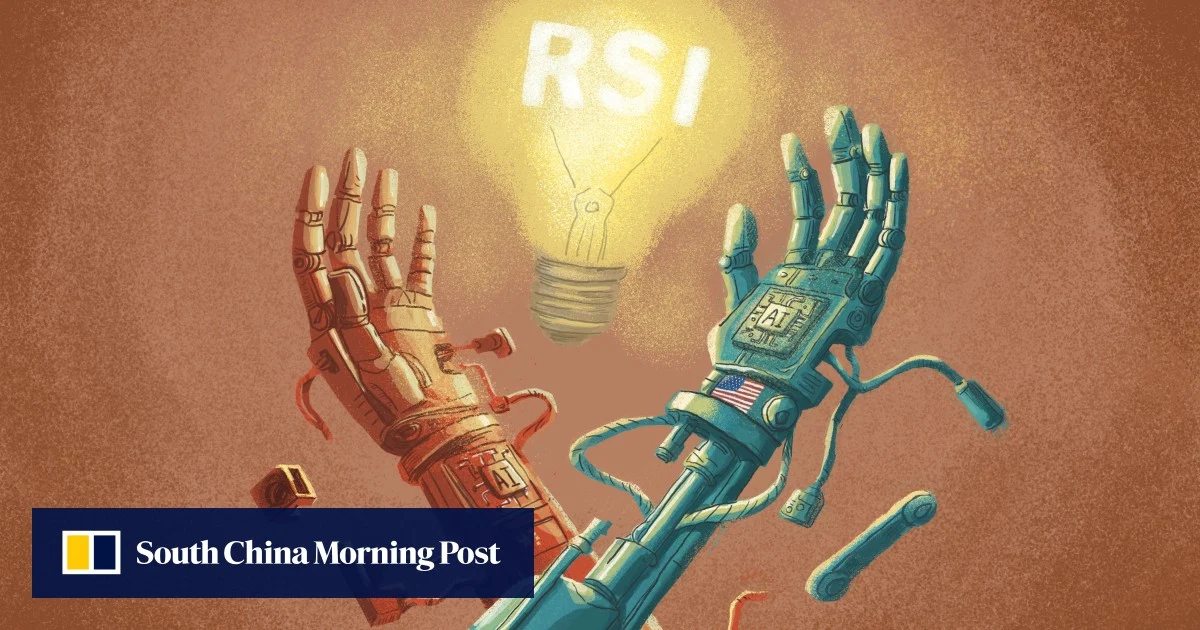
Image source: Rest of World

China’s AI Labs Lean Into Open Releases

Chinese AI labs are treating open-source model releases as a strategic route into the global developer ecosystem.

Tiezhen Wang, formerly head of the Asia-Pacific ecosystem at Hugging Face, framed the divide as less about a simple U.S.-China race and more about different engineering incentives around model access.

The core contrast is clear.

OpenAI and Anthropic keep proprietary model code behind commercial interfaces, while Chinese labs are releasing models that developers can inspect, customize and run without depending entirely on a foreign platform.

Wang said releases from Chinese labs are already useful to U.S. researchers, including DeepSeek reinforcement learning training work and Chinese open weights running on U.S. hardware.

The Monetization Question Is Not Settled

Open releases do not remove the business problem.

Wang said labs can struggle to earn money directly from a model once it is released, but they can still build revenue around infrastructure, subscriptions, application programming interfaces and retained base models.

Kimi was his example of that split.

The company released a model for free, yet demand remained strong for its interface and subscription because users still need reliable infrastructure.

Wang also said a lab can open a fine-tuned model while keeping base models private for commercial sale.

That model gives open-source labs a different kind of leverage.

The first advantage comes on day zero, when the research team behind a release already knows how to operate it.

The second advantage is reputation: strong public models help young labs recruit researchers and become visible to developers before they have a mature paid product.

Licenses Are Becoming The Control Layer

The open-source strategy is also becoming more selective.

Wang pointed to Minimax changing its license so commercial users that make money from a model have to pay.

His concern was not individual developers using a model for free, but cloud providers running it for profit without sharing value with the lab that created it.

That licensing shift matters because it is a middle path between fully closed models and unrestricted free use.

A lab can preserve developer access while asking revenue-generating infrastructure companies to contribute.

If Chinese labs cannot find that balance, Wang warned that monetization pressure could push more of them toward closed-source strategies.

Capital markets are another support line.

Wang cited Zhipu’s stock price as having reached 10 times growth, arguing that investor backing can help labs buy compute, recruit talent and secure data.

The point is not that open-source automatically pays for itself, but that financing can keep model labs active while they search for sustainable revenue.

Token Costs Shape Adoption

For startups, Wang described a pragmatic path rather than ideological loyalty to either open or closed models.

A company may begin with a closed model that fits the product, gather users and data, then later consider switching to an open-source model to cut token expense.

He said that move can eventually save maybe a hundred times on tokens.

The claim reflects the operating pressure behind the open-source debate: model access is not just a research preference, but a cost structure that affects whether products can scale.

Wang also contrasted U.S. and Chinese adoption patterns.

He said Uber burned through an entire year’s token allocation within four months, while Chinese internet companies are pushing employees to use large token volumes because domestic open models are cheaper to run.

What To Watch Next

The next checkpoint is whether Chinese labs keep releasing useful models while tightening commercial licensing for cloud providers.

If that balance holds, developers get more model choice and labs get a path to revenue.

If it fails, the strongest labs may reserve more work behind paid interfaces.

For enterprise AI buyers, the practical test is narrower: whether open models can reduce token costs without creating new risks around support, governance, intellectual property and operational reliability.

Wang’s comments leave one clear measure to watch: whether cheaper Chinese open models cross the threshold where companies use them in everyday products, not only research experiments.
Share this article
inXf

Related articles

More
Xiaomi MiMo Code Tests Long-Horizon AI Coding Inside the Terminal
AI

Xiaomi MiMo Code Tests Long-Horizon AI Coding Inside the Terminal

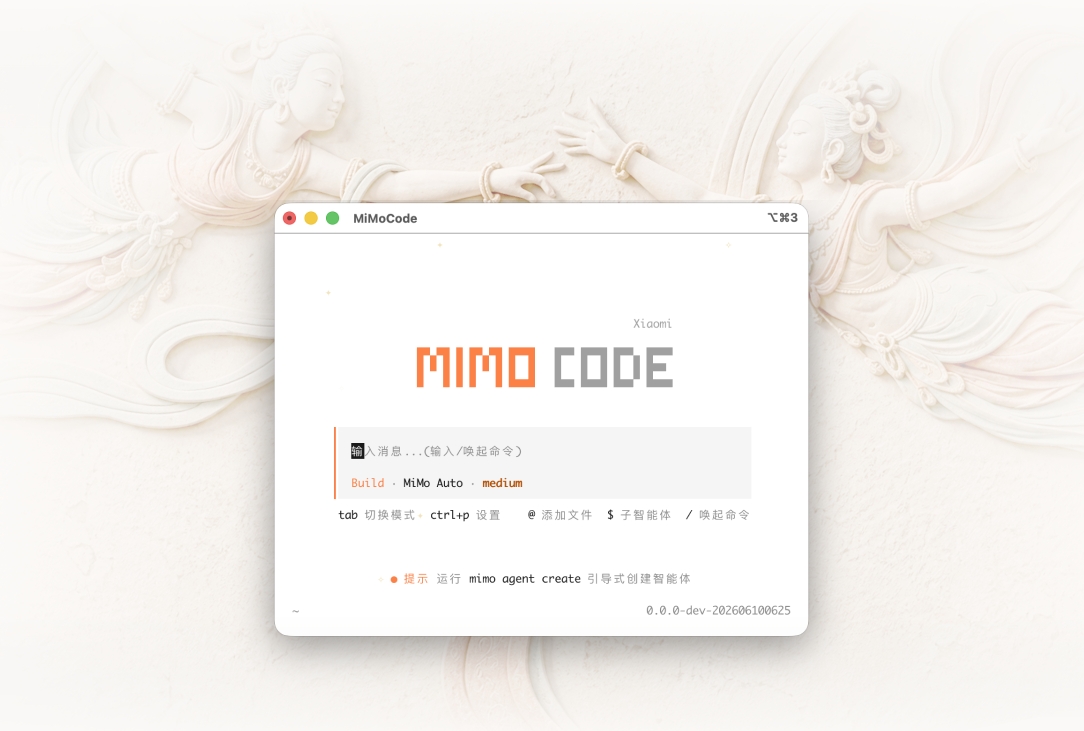
Xiaomi has open-sourced MiMo Code V0.1.0, a terminal-native AI programming assistant built for long agentic software workflows. Internal testing with 576 developers and tasks exceeding 200 steps positions the release as a direct challenge to existing coding agents such as Claude Code.

Claude Fable 5 Turns AI Safety Controls Into A China Model-Access Test
AI

Claude Fable 5 Turns AI Safety Controls Into A China Model-Access Test

Anthropic’s Claude Fable 5 restrictions show how frontier AI providers can move safety and anti-distillation controls into the model layer, creating new friction for Chinese developers.

Avataar’s Varya Tests India’s Lower-Cost Path For AI Video
AI

Avataar’s Varya Tests India’s Lower-Cost Path For AI Video

Avataar AI’s Varya video model links India’s public compute push with a lower-cost, culturally localized AI video strategy, but customer traction and independent quality proof remain undisclosed.

China’s AI Labs Turn Self-Improving Models Into A Chip-Efficiency Test
AI

China’s AI Labs Turn Self-Improving Models Into A Chip-Efficiency Test

Chinese AI teams are tying recursive self-improvement claims to research automation and kernel optimisation, but the strongest evidence still sits in narrow engineering tasks rather than full autonomous AI research.

Keep Reading

More Stories

Latest
AutoVRse Funding Puts India’s Industrial AI Training Stack Under Investor ScrutinyAIJun 15, 2026AutoVRse Funding Puts India’s Industrial AI Training Stack Under Investor ScrutinyAutoVRse raised $2.4 Mn from Singularity AMC and Lumikai, giving the India-based AR/VR training startup fresh capital for North America and Europe while it claims more than 50 enterprise customers.UPI’s Eiffel Tower Rollout Turns India’s Payment Rail Into A Tourist Corridor TestEconomyJun 15, 2026UPI’s Eiffel Tower Rollout Turns India’s Payment Rail Into A Tourist Corridor TestIndia’s UPI is now accepted at the Eiffel Tower and is slated for Paris and Nice airport expansion, giving NPCI International and Lyra a live test of QR-based payments for Indian travellers in France.AI Coding Tools Move From Flat Fees To Usage BudgetsAIJun 15, 2026AI Coding Tools Move From Flat Fees To Usage BudgetsGitHub Copilot, Cursor, Windsurf/Devin and Anthropic pricing moves show AI coding tools becoming metered software, forcing engineering teams to manage agentic development like a cloud cost line.Omniyat Targets Dh200 Billion UAE Property Portfolio By 2030Real EstateJun 15, 2026Omniyat Targets Dh200 Billion UAE Property Portfolio By 2030Omniyat is targeting a portfolio of more than Dh200 billion by 2030 as it expands beyond Dubai and looks for Abu Dhabi projects. The plan is backed by a current Dh100 billion to Dh120 billion portfolio, The Yards launch in City of Arabia and liquidity from recent sukuk issuance, but it will be tested by softer May property-price data.Singapore AI Job Premiums Show Public Sector Demand Moving Faster Than General HiringAIJun 15, 2026Singapore AI Job Premiums Show Public Sector Demand Moving Faster Than General HiringPwC’s Singapore AI jobs data shows government and consumer-market roles paying the largest AI skill premiums, while most new AI listings are for users of AI tools rather than model-building specialists.ASML Warning Pushes Europe’s AI Sovereignty Debate Up The StackChips & SemiconductorsJun 15, 2026ASML Warning Pushes Europe’s AI Sovereignty Debate Up The StackASML chief Christophe Fouquet’s criticism of EU chip-intervention thinking puts the focus on where Europe can still build leverage: trusted compute, data governance, hosting, network interfaces and niche AI supply-chain strengths.Hong Kong Offices Face An AI Infrastructure Test As Tenants Move UpmarketReal EstateJun 15, 2026Hong Kong Offices Face An AI Infrastructure Test As Tenants Move UpmarketKnight Frank says AI adoption is adding energy, connectivity and training-space requirements to Hong Kong offices, putting older buildings under pressure as tenants favour better-equipped central assets.Dubai Municipality Launches Saeed As AI Virtual SpokespersonAIJun 15, 2026Dubai Municipality Launches Saeed As AI Virtual SpokespersonDubai Municipality launched Saeed, an AI-powered virtual spokesperson that will use official municipal data across websites, social media, press conferences, awareness videos, community events and internal employee channels.Lenovo Turns The 2026 World Cup Into A Live Test For Sports AI InfrastructureAIJun 15, 2026Lenovo Turns The 2026 World Cup Into A Live Test For Sports AI InfrastructureLenovo’s FIFA technology role puts AI stabilization, 3D officiating visuals, FIFA AI Pro and venue edge servers inside the operating layer of the 2026 World Cup, not just its sponsorship backdrop.EU AI Labelling Rules Turn Deepfake Disclosure Into A Platform Workflow TestAIJun 15, 2026EU AI Labelling Rules Turn Deepfake Disclosure Into A Platform Workflow TestThe EU’s Article 50 Code of Practice gives AI providers and deployers a practical disclosure framework for deepfakes, public-interest AI text, icons, accessibility, editorial responsibility and correction channels.India’s AI Skills Push Moves From Summit Talk To WhatsApp AccessAIJun 15, 2026India’s AI Skills Push Moves From Summit Talk To WhatsApp AccessIndia’s skills minister Jayant Chaudhary is framing AI as a workforce inclusion tool, with Skill India Assistant now working on WhatsApp, voice support and 13 languages while CBSE introduces computational thinking and AI for classes 3 to 8.Amazon India Puts Generative AI Inside Seller OperationsAIJun 15, 2026Amazon India Puts Generative AI Inside Seller OperationsAmazon is rolling out an AI-powered Seller Assistant for Indian merchants, using Bedrock, Nova and Anthropic Claude to cut listing work, support inventory and advertising decisions, and test the tool during Prime Day demand.