Xiaomi MiMo Code Tests Long-Horizon AI Coding Inside the Terminal
Xiaomi has open-sourced MiMo Code V0.1.0, a terminal-native AI programming assistant built for long agentic software workflows. Internal testing with 576 developers and tasks exceeding 200 steps positions the release as a direct challenge to existing coding agents such as Claude Code.
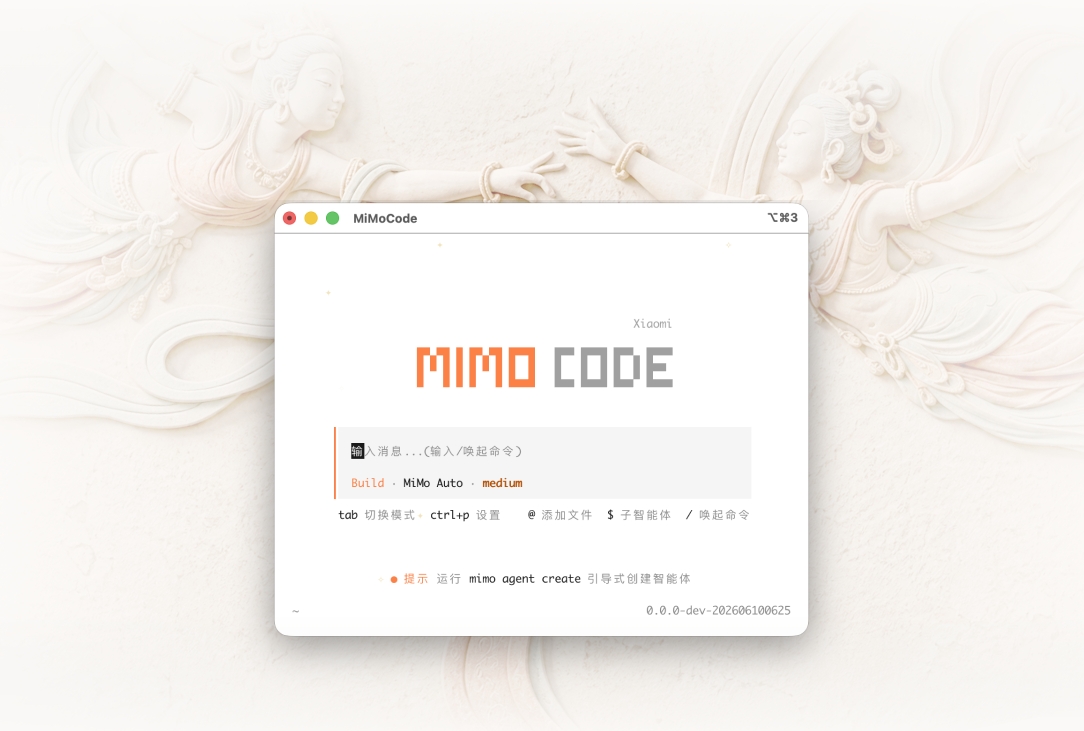
Xiaomi moves coding agents into the terminal
Xiaomi has open-sourced MiMo Code V0.1.0, a terminal-native AI programming assistant designed to run long software development workflows from the command line.
The tool is positioned against agentic developer environments such as Anthropic's Claude Code, but its focus is direct execution across local files, terminal output and build commands.
That architecture changes the interface for AI-assisted development.
Instead of generating code blocks inside an IDE for engineers to paste manually, MiMo Code can modify files, run compilers and interact with version control workflows inside the terminal.
The 200-step claim targets agent reliability
Xiaomi tested MiMo Code inside its own engineering teams before the public release.
An internal beta survey recorded 576 developers using the tool for daily production tasks, and the company said the system completed long-horizon objectives exceeding 200 distinct operational steps.
Those figures matter because long agentic workflows often break when models lose context across repeated operations.
MiMo Code is designed to anchor its memory to local file-system state and terminal logs, allowing the agent to read environment variables, plan file changes, write code and start a build sequence.
Debug loops become part of the workflow
The source describes compiler errors as part of the intended operating loop rather than a terminal failure point.
MiMo Code parses stack traces from terminal output, identifies the line responsible for a failure and attempts a targeted fix without another human prompt.
A representative 200-step path can include cloning an external repository, reading a package manifest, updating obsolete libraries, refactoring API endpoints, running unit tests, processing test-failure logs and opening a formatted pull request.
That makes the tool less like a completion assistant and more like an execution harness for software maintenance tasks.
Checkpointing addresses collapse risk
Xiaomi's benchmark material says MiMo Code completed long 200-step runs where Claude Code fell into repeated terminal hallucination loops.
The important engineering issue is not only whether an agent can start a task, but whether teams can recover when an autonomous workflow fails near the end of a long refactor.
MiMo Code uses deterministic checkpointing to reduce that risk.
The harness records every bash command, every altered file line and every installed dependency, giving developers a review trail at predefined intervals.
That audit layer is essential because a coding agent with local shell execution and write access can create serious security and operational exposure if it is misconfigured.
Open source changes the cost equation
The source also frames MiMo Code as a response to token economics.
A 200-step coding workflow can repeatedly read a large context window, which raises costs when commercial API models charge by processed tokens.
Xiaomi's open-source approach lets enterprise engineering teams host the underlying model on internal hardware and run longer testing loops without sending every step to an external API.
The internal beta was tied to Xiaomi's consumer electronics engineering work, including Android Open Source Project components and device firmware modules.
That gives the release a systems-programming angle as well as a web-application automation angle.
What teams should watch next
The next proof point is whether external developers can reproduce Xiaomi's internal claims on proprietary codebases.
Xiaomi paired the repository with a limited-time free API allowance, but adoption will depend on whether teams can safely sandbox the agent, inspect its command history and control where automated patches are allowed to run.
If those controls hold, MiMo Code points toward a more continuous model for software engineering.
The terminal becomes the shared workspace where an AI agent reads errors, edits files, runs tests and prepares pull requests without forcing engineers to move between chat windows, IDE panes and separate shell sessions.