Dubai RTA Turns AI Mobility Services Into A Dh5.3 Billion Digital Revenue Engine
Dubai RTA reported Dh5.3 billion in 2025 revenue from digital channels, up 20.6% year on year. The authority recorded more than 628 million digital transactions, with 96% digital adoption and 98% customer happiness. AI, apps, kiosks, WhatsApp services and shared government platforms are becoming the operating layer for Dubai mobility services.
Dubai's Roads and Transport Authority is turning digital mobility into a measurable revenue engine after reporting Dh5.3 billion from digital channels in 2025.
The Market Signal
RTA said digital channels generated Dh5.3 billion in 2025, up 20.6% from the previous year, while more than 628 million digital transactions were completed.
Digital adoption reached 96% and customer happiness was reported at 98%.
The figures show that Dubai's mobility services are moving from isolated online tools toward a wider digital operating model.
The authority also scored 94% on Dubai Government's Digital Maturity Index, reaching Level 5 and ranking among the top four government entities in the emirate.
For Dubai, the numbers support a smart-city strategy that links transport services, government platforms and customer convenience.
AI Moves Into The Operating Layer
Mattar Al Tayer, Director General and Chairman of RTA's Board of Executive Directors, said the authority is moving from service digitisation to an integrated ecosystem driven by data and artificial intelligence.
He also said the next phase will expand AI and emerging technologies in service design and delivery while strengthening links with government digital platforms.
That matters here because RTA handles repeated, high-volume public services across parking, permits, journey planning, public transport and customer support.
If AI improves search, routing, service discovery or automated assistance, the impact can be visible in transaction growth, service speed and customer satisfaction.
Channels With Commercial Weight
RTA's apps are becoming central to the model.
Smart-app service usage rose by more than 25%, with 18 services added to the RTA Dubai app.
Active users passed 1.2 million, while combined annual visits to RTA Dubai and S'hail reached 68 million, a 144% increase from 2024.
Enquiry and journey-planning requests rose 48% to 48 million.
The website offered 103 services and handled more than 11 million transactions.
RTA also added services such as advertising signboard fine payments, violation disputes, the Naqel temporary passenger transport permit and an AI-powered search tool.
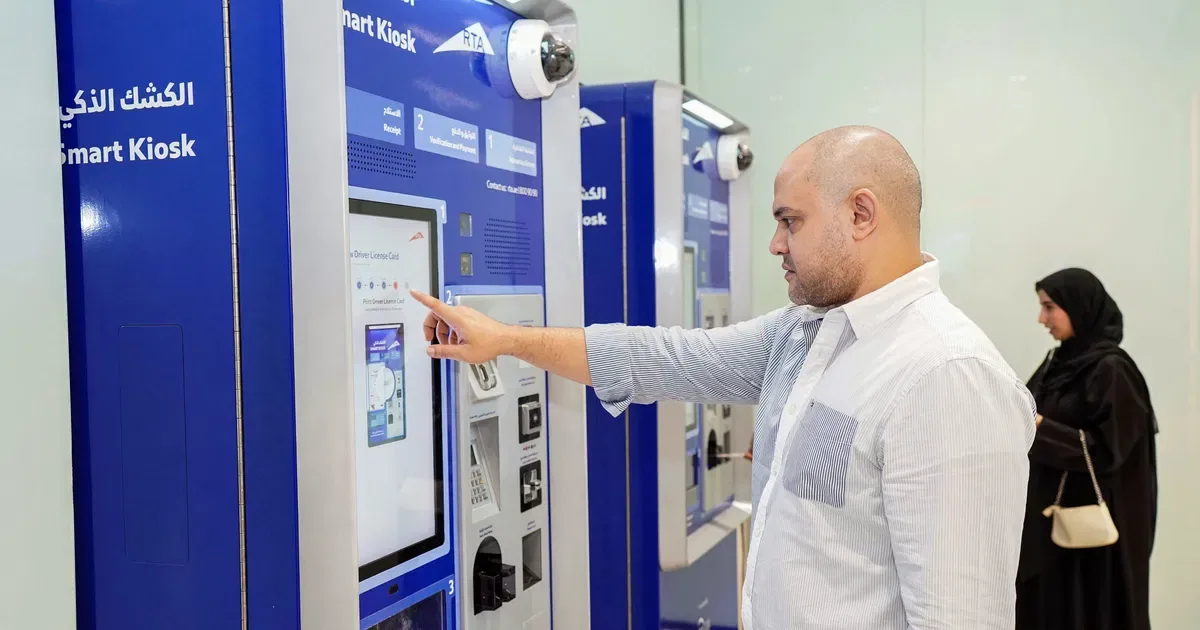
Smart kiosks processed more than one million transactions and generated over AED425 million, while WhatsApp parking reservation payments exceeded Dh21.7 million.
What To Watch
The next test is whether RTA can turn high digital adoption into deeper integration across Dubai's public platforms.
Its services already connect with S'hail, Dubai Now, Invest in Dubai, Visit Dubai and Build in Dubai, while the Mahboub virtual assistant has expanded to 32 interactive services.
The execution risk is practical: AI services must remain accurate, accessible and easy to use.
RTA has strong revenue, satisfaction and usage indicators, but sustained growth will depend on reliable automation, data quality and smooth coordination across government channels.
Summary version for Medium
Dubai RTA Turns AI Mobility Services Into A Dh5.3 Billion Digital Revenue Engine
What the announcement means beyond the headline
Quick Summary: Dubai RTA reported Dh5.3 billion in 2025 revenue from digital channels, up 20.6% year on year. The authority recorded more than 628 million digital transactions, with 96% digital adoption and 98% customer happiness.
The Market Signal
RTA said digital channels generated Dh5.3 billion in 2025, up 20.6% from the previous year, while more than 628 million digital transactions were completed. Digital adoption reached 96% and customer happiness was reported at 98%.
AI Moves Into The Operating Layer
Mattar Al Tayer, Director General and Chairman of RTA's Board of Executive Directors, said the authority is moving from service digitisation to an integrated ecosystem driven by data and artificial intelligence.
- Point 1: The central topic is Dubai, with the announcement framed around concrete operating detail.
- Point 2: He also said the next phase will expand AI and emerging technologies in service design and delivery while strengthening links with government digital platforms.
The important shift is not the AI label, but the operating boundary it creates for teams.
Channels With Commercial Weight
RTA's apps are becoming central to the model. Smart-app service usage rose by more than 25%, with 18 services added to the RTA Dubai app.
Read the Full Deep Dive
Want to explore the complete technical analysis, enterprise trade-offs, and detailed metrics?
Read the full article originally published at SendTech Times