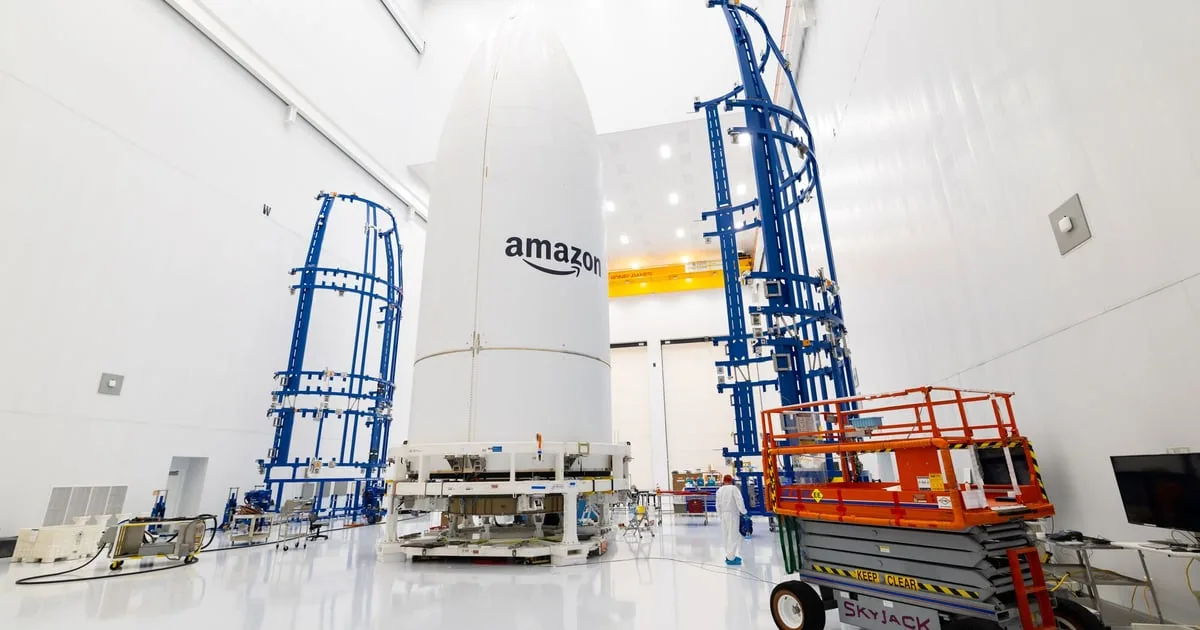
Far EasTone signs Amazon Leo deal for Taiwan satellite broadband
Far EasTone Telecommunications has signed on as the authorized distributor of Amazon Leo satellite broadband services in Taiwan. The operator said regulatory steps could take nine to 12 months and is targeting a first-half 2027 service launch. Amazon Leo has around 300 satellites in orbit, while FET still needs approvals from multiple Taiwan authorities before service can begin.

Taiwan partnership
Far EasTone Telecommunications (FET) has signed an agreement to serve as the authorized distributor of Amazon Leo satellite broadband services in Taiwan.
Amazon Leo was previously known as Project Kuiper.
FET said the deal fits its wider plan to improve the resilience of its communications infrastructure and broaden the services it can offer.
The company said Amazon Leo will be folded into its broader network architecture and telecom portfolio.
In describing the role of the service, FET said the addition is meant to help public-sector use cases, consumer applications and enterprise customers keep essential connections available for critical systems and operating processes.
FET also said the satellite service is intended to work alongside conventional communications networks.
It described the offering as a way to extend connectivity beyond existing service areas, especially in locations where geography or severe weather can affect the performance of terrestrial networks.
Regulatory path and launch target
Before the service can be launched, FET said it must complete several regulatory steps in Taiwan.
The operator told local media that clearing the main hurdles may take from nine to 12 months.
Based on that process, the company is aiming to introduce its low-Earth orbit satellite services in the first half of 2027.
FET President Ching Chee said there is a possibility of reaching that schedule based on the company’s estimate for how long the full procedure may require.
The company must secure approval from Taiwan’s Ministry of Digital Affairs to use its spectrum for LEO satellite operations.
In addition, the operator must obtain the required approvals from the National Communications Commission and the Criminal Investigation Bureau before it can begin offering the satellite service.
Spectrum access is an important part of the plan.
FET holds 28GHz radio frequency spectrum, while Amazon’s LEO satellites operate in the 27.5GHz to 30GHz band.
That match is central to deploying the service.
Network buildout and use cases
Amazon Leo is still building its constellation and has not yet launched commercial services.
The network currently has roughly 300 satellites in orbit.
As a result, the Taiwan rollout depends not only on local approvals but also on the continued development of Amazon Leo’s satellite system.
FET said the service is designed to support communications in places where traditional infrastructure may be harder to rely on.
The company identified maritime, agriculture and mining as target industries, along with other sectors that need dependable links.
The planned service is expected to provide as much as 1 Gbit/s for downloads and as much as 400 Mbit/s for uploads.
FET presented this as part of a broader effort to strengthen connectivity options in areas beyond the reach or reliability of standard network coverage.
Taiwan’s broader telecom market could also see additional cooperation around Amazon Leo.
Chunghwa Telecom, the island’s largest telecom operator, has expressed interest in working with Amazon Leo even though it already holds distribution rights for OneWeb and SES satellite services.
The company said it remains open to that kind of partnership and has not ruled it out.
For FET, the immediate focus remains on securing approvals and preparing for a launch window in the first half of 2027.
The agreement gives Amazon Leo a route into Taiwan, but service availability still depends on regulatory clearance and the continued rollout of the satellite network.
Summary version for Medium
Far EasTone signs Amazon Leo deal for Taiwan satellite broadband
What the announcement means beyond the headline
Quick Summary: Far EasTone Telecommunications has signed on as the authorized distributor of Amazon Leo satellite broadband services in Taiwan. The operator said regulatory steps could take nine to 12 months and is targeting a first-half 2027 service launch.
Taiwan partnership
Far EasTone Telecommunications (FET) has signed an agreement to serve as the authorized distributor of Amazon Leo satellite broadband services in Taiwan. Amazon Leo was previously known as Project Kuiper.
Regulatory path and launch target
Before the service can be launched, FET said it must complete several regulatory steps in Taiwan.
- Point 1: The announcement adds a concrete operating detail that changes how buyers should read the story.
- Point 2: The operator told local media that clearing the main hurdles may take from nine to 12 months.
The important shift is not the AI label, but the operating boundary it creates for teams.
Network buildout and use cases
Amazon Leo is still building its constellation and has not yet launched commercial services. The network currently has roughly 300 satellites in orbit.
Read the Full Deep Dive
Want to explore the complete technical analysis, enterprise trade-offs, and detailed metrics?
Read the full article originally published at SendTech Times