News
CAPACITY TEST:

SpaceX And Orbital File 100,000-Satellite Plans At FCC

Newsroom brief

SpaceX and Orbital Compute have filed separate FCC plans for 100,000 satellites each, with SpaceX targeting Starlink Gen 3 broadband and Orbital proposing space-based AI data-centre capacity. The filings do not include approvals, named customers, launch cadence or final commercial timetables.
Verified against source materialEdited by SendTech Times Cloud & Infrastructure Desk
SpaceX And Orbital File 100,000-Satellite Plans At FCC
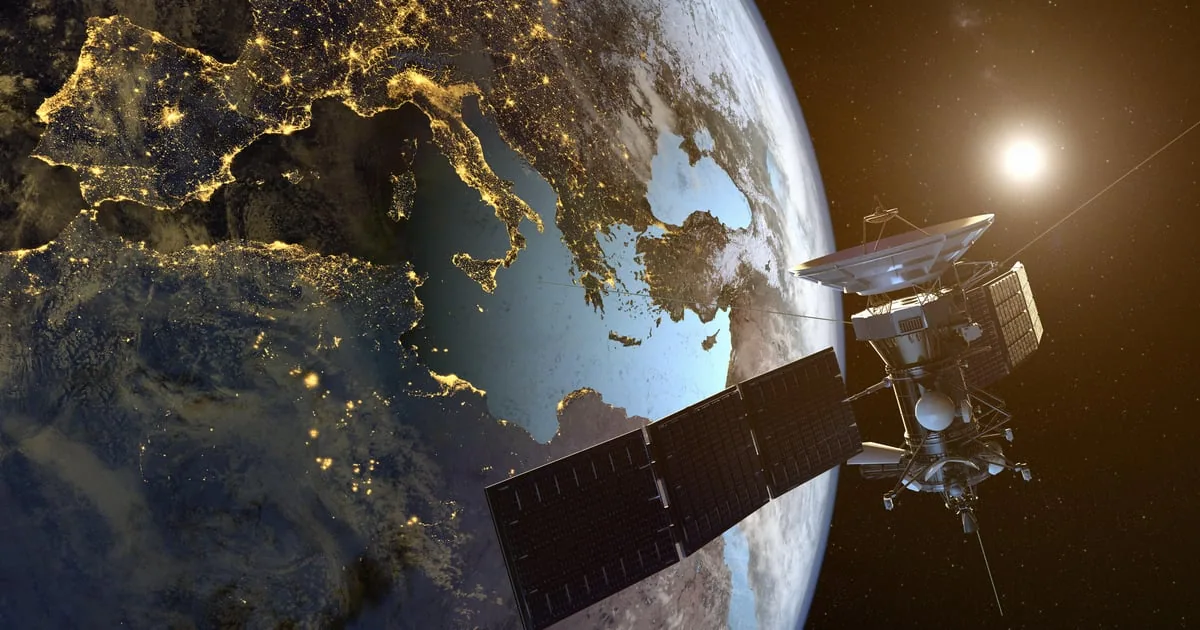
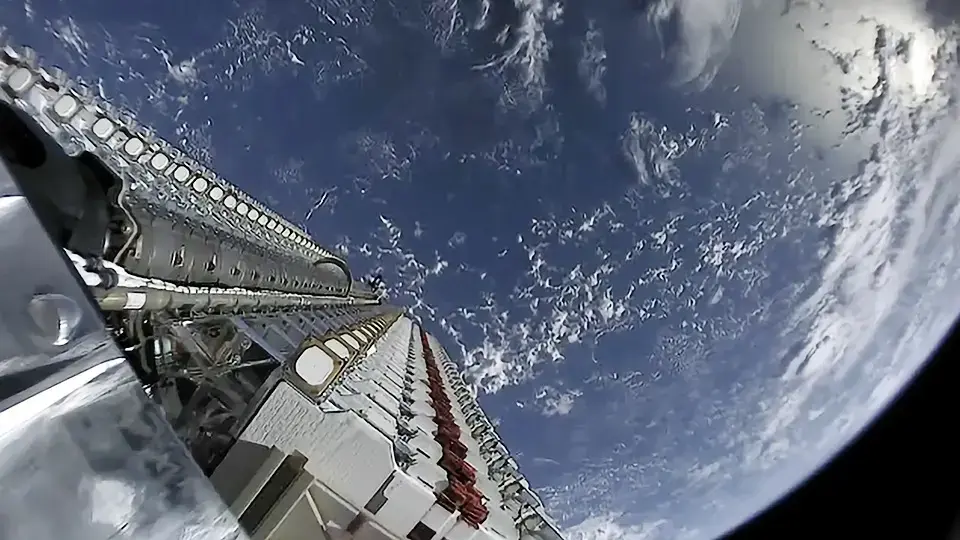
Image source: Wikimedia Commons / SpaceX public domain manual fallback image

FCC Filings Name Two 100,000-Satellite Constellations

SpaceX and Orbital Compute have put separate 100,000-satellite plans before the FCC, turning satellite broadband and orbital data-centre capacity into the same regulatory queue.

The filings show one plan built around Starlink Gen 3 communications satellites and another around space-based compute for AI workloads.

SpaceX filed its Gen 3 Starlink application on Monday.

The company said the new system would add larger satellites above its current Starlink network and separate orbital data-centre ambitions, including an earlier plan for up to 1 million data-centre satellites.

Orbital Compute filed its application in June.

The Los Angeles startup said its proposed constellation would support AI applications by placing data-centre hardware in orbit rather than drawing on terrestrial electricity, land or water.

SpaceX Gen 3 Satellites Target Very-Low-Earth Orbit

SpaceX said the Gen 3 system would use satellites between 323 kilometres and 477 kilometres above Earth.

The company described the layer as very-low-Earth orbit and said the network would use Ku-, Ka-, V- and E-band spectrum, with anticipated use of W-band and D-band frequencies.

The company said Gen 3 would provide low-latency, multi-gigabit satellite broadband for consumers, businesses and government users.

SpaceX also said the constellation could connect "billions of AI-powered devices around the world" and serve as communications infrastructure for what it called the AI age.

SpaceX said each Gen 3 satellite would weigh about 2,000 kilograms and support downstream speeds around 1 Tbit/s.

Elon Musk wrote on X that the plan would need Starship, the company's heavy-lift rocket, to deploy the larger satellites.

Orbital Compute Says Its Plan Could Reach 10 Gigawatts

Orbital Compute said the filing also sets a path to about 10 gigawatts of orbital computing power.

The company compared that figure with roughly 8.5 gigawatts of new U.S. grid capacity added over the past year.

The startup said each satellite would operate as a high-density rack backed by 100 kilowatts from its own solar arrays.

Orbital Compute said each unit would span about 100 meters, weigh roughly two tons and use radiators to move heat into space.

Orbital Compute said it plans to launch a single Nvidia GPU payload on a SpaceX Falcon 9 rocket in 2027, followed by Orbital-1, its first data-centre satellite, sometime in 2028.

Founder and chief executive Euwyn Poon said in April that the company was close to opening an R&D manufacturing site in Los Angeles.

Poon also said orbital data centres could address power and cooling limits facing terrestrial facilities.

Commercial Proof Still Depends On FCC Action And Capital

Orbital Compute said funding for its 2027 test is largely coming from a16z speedrun, an Andreessen Horowitz programme that says it has allocated more than $180 million to more than 150 startups.

The company expects each satellite to cost about $5 million including GPUs.

The filings leave major deployment evidence outside the public record.

The FCC has not approved the constellations, Orbital Compute has not announced additional capital partners, and neither plan names confirmed customers, launch cadence, service pricing or a final commercial timetable for a 100,000-satellite buildout.

Share this article
inXf

Related articles

More
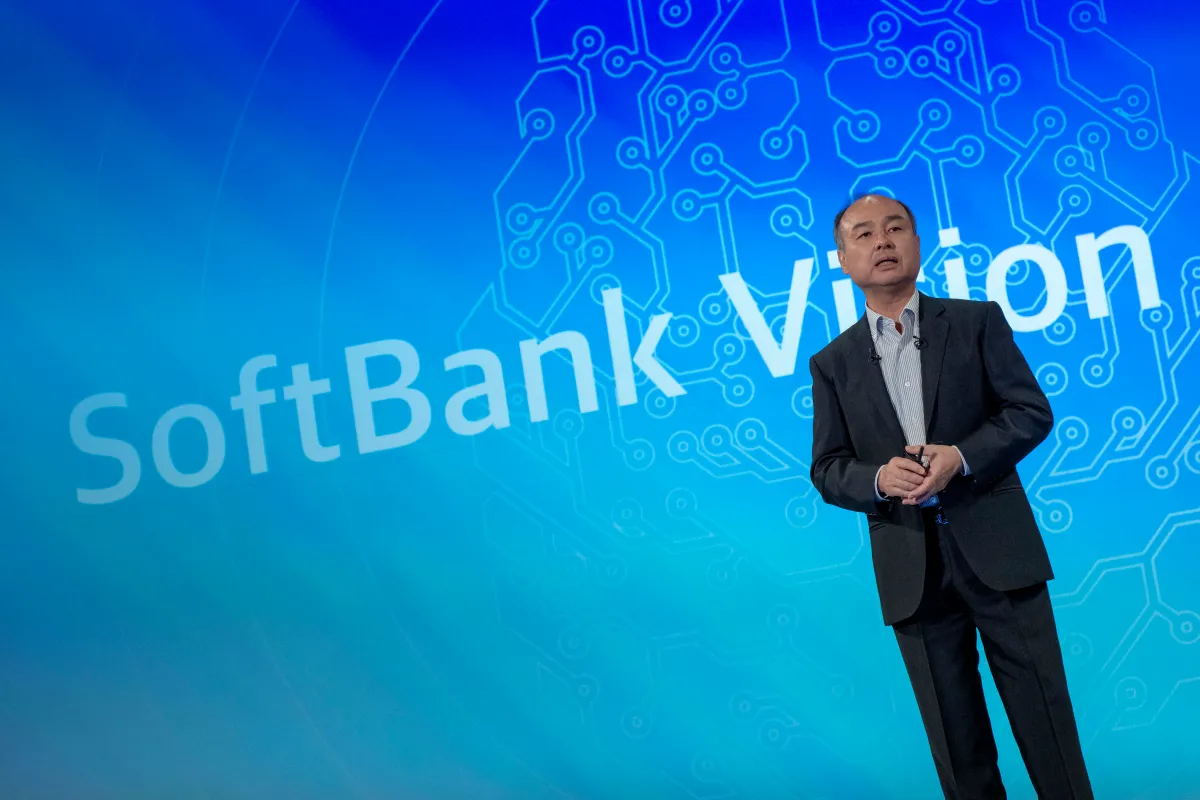
SoftBank CEO Questions Space-Based AI Data-Centre Economics
Cloud & Data Centers

SoftBank CEO Questions Space-Based AI Data-Centre Economics

Masayoshi Son challenged orbital data-centre claims, arguing near-term AI competition needs terrestrial compute capacity faster than space infrastructure can deliver.

Spacesail Uses Starlink Friction To Push China’s Satellite Internet Abroad
Telco & Connectivity

Spacesail Uses Starlink Friction To Push China’s Satellite Internet Abroad

China-backed Spacesail is targeting markets where Starlink has faced pricing, regulatory or capacity friction, using state telecom partnerships and a 200-satellite base to prepare broader service by the end of 2026.

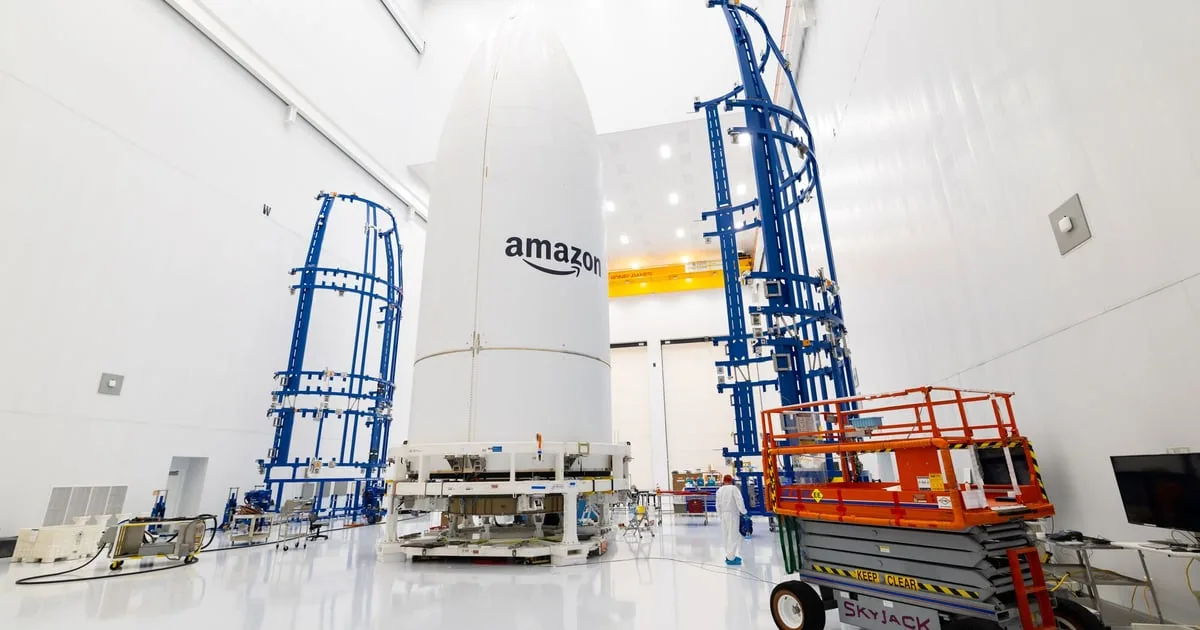
NBN’s Kuiper Deal Sets Up A New Satellite Broadband Phase In Australia
Telco & Connectivity

NBN’s Kuiper Deal Sets Up A New Satellite Broadband Phase In Australia

NBN has agreed with Amazon to sell Project Kuiper satellite broadband to more than 300,000 remote Australian customers. The plan would eventually replace NBN’s geostationary Sky Muster service while keeping those satellites running until around 2032. The main test is whether Amazon can scale Kuiper launches and ground infrastructure quickly enough to support a national broadband role.

Qatar Funds Turksat Satellite As 50Gbps Capacity Stays At Turkish Orbital Slot
Telco & Connectivity

Qatar Funds Turksat Satellite As 50Gbps Capacity Stays At Turkish Orbital Slot

Turksat and Qatar's Es'hailSat signed a satellite partnership funded by Qatar, with Turkey keeping the 50 degrees east orbital and frequency rights while the project leaves cost, launch timing and customers undisclosed.

GCI Turns Starlink Into a Backup Path for Remote Alaska Networks
Telco & Connectivity

GCI Turns Starlink Into a Backup Path for Remote Alaska Networks

GCI plans to use Starlink dedicated service with bonded gateways as backup connectivity for Alaskan hubs including Bethel, Sitka, Kotzebue and Dillingham, adding a satellite path behind existing microwave and fiber links.

Amazon Leo FCC Extension Keeps Starlink Satellite Rivalry Alive
Telco & Connectivity

Amazon Leo FCC Extension Keeps Starlink Satellite Rivalry Alive

The FCC gave Amazon Leo a 24-month extension for its interim LEO satellite deployment milestone, preserving a path toward a mid-2026 service launch while keeping the July 30, 2029 full-buildout deadline in place.

Keep Reading

More Stories

Latest
Meta Faces Backlash Over AI Images From Public Instagram PhotosCapital & PolicyJul 9, 2026Meta Faces Backlash Over AI Images From Public Instagram PhotosMeta is facing criticism after BBC reported that Muse Image can generate AI pictures using public Instagram profile photos for US users. Meta said public-account holders can opt out, while campaigners warned that the setting is separate from normal account privacy controls.Telstra Outage Stops 300 Triple Zero Calls In AustraliaTelco & ConnectivityJul 9, 2026Telstra Outage Stops 300 Triple Zero Calls In AustraliaA Telstra outage in Australia disrupted mobile voice and data services and stopped 300 triple zero emergency calls, according to Light Reading. Telstra said just under 90% of calls and data services had been restored after 12 hours, but the report did not include total affected users, the full systems involved or any new redundancy plan.Rapidus Targets 2027 2nm Fab Ramp Without Volume CustomerChips & SemiconductorsJul 9, 2026Rapidus Targets 2027 2nm Fab Ramp Without Volume CustomerRapidus has EUV equipment running at its Chitose fab and plans 2nm mass production in 2027, but Tom's Hardware reported that the Japanese chipmaker still lacks a committed high-volume customer.Sony Wins OCC Conditional Trust Charter For Stablecoin UnitFintech & Digital PaymentsJul 9, 2026Sony Wins OCC Conditional Trust Charter For Stablecoin UnitSony disclosed that the OCC has conditionally approved a U.S. national trust bank for Connectia Trust, a Sony Financial Group subsidiary that would issue and manage dollar-denominated stablecoins. Sony said the unit will be capitalised at $40 million, while trade groups and consumer advocates objected to the charter path.Mastercard Says 77% Of Saudi SMEs Accept Online PaymentsFintech & Digital PaymentsJul 8, 2026Mastercard Says 77% Of Saudi SMEs Accept Online PaymentsMastercard research says 75% of Saudi SME leaders remain confident despite a fall from a 92% benchmark, while 77% accept online payments and the Saudi sample size is not disclosed.Naver And KAI Sign Defence AI MOU Without Weapons-Control TimelineAIJul 8, 2026Naver And KAI Sign Defence AI MOU Without Weapons-Control TimelineNaver, Naver Cloud and KAI signed a defence AI MOU for sovereign models and physical AI combat platforms, but the companies did not disclose budget, deployment timing, test results or weapons-control approvals.Elisa Claims AI Automation Cut Network Incidents By More Than 80%Telco & ConnectivityJul 8, 2026Elisa Claims AI Automation Cut Network Incidents By More Than 80%RCR Wireless News reported that Elisa says AI-powered automation has reduced customer-impacting network incidents by more than 80% and pushed preventive actions to 99%, while the operator still has not deployed Open RAN.AI Times Says Infrastructure Captures 82% Of Generative AI ValueCloud & Data CentersJul 8, 2026AI Times Says Infrastructure Captures 82% Of Generative AI ValueAI Times Korea cited Exponential View data showing 82% of measured AI-economy value going to cloud, GPU and inference infrastructure in Q1 2026, while foundation-model companies accounted for 11% and applications 7%.Klarna Seeks U.S. Industrial Bank Charter As Partner-Bank Model Faces ReviewFintech & Digital PaymentsJul 8, 2026Klarna Seeks U.S. Industrial Bank Charter As Partner-Bank Model Faces ReviewBanking Dive reported that Klarna applied for a U.S. industrial bank charter after the company said it had extended $91.3 billion in credit to U.S. consumers; the application still needs FDIC and Utah approval.SambaNova Raises $1 Billion For AI Inference Hardware Without IPO TimingChips & SemiconductorsJul 8, 2026SambaNova Raises $1 Billion For AI Inference Hardware Without IPO TimingTechCrunch reported that SambaNova Systems raised $1 billion at an $11 billion valuation, named JPMorganChase as an inference-infrastructure partner and did not give IPO timing or SN50 customer shipment dates beyond the second half of 2026.FuriosaAI Starts RNGD Accelerator Deployment At Equinix Lisbon DatacenterChips & SemiconductorsJul 8, 2026FuriosaAI Starts RNGD Accelerator Deployment At Equinix Lisbon DatacenterFuriosaAI has begun deploying its RNGD AI accelerators at Equinix’s LS2 datacenter in Lisbon as the South Korean chip startup looks for European sovereign AI demand. The company describes 48 GB of HBM3, 1.5 TB/s memory bandwidth and 512 teraFLOPS of dense FP8 performance per card, but its Broadcom-linked next-generation accelerator still depends on HBM4 and HBM4e timing.Kraken Targets European Banking Licence In 10-Year Licence PushFintech & Digital PaymentsJul 8, 2026Kraken Targets European Banking Licence In 10-Year Licence PushKraken is pursuing a full European banking licence with Lithuania as the focus jurisdiction, according to a person familiar with the plans. CEO Arjun Sethi said Kraken’s parent company aims to acquire licences over the next 10 years, while Kraken declined to comment and Lithuania’s central bank said licensing processes are confidential.