Naver And KAI Sign Defence AI MOU Without Weapons-Control Timeline
Naver, Naver Cloud and KAI signed a defence AI MOU for sovereign models and physical AI combat platforms, but the companies did not disclose budget, deployment timing, test results or weapons-control approvals.
Naver And KAI Sign Defence AI MOU
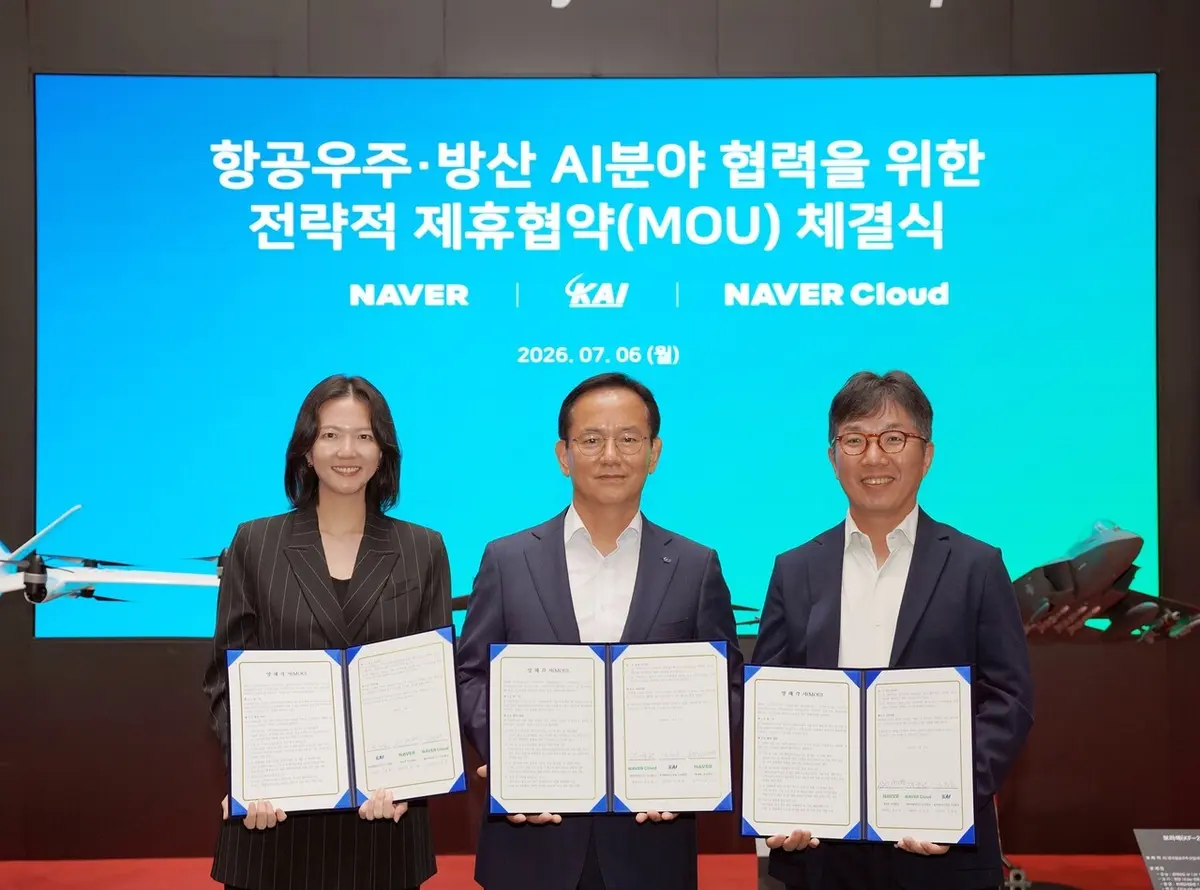
Naver, Naver Cloud and Korea Aerospace Industries have signed a memorandum of understanding to develop a defence-focused sovereign AI model, moving the Korean internet and cloud group into a military AI project where deployment proof is still absent.
The Naver KAI defence AI agreement covers a foundation model for defence and a physical AI combat-platform plan, but the companies did not disclose a budget, procurement order, deployment date, testing timetable or weapons-control approval process.
The companies said the work will combine Team Naver's AI capability with KAI's aerospace and defence systems-integration experience.
The cooperation is based on domestic Korean technology and is framed around a model tailored to Korea's defence and security environment.
Naver chief executive Choi Soo-yeon, Naver Cloud chief executive Kim Yu-won and KAI chief executive Kim Jong-chul were identified with the agreement.
The companies described the goal as reducing security risk and strengthening defence-technology independence through sovereign AI infrastructure.
The Defence Foundation Model Targets Physical AI
The agreement is not only a software-supply arrangement.
Naver and KAI said the project moves from military decision support into physical AI.
The disclosed work includes weapon autonomy, unmanned systems and hardware for operating weapon systems such as fighter aircraft.
The companies plan to work across model development and commercialisation.
AI Times Korea said the three companies will develop a foundation model optimised for defence and then build a wider cooperation structure around the technology.
Naver also plans to apply the work to KAI's next-generation air combat system, known as NACS.
AI Times Korea described unmanned aerial vehicle platforms, AI pilots and manned-unmanned teaming, or MUM-T, as areas where the partners want to embed AI into future aerospace systems.
South Korea Is Pursuing Domain-Specific Defence Models
AI Times Korea reported that the South Korean ministry is developing sector-focused foundation models for defence and related industries.
The ministry has disclosed plans for weapon-system autonomy, the article said.
The public record still lacks specific information on whether foundation models will be applied to weapons or control systems.
The strongest claims in the agreement concern military autonomy and future combat platforms rather than a deployed commercial AI service.
Naver's sovereign AI language also puts the project in the policy area of domestic control over models, infrastructure and sensitive data.
AI Times Korea did not provide technical architecture, model parameters, training data controls, data-residency commitments or a safety evaluation process for defence use.
Testing And Weapons-Control Approvals Are Still Missing
The agreement gives Naver and KAI a formal cooperation route for defence AI, but it remains at MOU stage.
AI Times Korea did not name a defence customer order, a signed procurement programme, a live deployment, a production platform or measured test results.
The companies also did not disclose budget, deployment date, weapons-control approval process, safety certification, benchmark results, customer contracts or a commercial launch schedule for the defence AI model and physical AI combat-platform work.
No production aircraft, live military unit or operational trial was named.
Summary version for Medium
Naver And KAI Sign Defence AI MOU Without Weapons-Control Timeline
What the announcement means beyond the headline
Quick Summary: Naver, Naver Cloud and KAI signed a defence AI MOU for sovereign models and physical AI combat platforms, but the companies did not disclose budget, deployment timing, test results or weapons-control approvals.
Naver And KAI Sign Defence AI MOU
Naver, Naver Cloud and Korea Aerospace Industries have signed a memorandum of understanding to develop a defence-focused sovereign AI model, moving the Korean internet and cloud group into a military AI project where deployment proof is still absent. The Naver KAI defence AI agreement covers a foundation model for defence and a physical AI combat-platform plan, but the companies did not disclose a budget, procurement order, deployment date, testing timetable or weapons-control approval process.
The Defence Foundation Model Targets Physical AI
The agreement is not only a software-supply arrangement.
- Point 1: The central topic is ai, with the announcement framed around concrete operating detail.
- Point 2: Naver and KAI said the project moves from military decision support into physical AI.
The important shift is not the AI label, but the operating boundary it creates for teams.
South Korea Is Pursuing Domain-Specific Defence Models
AI Times Korea reported that the South Korean ministry is developing sector-focused foundation models for defence and related industries. The ministry has disclosed plans for weapon-system autonomy, the article said.
Read the Full Deep Dive
Want to explore the complete technical analysis, enterprise trade-offs, and detailed metrics?
Read the full article originally published at SendTech Times