Klarna Seeks U.S. Industrial Bank Charter As Partner-Bank Model Faces Review
Banking Dive reported that Klarna applied for a U.S. industrial bank charter after the company said it had extended $91.3 billion in credit to U.S. consumers; the application still needs FDIC and Utah approval.
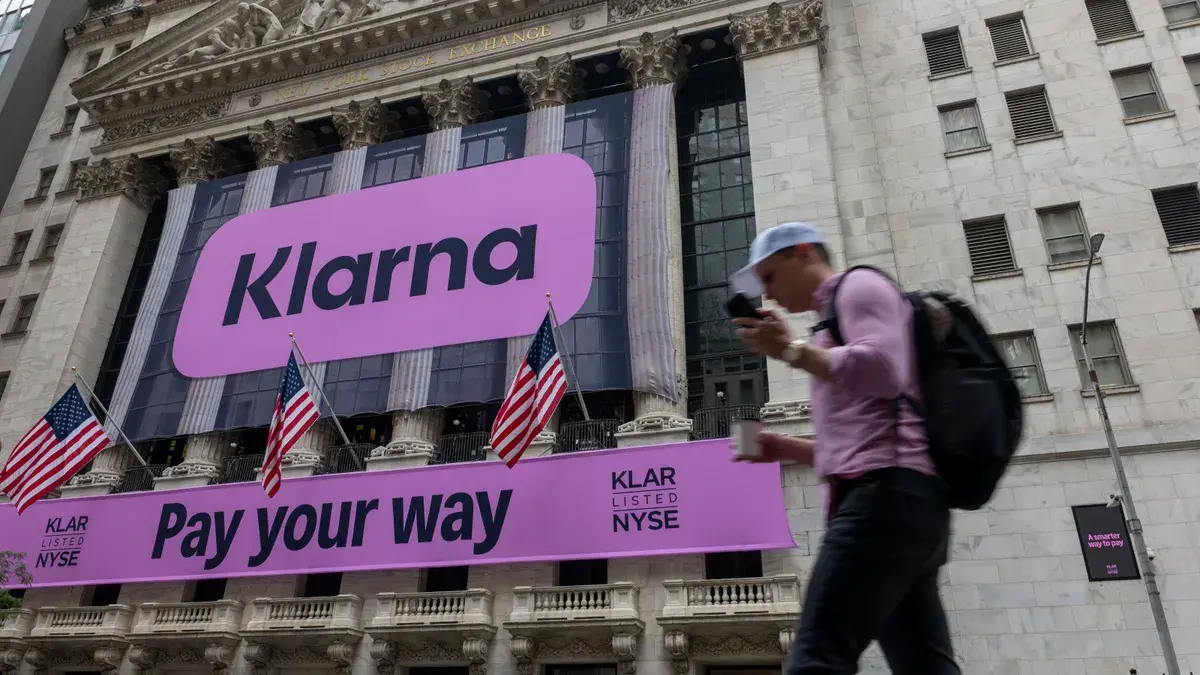
Klarna Applied For A U.S. Industrial Bank Charter
Klarna's U.S. industrial bank charter application would move part of the buy now, pay later company's American lending model inside its own regulated bank if federal and Utah authorities approve it.
Banking Dive reported that Klarna applied on Monday with the Federal Deposit Insurance Corp. and Utah's Department of Financial Institutions for a charter to run an industrial bank.
Banking Dive reported that Klarna already operates as a bank in Europe under a licence it has held since 2017, while its U.S. services have relied on partner financial institutions, often WebBank.
Banking Dive reported that a Klarna spokesperson declined to comment on other bank partners or intermediaries.
Klarna Says A Licence Would Bring U.S. Banking In-House
Klarna said the licence would let it bring more financial services under its own control.
Chief executive Sebastian Siemiatkowski said the company's own banking licence was a natural next step that would give customers tools to borrow responsibly and build financial confidence, while bringing more competition and choice to consumers and merchants.
Klarna is still headquartered in Stockholm, but its U.S. push is now central to the company.
Banking Dive reported that Klarna registered in London for its initial public stock offering last year.
The same article cited a company spokesperson saying the United States leads Klarna's revenue base and investor exposure.
The company release cited by Banking Dive said Klarna has extended $91.3 billion in credit to millions of U.S. consumers since 2019, with hundreds of thousands of merchants using its services.
Klarna's website lists about 119 million active consumers worldwide and about 1 million merchants, including Sephora, H&M and Adidas, across 26 countries.
ILC Charters Face Federal Reserve Oversight Debate
The charter route is politically sensitive because industrial loan companies can be owned by commercial firms without the same Federal Reserve holding-company oversight that applies to many banks.
Banking Dive reported that some Republican and Democratic lawmakers, backed by the banking industry, argue that ILCs can avoid the definition of a bank under the Bank Holding Company Act as long as they do not offer demand deposit accounts.
Senators John Kennedy and Andy Kim introduced a bill in January to close what they called the shadow banking loophole.
Banking Dive reported that the measure remains before the Senate Banking Committee.
The Independent Community Bankers of America said in May that removing the Fed from ILC supervision leaves a safety-and-soundness gap and adds systemic risk.
Regulators have also approved several recent ILC applications.
Banking Dive reported that Stellantis received approval in May to launch an ILC, Ford and GM received green lights in January, and Edward Jones followed in February.
FDIC Chair Travis Hill last year described the ILC charter as one way to increase the creation of new banks.
Klarna Has Not Disclosed Approval Timing Or Product Launch Dates
If the charter is approved with FDIC insurance, Banking Dive reported that Klarna's bank would operate as a subsidiary and would be headed by Gary Harding, formerly chief executive of Milestone Bank and Prime Alliance Bank.
Klarna would still need the approval process to turn the application into an operating bank.
Klarna did not disclose an FDIC decision timetable, Utah approval conditions, deposit product launch dates or how much partner-bank volume would move inside the proposed industrial bank.
Summary version for Medium
Klarna Seeks U.S. Industrial Bank Charter As Partner-Bank Model Faces Review
What the move signals for regulated finance and digital payments
Quick Summary: Banking Dive reported that Klarna applied for a U.S. industrial bank charter after the company said it had extended $91.3 billion in credit to U.S.
Klarna Applied For A U.S. Industrial Bank Charter
Klarna's U.S. industrial bank charter application would move part of the buy now, pay later company's American lending model inside its own regulated bank if federal and Utah authorities approve it.
Klarna Says A Licence Would Bring U.S. Banking In-House
Klarna said the licence would let it bring more financial services under its own control.
- Point 1: The central topic is fintech-digital-payments, with the announcement framed around concrete operating detail.
- Point 2: Chief executive Sebastian Siemiatkowski said the company's own banking licence was a natural next step that would give customers tools to borrow responsibly and build financial...
The headline matters only if the approval path, compliance burden and operating limits line up.
ILC Charters Face Federal Reserve Oversight Debate
The charter route is politically sensitive because industrial loan companies can be owned by commercial firms without the same Federal Reserve holding-company oversight that applies to many banks. Banking Dive reported that some Republican and Democratic lawmakers, backed by the banking industry, argue that ILCs can avoid the definition of a bank under the Bank Holding Company Act as long as they do not offer demand deposit accounts.
Read the Full Deep Dive
Want to explore the complete technical analysis, enterprise trade-offs, and detailed metrics?
Read the full article originally published at SendTech Times