Taktile Raises $110 Million As Banks Test AI Agent Oversight
Taktile raised $110 million for financial-services AI agents, according to PYMNTS. The company cited banking, KYB, fraud and claims workflows, but the source did not name bank customers, valuation, benchmark methodology or regulator-reviewed deployment evidence.
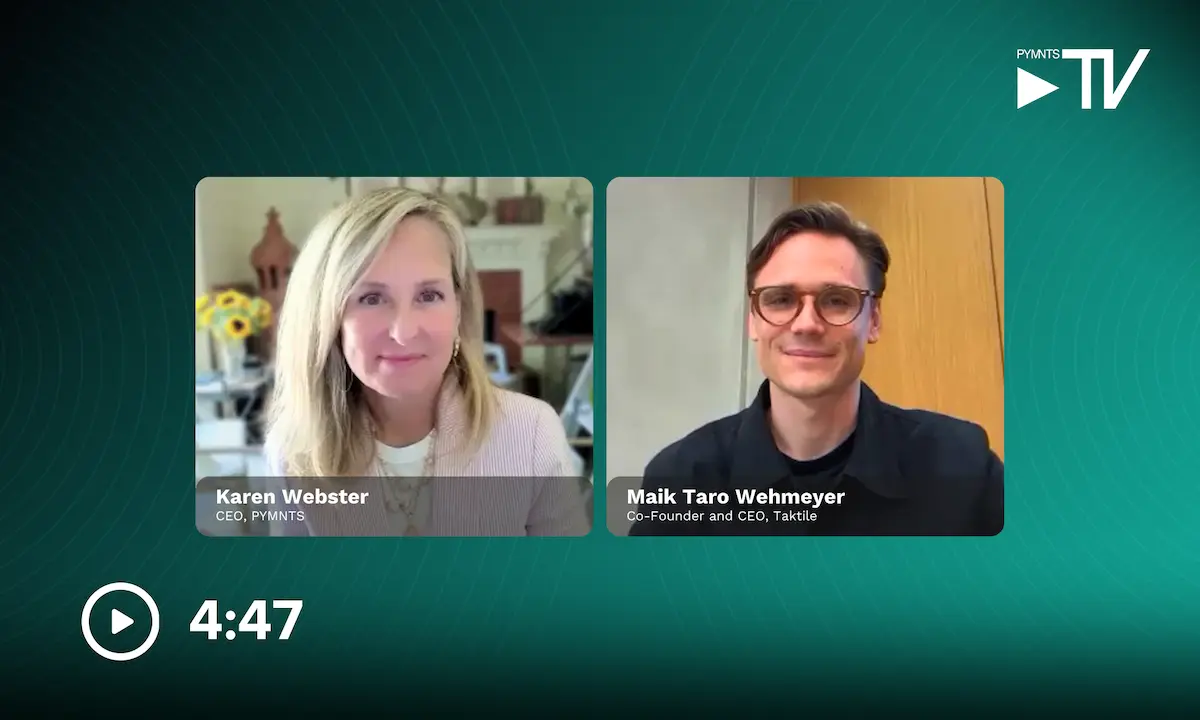
Regulated banks are being asked to trust Taktile AI agents in lending, KYB, fraud and claims workflows after PYMNTS said the company raised $110 million.
The banking AI agent funding round, led by Goldman Sachs Alternatives, gives the decisioning platform more capital as banks test whether AI can support account opening, lending, know-your-business checks, fraud work and claims decisions.
Taktile co-founder and CEO Maik Taro Wehmeyer told PYMNTS that financial institutions are moving from experiments toward production, while many banks still hesitate to give AI access to core systems.
Taktile Raises $110 Million For Financial Decisioning AI
Goldman Sachs Alternatives led the round, according to PYMNTS.
Taktile positions its platform for regulated financial institutions that want AI agents to help complete complex operational workflows while keeping oversight in place.
Wehmeyer described 2026 as the year AI comes to financial services.
His argument was not that banks are ready to remove human control from every decision.
He said models are becoming strong enough for mission-critical financial workflows, while banks, regulators and executives still need proof that those systems can be trusted.
PYMNTS presented Taktile as a company trying to move AI beyond document summaries and employee assistance.
Its examples included commercial lending, insurance claims management and business underwriting.
Those are regulated workflows where speed, explainability and accountability matter because decisions can affect credit, claims payments and customer access.
Banks Are Testing Agents For Lending, KYB, Fraud And Claims
PYMNTS reported that Wehmeyer sees conversational AI becoming a primary interface for opening accounts, applying for loans and interacting with financial institutions.
He also said thousands of banks remain cautious, even as a smaller group has moved into production.
PYMNTS cited potential workflow changes rather than audited customer outcomes.
In Wehmeyer's examples, lenders could compress small-business loan decisions from a multi-week manual process to minutes, and insurers could shorten claims reviews by using drone imagery with AI-assisted damage assessment.
Those examples remain vendor-side claims from the interview.
PYMNTS did not include named bank customers, production volumes, approval rates, default outcomes, claims accuracy, fraud-loss reductions or regulator-reviewed performance results.
That keeps the near-term story centred on deployment confidence rather than proven industry-wide return.
Community Banks May Move Faster After Cloud Modernisation
PYMNTS said Taktile has seen AI readiness vary by institution rather than size.
Some large banks remain hesitant, while some community banks and credit unions have adopted AI more aggressively after wider cloud modernisation work.
PYMNTS used a sharp size comparison to explain the competitive pressure.
It said a $2 billion-asset credit union could use decisioning tools that were previously more common at institutions with far larger technical teams, while a $2 trillion-asset bank can also compete on faster loan decisions.
Smaller financial institutions want the decision speed of larger rivals without building large internal data-science teams.
PYMNTS quoted Wehmeyer as saying many people confuse AI transformation with cost savings, while the larger advantage is compressing decision times.
Taktile Labs Benchmarks Are Meant To Support Trust
Taktile has created Taktile Labs to benchmark AI performance against human experts across financial use cases, according to PYMNTS.
The source said the lab publishes ongoing data on model performance across underwriting, KYB, fraud and claims.
The company also encourages customers to run AI in shadow mode.
In that setup, institutions can compare AI recommendations with existing human workflows before giving systems operational authority.
Regulated lenders and insurers still have to explain decisions to auditors, executives and supervisors.
PYMNTS did not provide the benchmark methodology, independent validation, regulator approval, or customer-level results behind those tests.
It also did not say which banks are using Taktile agents in production or how many decisions the platform has processed.
Taktile has raised $110 million, but named customers, valuation, contract terms, audited benchmark results and regulator-reviewed deployment evidence remain undisclosed.
Summary version for Medium
Taktile Raises $110 Million As Banks Test AI Agent Oversight
What the move signals for regulated finance and digital payments
Quick Summary: Taktile raised $110 million for financial-services AI agents, according to PYMNTS. The company cited banking, KYB, fraud and claims workflows, but the source did not name bank customers, valuation, benchmark methodology or regulator-reviewed deployment evidence.
Taktile Raises $110 Million For Financial Decisioning AI
Goldman Sachs Alternatives led the round, according to PYMNTS. Taktile positions its platform for regulated financial institutions that want AI agents to help complete complex operational workflows while keeping oversight in place.
Banks Are Testing Agents For Lending, KYB, Fraud And Claims
PYMNTS reported that Wehmeyer sees conversational AI becoming a primary interface for opening accounts, applying for loans and interacting with financial institutions.
- Point 1: The central topic is fintech-digital-payments, with the announcement framed around concrete operating detail.
- Point 2: He also said thousands of banks remain cautious, even as a smaller group has moved into production.
The important shift is not the AI label, but the operating boundary it creates for teams.
Community Banks May Move Faster After Cloud Modernisation
PYMNTS said Taktile has seen AI readiness vary by institution rather than size. Some large banks remain hesitant, while some community banks and credit unions have adopted AI more aggressively after wider cloud modernisation work.
Read the Full Deep Dive
Want to explore the complete technical analysis, enterprise trade-offs, and detailed metrics?
Read the full article originally published at SendTech Times