Micron 9650 SSD Promises 28GB/Second Reads Before PCIe Gen6 Servers Ship
Micron’s 9650 enterprise SSD is rated for up to 28GB/second reads and 5.5M random-read IOPS, with liquid cooling expected for the E1.S form factor. Public PCIe Gen6 server platforms were not yet available for a Computex demo.
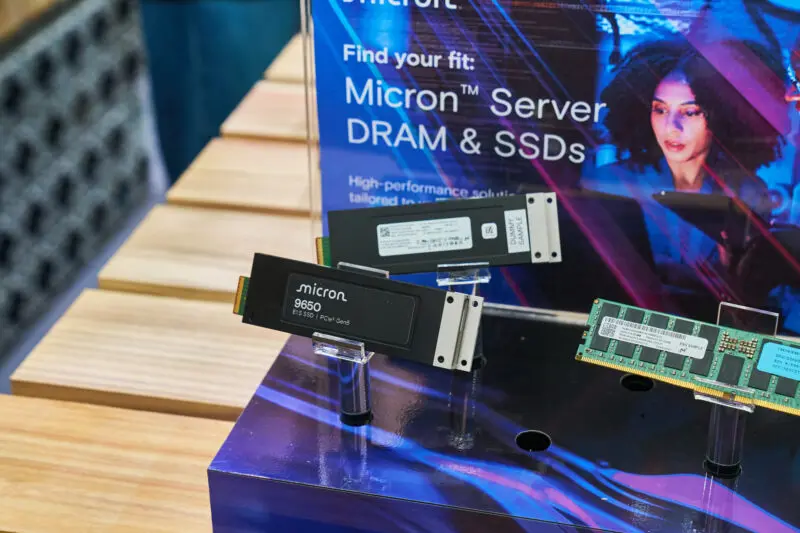
Micron’s 9650 enterprise SSD is being pitched at AI inference and training systems with up to 28GB/second sequential reads, but the same specialist hardware coverage says public PCIe Gen6 server platforms are not yet ready for a live demo.
Micron has begun mass production of the 9650 SSDs, according to the company, yet shipping and publicly suitable PCIe Gen6 server platforms were not available at Computex.
Micron 9650 Targets 28GB/Second PCIe Gen6 Reads
Micron said the 9650 enterprise SSD is rated for sequential read speeds of up to 28GB/second.
The 28GB/second figure remains a Micron product rating, and the article did not include an independent benchmark for the PCIe Gen6 x4 saturation claim.
Micron also said the drive is rated for up to 5.5M random-read IOPS.
Micron listed lower write-side figures, with the Gen6 drive rated at 14GB/second sequential writes and 900K random-write IOPS.
Those Micron figures describe a read-optimised product rather than a drive balanced across reads and writes.
The performance comparison is also company-owned.
Micron’s read ratings are upwards of 2x its Gen5 9550 drives, but the coverage does not include independent benchmark runs, customer validation or server-level application tests.
Liquid Cooling Enters Micron’s Enterprise SSD Line
The smallest 9650 form factor, the ultra-compact E1.S configuration, is described as the first Micron SSD where direct liquid cooling is effectively required rather than merely supported.
Micron describes the configuration as optimised for liquid cooling.
Micron said its performance figures assume 25-Watt power consumption for the drive.
The Micron-listed 25-Watt assumption puts the 9650 in a thermal class where the article described direct liquid cooling as effectively required for the E1.S configuration.
ServeTheHome reported that the drive uses Micron’s new PCIe Gen6 controller and ninth-generation G9 TLC NAND running at 3600MT/sec.
ServeTheHome wrote that G9 is already used in other Micron products, so the controller is the main source of the 9650 performance change.
AI Servers Still Need PCIe Gen6 Platforms
ServeTheHome reported that Micron is aiming the first generation of Gen6 drives at AI inference and training systems.
The article described the 9650 as part of AI compute infrastructure, while noting that public PCIe Gen6 server platforms were not available for a Computex demo.
The deployment timing is less complete.
A public demo had to wait beyond Computex because shipping server platforms with PCIe Gen6 connectivity were not available at the event.
ServeTheHome pointed to NVIDIA and AMD server-platform launches focused on 2027, while Intel Xeon 7 Diamond Rapids is described as following a different path.
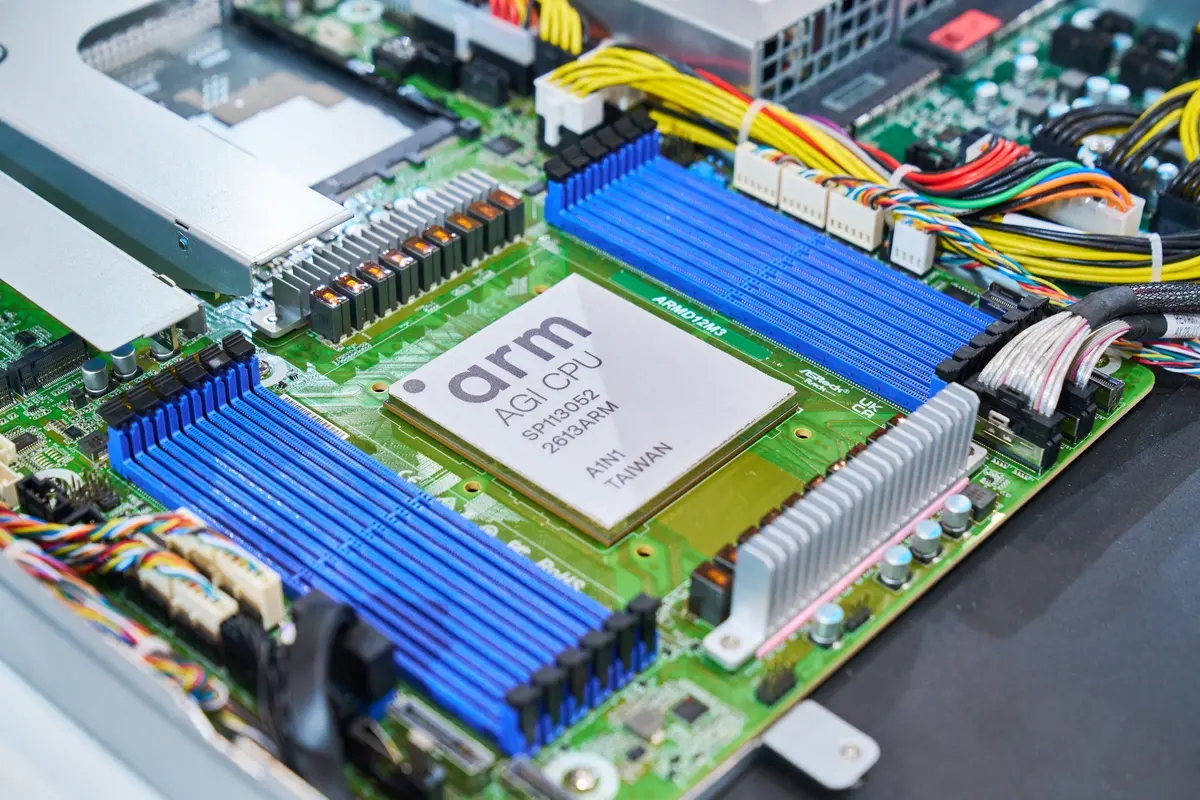
It also names hyperscale designs and Arm AGI CPU designs as expected in the next few quarters.
Capacity Claims Depend On Workload Class
Micron says mass production of the 9650 SSDs has already begun.
The read-optimised PRO drives are listed at capacities up to 30.72TB, while mixed-workload MAX drives are listed at capacities up to 25.6TB.
Those capacity and performance claims remain product ratings.
ServeTheHome did not name first customers, shipping server platforms, deployment dates, independent benchmarks or purchase commitments for the 9650.
Summary version for Medium
Micron 9650 SSD Promises 28GB/Second Reads Before PCIe Gen6 Servers Ship
Why this hardware shift matters for AI and compute buyers
Quick Summary: Micron’s 9650 enterprise SSD is rated for up to 28GB/second reads and 5.5M random-read IOPS, with liquid cooling expected for the E1.S form factor. Public PCIe Gen6 server platforms were not yet available for a Computex demo.
Micron 9650 Targets 28GB/Second PCIe Gen6 Reads
Micron said the 9650 enterprise SSD is rated for sequential read speeds of up to 28GB/second. The 28GB/second figure remains a Micron product rating, and the article did not include an independent benchmark for the PCIe Gen6 x4 saturation claim.
Liquid Cooling Enters Micron’s Enterprise SSD Line
The smallest 9650 form factor, the ultra-compact E1.S configuration, is described as the first Micron SSD where direct liquid cooling is effectively required rather than merely supported.
- Point 1: The central topic is chips-semiconductors, with the announcement framed around concrete operating detail.
- Point 2: Micron describes the configuration as optimised for liquid cooling.
The important shift is not the AI label, but the operating boundary it creates for teams.
AI Servers Still Need PCIe Gen6 Platforms
ServeTheHome reported that Micron is aiming the first generation of Gen6 drives at AI inference and training systems. The article described the 9650 as part of AI compute infrastructure, while noting that public PCIe Gen6 server platforms were not available for a Computex demo.
Read the Full Deep Dive
Want to explore the complete technical analysis, enterprise trade-offs, and detailed metrics?
Read the full article originally published at SendTech Times