iPhone 18 Pro Leak Points To Qualcomm Modem Split And A20 Packaging Shift
AppleInsider says prototype-stage Tata files point to a regional modem split for Apple's next Pro iPhone, with Qualcomm hardware in the United States model, Apple's modem elsewhere, and separate A20 Pro packaging and camera-sensor clues.
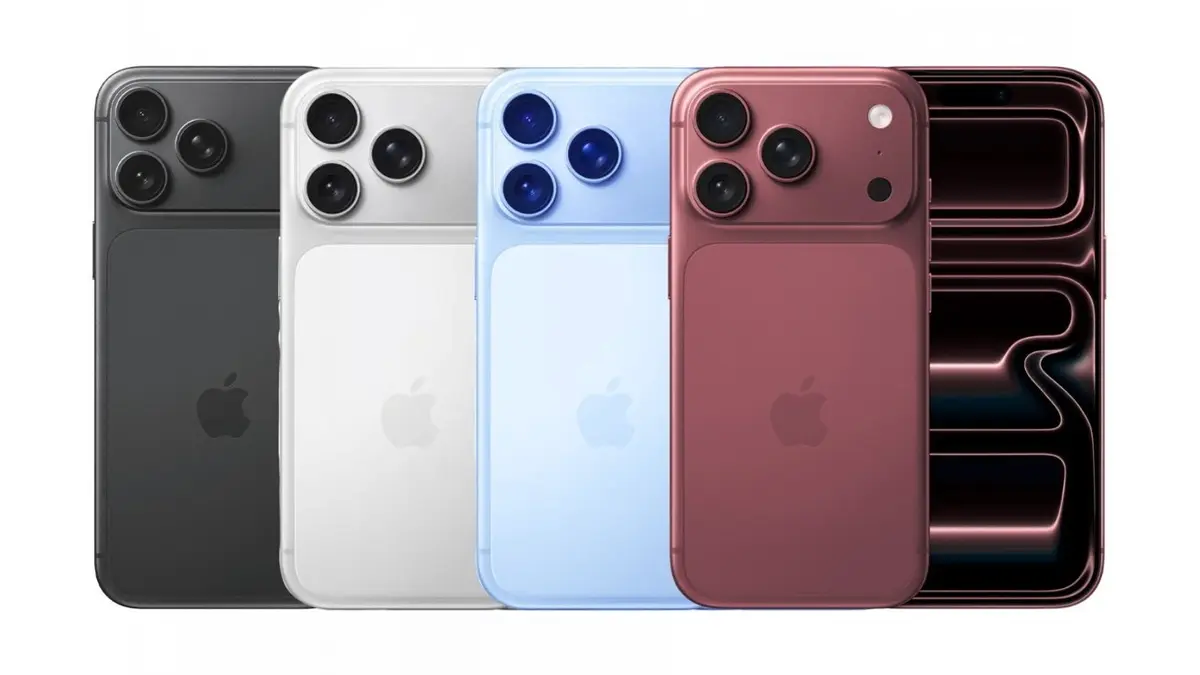
Leak Points To A Split Modem Plan
Prototype-stage files described by AppleInsider suggest Apple could split modem sourcing by region in the next Pro iPhone, keeping Qualcomm hardware in the United States while using its own modem elsewhere.
AppleInsider said the documents came from more than 630GB of Tata files taken in a cyberattack and included iPhone 18 Pro and iPhone 18 Pro Max material.
The regional split is tied to mmWave support in the United States version.
The bill of materials cited Qualcomm parts including SDX80M, SDR875, QDM8771, QDM8720, PMK75, PMX75 and QET7100A for the model Apple plans to sell in the United States.
The non-mmWave version points instead to Apple's C2 modem.
Apple's current C1 and C1X modems do not support 5G mmWave, and the leaked information indicates the C2 may keep that limitation.
The leaked parts list leaves Qualcomm hardware attached to the United States model where mmWave support remains listed.
Outside the United States, the same material indicates Apple can use the C2 modem where mmWave is not required.
If the prototype plan reaches production, the modem split would add geography to Apple's hardware differences instead of separating modem choices only by model.
Board Numbers Separate The Variants
The same Tata material lists two iPhone 18 Pro logic-board paths.
AppleInsider said Tata schematics mark board 820-04340-06 with a mmWave connector and Qualcomm modem hardware, while identifying board 820-04305-06 as the non-mmWave version.
The documents also point to a possible SIM change in China.
A region configuration list for the iPhone 18 Pro Max says "No more dual PSIM starting in V64 P2" and refers to eSIM and physical SIM support for a configuration labeled CN.
The available details do not confirm whether that configuration will survive into the final commercial product.
The China item is separate from the modem split.
Existing iPhones sold in mainland China do not use eSIM, according to the extracted source.
If the listed configuration remains in the shipping plan, it would change the SIM setup while the United States model keeps a Qualcomm path for mmWave.
A20 Pro Packaging Changes The Hardware Layout
The leaked files also describe the A20 Pro chip, codenamed Borneo, and point to WMCM-style packaging.
WMCM stands for Wafer-Level Multi-Chip Module.
The leaked material contrasts that with Apple's standard InFO-PoP packaging, where memory is added to the chip package rather than placed as a separate external component.
Under a WMCM approach, Apple could place the application processor and memory side by side and potentially separate CPU, GPU and Neural Engine dies.
That would give Apple more flexibility in chip configurations than a single package layout with fewer memory combinations.
The board schematics also place the system-on-chip closer to the outer edge of the dual-layer board, while storage sits deeper between board layers.
The documents do not say whether that placement improves or worsens thermal performance or repairability.
Camera Data Still Needs Final Confirmation
Camera diagnostic data adds another hardware signal.
AppleInsider said diagnostic data comparing iPhone 17 Pro and iPhone 18 Pro changes the Wide sensor identifier, which points to a main rear camera change.
The extracted source identifies the iPhone 17 Pro wide camera as Sony IMX-903 and says the next Pro model may use a new custom Sony sensor.
AppleInsider also cited earlier variable-aperture rumours from October 2025, February 2026 and April 2026.
A variable aperture could reduce reliance on computational photography for bokeh effects if Apple uses it, but the Tata material does not confirm final camera behaviour.
The documents are still prototype-stage material, not final product documentation.
The available material does not include final Apple confirmation, shipping dates, regional pricing, repairability findings, thermal results or production specifications.
Summary version for Medium
iPhone 18 Pro Leak Points To Qualcomm Modem Split And A20 Packaging Shift
Why this hardware shift matters for AI and compute buyers
Quick Summary: AppleInsider says prototype-stage Tata files point to a regional modem split for Apple's next Pro iPhone, with Qualcomm hardware in the United States model, Apple's modem elsewhere, and separate A20 Pro packaging and camera-sensor clues.
Leak Points To A Split Modem Plan
Prototype-stage files described by AppleInsider suggest Apple could split modem sourcing by region in the next Pro iPhone, keeping Qualcomm hardware in the United States while using its own modem elsewhere. AppleInsider said the documents came from more than 630GB of Tata files taken in a cyberattack and included iPhone 18 Pro and iPhone 18 Pro Max material.
Board Numbers Separate The Variants
The same Tata material lists two iPhone 18 Pro logic-board paths.
- Point 1: The central topic is chips-semiconductors, with the announcement framed around concrete operating detail.
- Point 2: AppleInsider said Tata schematics mark board 820-04340-06 with a mmWave connector and Qualcomm modem hardware, while identifying board 820-04305-06 as the non-mmWave version.
The useful takeaway is the operating constraint behind the announcement, not the announcement alone.
A20 Pro Packaging Changes The Hardware Layout
The leaked files also describe the A20 Pro chip, codenamed Borneo, and point to WMCM-style packaging. WMCM stands for Wafer-Level Multi-Chip Module.
Read the Full Deep Dive
Want to explore the complete technical analysis, enterprise trade-offs, and detailed metrics?
Read the full article originally published at SendTech Times