Rapidus Targets 2027 2nm Fab Ramp Without Volume Customer
Rapidus has EUV equipment running at its Chitose fab and plans 2nm mass production in 2027, but Tom's Hardware reported that the Japanese chipmaker still lacks a committed high-volume customer.
Rapidus Targets A 2027 2nm Ramp In Hokkaido
Rapidus is trying to return Japan to leading-edge chipmaking through a single Hokkaido fab, but the company still has not named a committed volume customer for its planned 2027 2nm ramp.
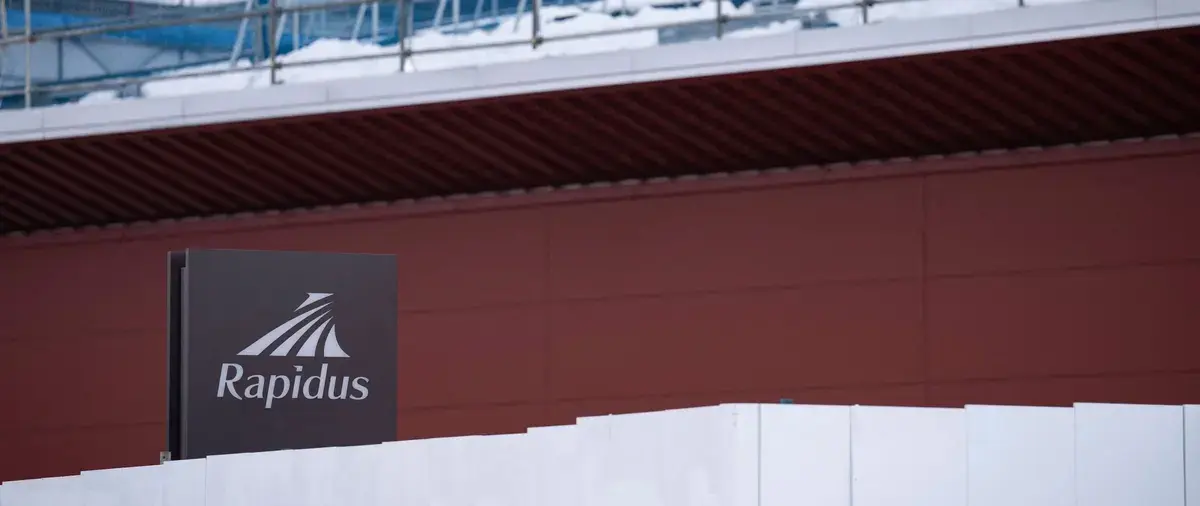
The Rapidus 2nm fab roadmap described by Tom's Hardware centres on the IIM-1 facility in Chitose, where the company has EUV equipment running, a gate-all-around prototype and government-backed capital, but not a signed high-volume order.
Tom's Hardware reported that Rapidus opened the IIM-1 pilot line in April 2025 after the cleanroom was completed in 2024.
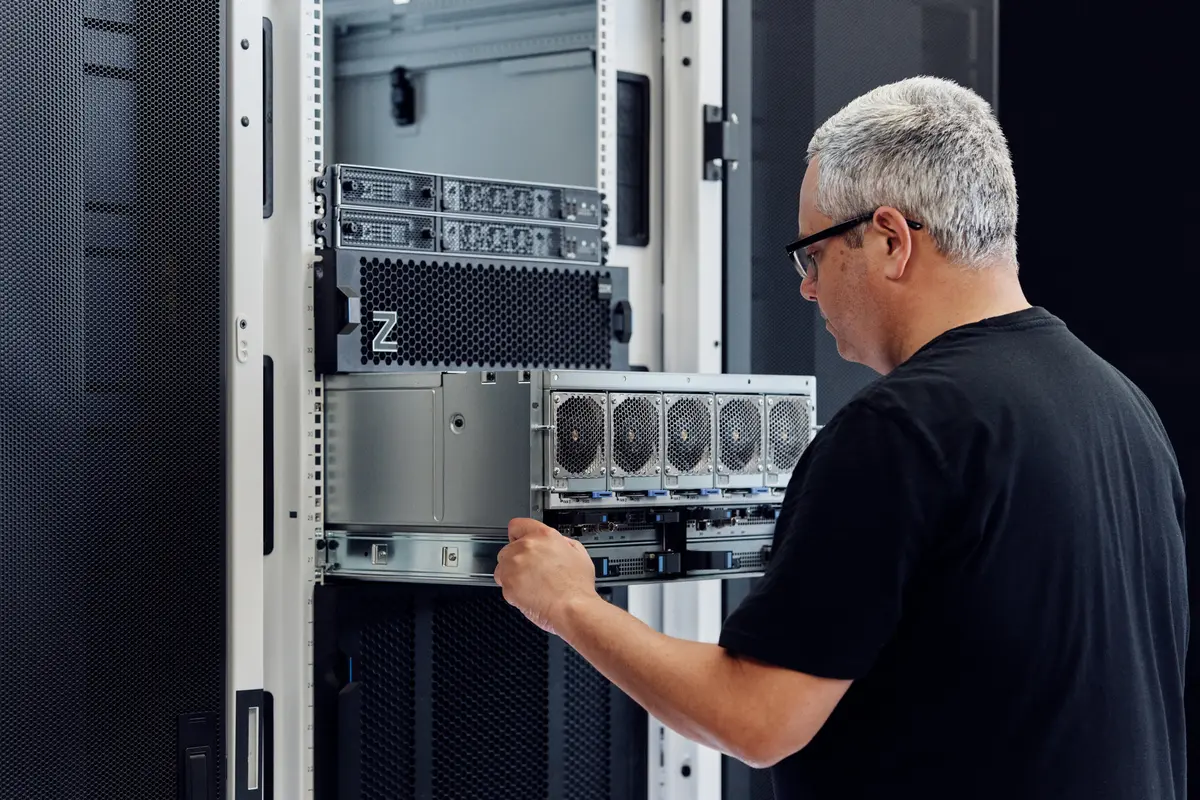
The report said ASML delivered a TWINSCAN NXE:3800E in December 2024, making it Japan's first mass-production-grade EUV system, and that the tool completed its first exposure on April 1, 2025.
The company is targeting mass production in the second half of fiscal 2027 and full-volume scaling in 2028, according to the business plan .
Tom's Hardware said the same plan describes a capacity ramp from about 6,000 wafer starts per month at the outset to about 25,000 within the first year.
IIM-1 Carries Japan's Leading-Edge Bet
The report said IIM-1 broke ground in September 2023 at Bibi in Chitose.
Tom's Hardware said the site gives Rapidus access to water for wafer cleaning, a cooler climate for fab operations and renewable-energy potential across wind, solar and hydro.
Local and prefectural authorities have organised around the project through a Hokkaido Valley initiative covering Tomakomai, Chitose and Ishikari.
Tom's Hardware described that cluster plan as part of Japan's effort to rebuild domestic semiconductor capacity around the northern fab.
Tom's Hardware reported that Rapidus' 2nm node is a gate-all-around nanosheet design derived from IBM's 2nm process announced in 2021, after a partnership signed in December 2022.
IBM was cited as saying more than 150 Rapidus engineers were dispatched to Albany across 2023 and 2024, with about 80 later returning to Chitose to transfer and tune the process.
Government Funding Gives Tokyo A Direct Stake
Tom's Hardware reported that Rapidus closed a ¥267.6 billion funding round in February.
It said the round included ¥100 billion from the Japanese government's Information-technology Promotion Agency, while 32 private companies supplied ¥167.6 billion.
The report said the state investment followed a 2025 subsidy-law revision that allowed government equity in Rapidus.
Tom's Hardware said Tokyo became the largest single shareholder and received a golden share with veto power over major decisions, including share transfers and technology partnerships.
It also said Japan's Ministry of Trade and Industry added about ¥1 trillion in support across fiscal 2026 and 2027, lifting planned government backing to about ¥2.9 trillion.
Tom's Hardware reported that Japan added a further ¥150 billion in equity in early June, taking Rapidus' combined capital and capital reserves to around ¥425 billion.
The report said the state shares are largely non-voting, leaving formal voting power near 11.5%, but convert to a roughly 60% controlling stake if performance deteriorates.
Customer Talks Have Not Become Volume Orders
Rapidus chief executive Atsuyoshi Koike said in February that more than 60 companies were discussing capacity with Rapidus and that about 10 had received preliminary price quotations, according to the report.
Tom's Hardware said names attached to those talks in TrendForce reporting include IBM and Canadian RISC-V accelerator startup Tenstorrent.
The signed design work is narrower than a foundry utilisation commitment.
The report said Tenstorrent's 2023 arrangement covered joint development of an edge-AI accelerator for the 2nm process through a project involving NEDO and the Leading-edge Semiconductor Technology Center.
Esperanto Technologies was listed separately as a RISC-V inference partner under a May 2024 cooperation memorandum with Rapidus.
Neither agreement was described as a committed high-volume order.
Tom's Hardware said Rapidus has not published a yield figure and that its public process claim extends to a 2nm prototype reaching expected electrical characteristics.
2nm Yield And Capacity Proof Are Still Missing
Japan is running a two-track semiconductor strategy.
Tom's Hardware reported that TSMC's JASM venture in Kumamoto began mass production in December 2024 on mature 12nm, 16nm, 22nm and 28nm nodes, while a second Kumamoto fab broke ground in 2025 and is targeted around 2028 after planned node upgrades to 4nm and then 3nm.
Tom's Hardware reported a longer-range schedule that places 1.4nm development in 2026, a later 1.4nm fab build in 2027 and an intended mass-production point around 2029.
It cited TrendForce and Nikkei figures saying total lifetime investment is expected to exceed ¥7 trillion, with about ¥5 trillion needed to reach stable 2nm production.
Tom's Hardware reported that Rapidus posted a ¥375 million loss for fiscal 2025 and total assets of ¥749.5 billion while still seeking about ¥1 trillion from private investors.
The report also said Rapidus is targeting operating profitability around fiscal 2030 and an IPO in fiscal 2031.
Rapidus has not disclosed a named committed volume customer, a public 2nm yield figure, signed wafer allocation, confirmed utilisation for the 25,000-wafer monthly ramp, or proof that the 2027 mass-production timetable has customer-backed demand.
Summary version for Medium
Rapidus Targets 2027 2nm Fab Ramp Without Volume Customer
Why this hardware shift matters for AI and compute buyers
Quick Summary: Rapidus has EUV equipment running at its Chitose fab and plans 2nm mass production in 2027, but Tom's Hardware reported that the Japanese chipmaker still lacks a committed high-volume customer.
Rapidus Targets A 2027 2nm Ramp In Hokkaido
Rapidus is trying to return Japan to leading-edge chipmaking through a single Hokkaido fab, but the company still has not named a committed volume customer for its planned 2027 2nm ramp. The Rapidus 2nm fab roadmap described by Tom's Hardware centres on the IIM-1 facility in Chitose, where the company has EUV equipment running, a gate-all-around prototype and government-backed capital, but not a signed high-volume order.
IIM-1 Carries Japan's Leading-Edge Bet
The report said IIM-1 broke ground in September 2023 at Bibi in Chitose.
- Point 1: The central topic is chips-semiconductors, with the announcement framed around concrete operating detail.
- Point 2: Tom's Hardware said the site gives Rapidus access to water for wafer cleaning, a cooler climate for fab operations and renewable-energy potential across wind, solar and hydro.
The important shift is not the AI label, but the operating boundary it creates for teams.
Government Funding Gives Tokyo A Direct Stake
Tom's Hardware reported that Rapidus closed a ¥267.6 billion funding round in February. It said the round included ¥100 billion from the Japanese government's Information-technology Promotion Agency, while 32 private companies supplied ¥167.6 billion.
Read the Full Deep Dive
Want to explore the complete technical analysis, enterprise trade-offs, and detailed metrics?
Read the full article originally published at SendTech Times