Japan Tests Bendable Solar As AI Data Centers Strain The Grid
Sekisui Chemical and NTT Data are putting flexible perovskite solar film on Japanese data centers and offices, testing whether building surfaces can add power as AI load rises.
AI Power Demand Moves Solar Onto The Building
Japan's data-center power problem is turning the outside of buildings into part of the energy plan.
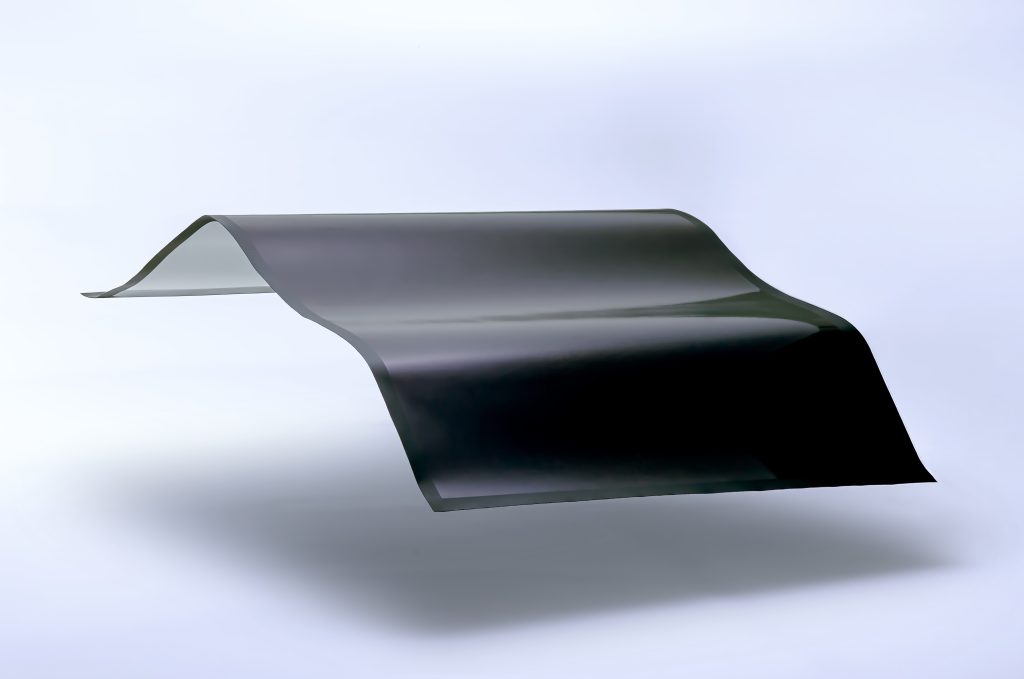
Film-type perovskite solar cells are being installed on Japanese data centers and offices as artificial intelligence increases demand for nonstop electricity and puts new pressure on grids.
The shift is modest but strategically useful.
Flexible solar film does not solve the energy burden of AI facilities by itself, and the source makes clear that it cannot power an AI data center alone.
Its value is different: it can use walls, curved structures and other surfaces that rigid silicon panels cannot easily reach.
Sekisui And NTT Data Move From Pilot To Rollout
Sekisui Chemical launched its Solafil film-type perovskite solar business in March 2026.
With NTT Data, it has started installing the film and plans to expand installations to 16 data centers and offices from fiscal 2026.
The industrial target is still ahead.
Sekisui wants annual production to reach 100 megawatts in 2027, followed by output at gigawatt scale in 2030.
That makes the story less about a finished replacement for conventional solar and more about whether Japan can scale a city-compatible power layer while AI facilities keep looking for additional supply.
Flexible Film Brings A Different Constraint Set
The attraction is physical rather than just financial.
Perovskite film is light and bendable, so it can be placed on building walls and curved surfaces where standard panels have limited use.
Sekisui frames that as a way to add renewable power in dense urban locations without needing new land.
The limits remain material.
The film still trails conventional silicon solar in durability, with faster degradation under heat, moisture and UV exposure.
Long-term outdoor performance data remains limited, and most formulations contain lead, which raises disposal and toxicity questions.
The technology also has lower efficiency and power density than rigid panels.
Japan Chooses Surfaces Over Scale
Japan is not presented as the largest-volume perovskite producer.
China-based UtmoLight already operates a one-gigawatt perovskite manufacturing line, while UK-based Oxford PV has made initial shipments to U.S. utilities.
Manufacturing economics are another test: current cost is put at $0.57 per watt, with a full-scale range of $0.29–0.42.
Japan's bet is narrower and more infrastructure-specific.
Sekisui has committed approximately ¥90 billion through 2030.
Separately, Japan's Ministry of Economy, Trade and Industry put ¥24.6 billion into related work by Panasonic, Ricoh and EneCoat.
For data-center operators, the watchpoint is whether those commitments can turn building surfaces into a measurable power supplement before AI load growth consumes the grid relief it creates.