Stratos Data Center Cuts Utah Plan as Water Backlash Tests AI Infrastructure Growth
A Kevin O'Leary-backed Utah data center plan has been cut back after water and transparency objections, showing how local resistance can reshape AI infrastructure projects.
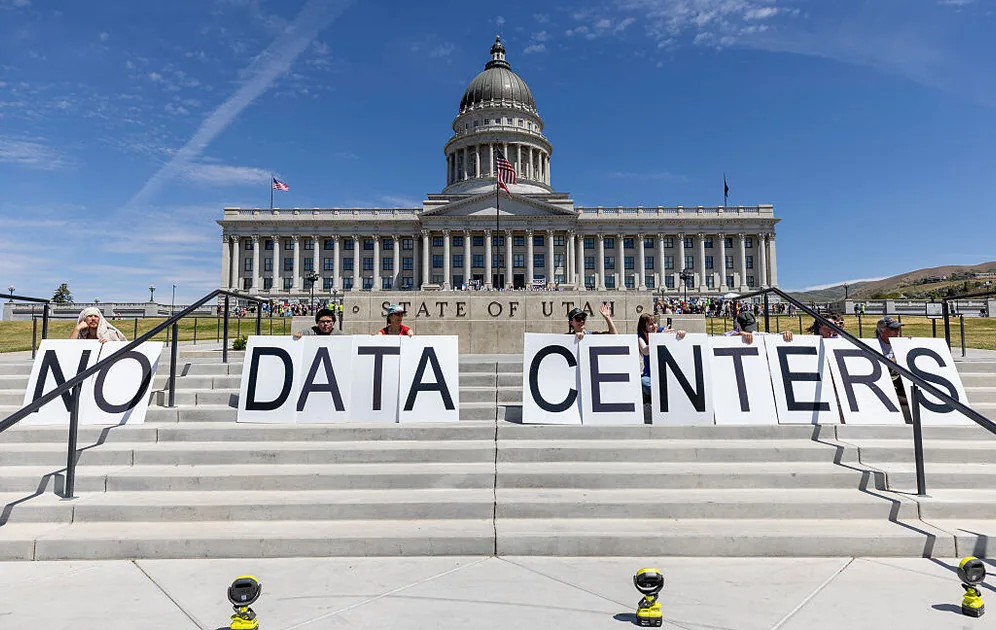
A major Utah data center proposal backed by Kevin O'Leary has been cut back after local opposition turned water use and transparency into blocking issues for one of the most visible AI infrastructure fights in the United States.
The Stratos data center project, originally planned across multiple Utah sites and described as nearly three times the size of Manhattan, has been reduced before construction begins.
The project was initially planned for 40,000 acres and has now been scaled to about 20,000 acres.
Of the remaining land, 10,000 acres would stay undeveloped, leaving about 25 percent of the original footprint for development.
Water becomes the central constraint
The most direct trigger was local resistance in Box Elder County.
Residents objected to a proposed transfer of 1,900 acre-feet of water from a ranch to the hyperscale project, with concerns focused on local water resources and the vulnerable Great Salt Lake.
Many residents paid a $15 fee to formally register comments opposing the transfer.
That local process matters because data center growth is no longer only a power or land question.
In water-stressed regions, the ability to secure public trust and environmental approvals can decide whether an AI infrastructure project advances, shrinks, or stops.
The Stratos case shows that communities are willing to use permitting processes to challenge projects even when developers present them as major local investments.
O'Leary acknowledges the process problem
O'Leary, chair of O'Leary Digital and a Shark Tank investor, told a local ABC affiliate that the project team made mistakes by not being more transparent from the start.
He said he was not expecting the intensity of the public backlash and said the team had expected people to be excited about the investment.
At an AI gala in Washington, DC, he said he had no choice but to accept a smaller project after Utah Senate President Stuart Adams asked him to reduce the scope by 75 percent.
The compromise has not resolved the trust issue.
O'Leary said he would personally take over communications and that future plans and designs would be transparent.
But local critics remain skeptical.
Brenna Williams, involved with the Box Elder Accountability Referendum, called the agreement performance art and argued that Box Elder County remains too vulnerable for a hyperscale data center of that size.
Why this matters beyond Utah
The Utah dispute is part of a broader political risk for AI infrastructure.
At least 20 data center projects were canceled after significant public backlash in the first quarter of this year, more than double the number in the previous quarter.
Public opinion has also shifted quickly against data centers, with opposition especially visible among rural voters.
That matters for developers and cloud investors because AI capacity expansion depends on more than capital expenditure and chip supply.
Projects need water, grid access, land, tax treatment, and local acceptance.
If residents see the process as rushed or opaque, the political cost can rise quickly, even in states where officials broadly support economic development.
What to watch next
The practical question is whether Stratos can secure written commitments, permitting approvals, and environmental reviews under the smaller plan.
Another signal is whether the reported nine-gigawatt capacity changes along with the land reduction; it was not immediately clear whether that capacity target would change.
The next market signal is replication.
If more communities use water, tax incentives, and transparency demands to pressure developers, AI infrastructure growth may become a slower and more negotiated process than the current investment cycle assumes.
Summary version for Medium
Stratos Data Center Cuts Utah Plan as Water Backlash Tests AI Infrastructure Growth
Why Stratos Data Center Cuts Utah matter now for cloud infrastructure teams
Quick Summary: A Kevin O'Leary-backed Utah data center plan has been cut back after water and transparency objections, showing how local resistance can reshape AI infrastructure projects.
Water becomes the central constraint
The most direct trigger was local resistance in Box Elder County. Residents objected to a proposed transfer of 1,900 acre-feet of water from a ranch to the hyperscale project, with concerns focused on local water resources and the vulnerable Great Salt Lake.
O'Leary acknowledges the process problem
O'Leary, chair of O'Leary Digital and a Shark Tank investor, told a local ABC affiliate that the project team made mistakes by not being more transparent from the start.
- Point 1: The central topic is AI infrastructure, with the announcement framed around concrete operating detail.
- Point 2: He said he was not expecting the intensity of the public backlash and said the team had expected people to be excited about the investment.
AI deployments now depend on where models, data, approvals and operating teams meet.
Why this matters beyond Utah
The Utah dispute is part of a broader political risk for AI infrastructure. At least 20 data center projects were canceled after significant public backlash in the first quarter of this year, more than double the number in the previous quarter.
Read the Full Deep Dive
Want to explore the complete technical analysis, enterprise trade-offs, and detailed metrics?
Read the full article originally published at SendTech Times