OpenAI Says China-Linked Accounts Used ChatGPT To Target U.S. Data Center Debate
OpenAI found China-linked accounts using ChatGPT to generate posts, cartoons and comments around U.S. data-center opposition and tariff politics, showing how AI infrastructure disputes can become targets for low-cost influence operations.
OpenAI Finds AI Misuse Inside A Data-Center Fight
OpenAI has identified China-linked accounts that used ChatGPT to produce political material around two U.S. technology disputes: opposition to data-center construction and criticism of the Trump administration’s tariff policy.
The accounts were blocked after OpenAI found that Chinese-language users had generated political posts, cartoons and comments between late 2025 and early 2026.
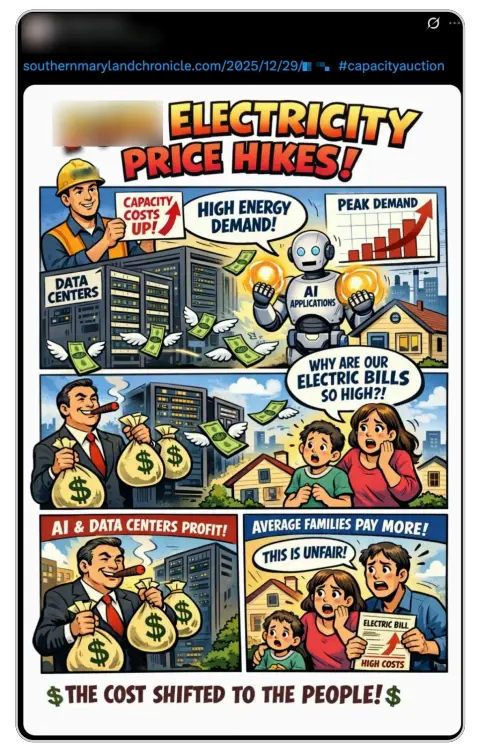
The most direct AI-infrastructure angle is the Data Center Bandwagon campaign.
In that case, accounts linked to China generated English-language social posts and images, then presented themselves as Americans while trying to amplify resistance to U.S. data-center projects.
The messages argued that data centers increase electricity prices and push costs onto ordinary citizens.
OpenAI assessed the activity as limited in reach.
That matters here because the operation did not need to create the U.S. data-center dispute from scratch.
It attempted to exploit a real domestic argument that already includes energy use, water demand, electricity bills and environmental pressure.
The Infrastructure Debate Was Already Active
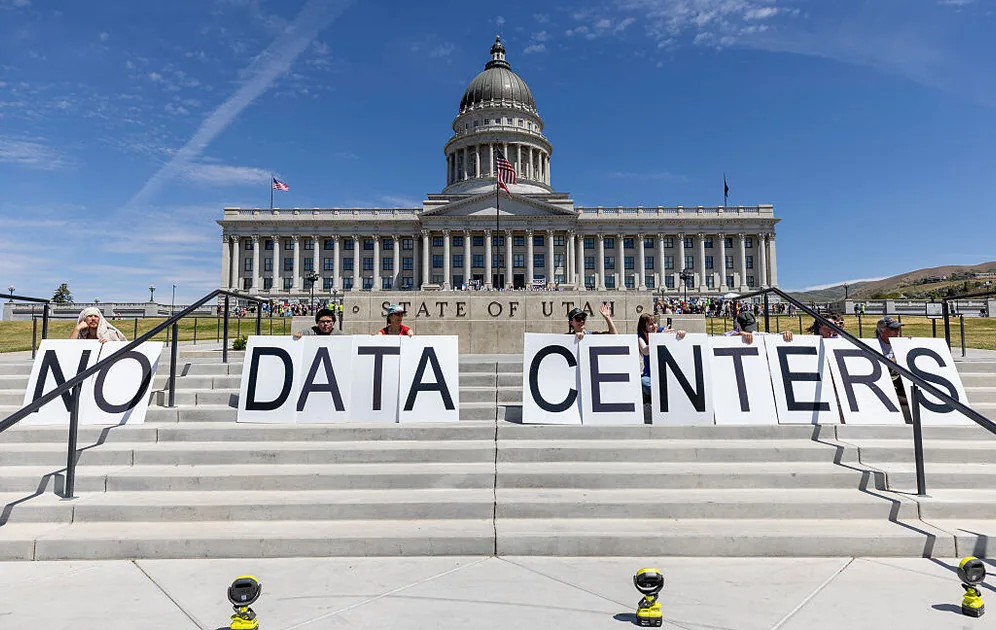
The campaign landed in a market where AI data centers are already politically sensitive.
Big technology companies say large facilities are necessary to support AI competitiveness, while local communities have objected to power consumption, water use, utility costs and environmental impact.
The scale of that conflict is material.
Data Center Watch put the affected 2025 U.S. pipeline at dozens of projects and more than $150 billion, with community resistance and regulatory hurdles cited as reasons those projects did not move on schedule.
That figure gives influence operators a ready-made pressure point: data centers are no longer only a cloud or AI-capacity topic, but also a local infrastructure and utility-cost issue.
Some Republican federal lawmakers also raised concerns this month in a letter to the Trump administration about foreign influence operations aimed at slowing U.S. AI development and obstructing related infrastructure.
OpenAI’s assessment fits that risk model, while still describing the detected activity as small and low-engagement.
Tariffs Became A Second Content Track
OpenAI also identified a separate Tech and Tariffs campaign.
That activity used ChatGPT for anti-U.S.-policy comment material and political cartoons focused on Washington’s technology position and tariffs on China.
The images depicted President Donald Trump as damaging the global trade order, including scenes involving a wall labeled Global Future and a ladder being cut.
The campaign coincided with October 2025, when Trump announced an additional 100% tariff on Chinese products.
Related accounts produced material for Chinese-language article comments and also generated Japanese and Italian posts.
The users reportedly asked that Chinese President Xi Jinping be excluded as a target of satire during AI image generation.
OpenAI did not directly attribute the tariff campaign to a specific Chinese agency or company.
For the data-center campaign, its assessment pointed to a likely tie between the accounts and a private Chinese technology company’s social-media operations team, with possible local-government customers.
The Security Issue Is Model Access, Not Virality
The near-term risk is not that these campaigns succeeded at scale.
OpenAI said the operations mostly failed to gain attention on X and Facebook, and actual user engagement was minimal.
The more important signal is that foreign influence actors are using mainstream generative AI tools to lower the cost of multilingual political content production.
For AI infrastructure operators, this turns local data-center approval into a trust and information-security issue as well as a permitting issue.
The available details do not show that protests were created by the detected accounts.
They show a narrower but still important pattern: existing disputes over AI infrastructure can be targeted by actors who use AI systems to produce persuasive material, images and comments across languages.
Summary version for Medium
OpenAI Says China-Linked Accounts Used ChatGPT To Target U.S. Data Center Debate
Why OpenAI Says China-Linked Accounts Used ChatGPT To matter now for cloud infrastructure teams
Quick Summary: OpenAI found China-linked accounts using ChatGPT to generate posts, cartoons and comments around U.S. data-center opposition and tariff politics, showing how AI infrastructure disputes can become targets for low-cost influence operations.
OpenAI Finds AI Misuse Inside A Data-Center Fight
OpenAI has identified China-linked accounts that used ChatGPT to produce political material around two U.S. technology disputes: opposition to data-center construction and criticism of the Trump administration’s tariff policy.
The Infrastructure Debate Was Already Active
The campaign landed in a market where AI data centers are already politically sensitive.
- Point 1: The central topic is influence operations, with the announcement framed around concrete operating detail.
- Point 2: Big technology companies say large facilities are necessary to support AI competitiveness, while local communities have objected to power consumption, water use, utility costs...
AI deployments now depend on where models, data, approvals and operating teams meet.
Tariffs Became A Second Content Track
OpenAI also identified a separate Tech and Tariffs campaign. That activity used ChatGPT for anti-U.S.-policy comment material and political cartoons focused on Washington’s technology position and tariffs on China.
Read the Full Deep Dive
Want to explore the complete technical analysis, enterprise trade-offs, and detailed metrics?
Read the full article originally published at SendTech Times