SpaceX Prospectus Puts Gulf AI Capital Under A Data-Center Lens
SpaceX’s S-1 puts Gulf AI capital in public view, tying Saudi and UAE financing to data center build-outs, a $1.75 trillion listing target and long-running investor links to Elon Musk’s companies.
Gulf Capital Becomes Visible In SpaceX’s AI Orbit
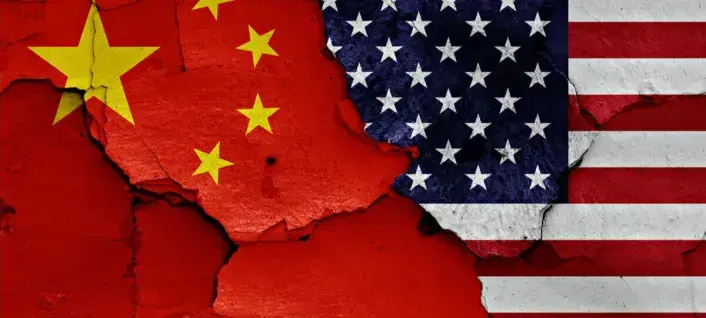
SpaceX’s S-1 has turned a private financing pattern into a public market signal: Saudi Arabia and the UAE are not only funding parts of America’s AI boom, they are tying that capital to the build-out of data centers on their own soil.
The document lists Gulf sovereign wealth investors, AI subsidiaries and technology companies connected to infrastructure deals, making the Middle East role harder to treat as background finance.
The offering is framed around a June 12 Nasdaq listing at a $1.75 trillion valuation, with SpaceX seeking to sell up to $75 billion in shares.
One of the most material details is Saudi Arabia’s Public Investment Fund being in talks to invest $5 billion.
For AI infrastructure watchers, that places Gulf state capital inside the same financing conversation as rockets, satellites and model-scale computing demand.
Data Centers Are The Strategic Return
The commercial exchange described by the filing is not limited to equity ownership.
Sovereign wealth money differs from conventional venture capital because the investing governments often seek domestic infrastructure in return.
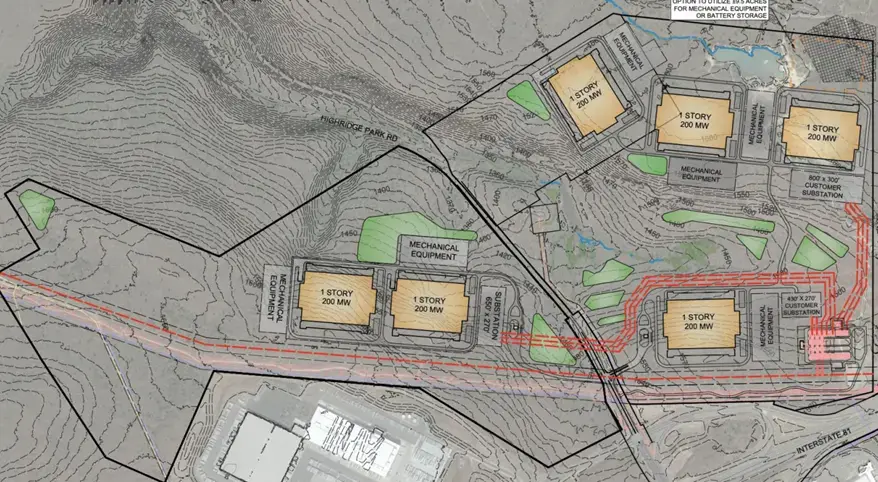
In this case, the relevant assets are AI data centers, with jobs, tax revenue and related construction activity directed toward the Middle East rather than only toward US communities.
That makes the story important beyond SpaceX’s headline valuation.
ChatGPT, Claude and Grok are named as widely used AI tools that are partly backed by Middle Eastern governments.
The financing structure matters for companies whose employees use those tools, because the capital behind model ecosystems can influence where compute capacity is built and which governments host more of the physical infrastructure.
Older Musk Ties Now Have A Public Price
The prospectus also puts long-running Gulf exposure to Elon Musk’s companies into a clearer financial frame.
Prince Alwaleed bin Talal invested $300 million in X, then Twitter, in 2011.
When Musk bought the platform in 2022, Alwaleed kept his stake rather than exiting.
After X was folded into xAI and xAI was merged with SpaceX, that earlier social media position became shares in the rocket company.
Kingdom Holding now values that position at $10.6 billion at the expected IPO price.
The point is not simply that one early investor benefited.
It is that a social media investment made more than a decade ago is now linked to a larger chain of AI, satellite and space assets, while Gulf sovereign and private capital sits inside the same network.
What The Filing Does Not Settle
The available facts do not prove how much of the proposed share sale will ultimately be taken up by Gulf investors, whether the Public Investment Fund talks will close, or which data center projects will be directly tied to the SpaceX transaction.
They do show that Gulf AI capital has moved from private dealmaking into a public filing that investors, policymakers and enterprise AI customers can examine.
The next check is execution: the final IPO allocation, any confirmed PIF investment, and whether Middle East data center commitments expand alongside the financing.
Until those details are public, the clearest conclusion is narrower but still significant.
Gulf investors are no longer peripheral to the US AI infrastructure story; they are part of its capital stack and, increasingly, its geographic footprint.
Summary version for Medium
SpaceX Prospectus Puts Gulf AI Capital Under A Data-Center Lens
What the policy signal means for operators and investors
Quick Summary: SpaceX’s S-1 puts Gulf AI capital in public view, tying Saudi and UAE financing to data center build-outs, a $1.75 trillion listing target and long-running investor links to Elon Musk’s companies.
Gulf Capital Becomes Visible In SpaceX’s AI Orbit
SpaceX’s S-1 has turned a private financing pattern into a public market signal: Saudi Arabia and the UAE are not only funding parts of America’s AI boom, they are tying that capital to the build-out of data centers on their own soil. The document lists Gulf sovereign wealth investors, AI subsidiaries and technology companies connected to infrastructure deals, making the Middle East role harder to treat as background finance.
Data Centers Are The Strategic Return
The commercial exchange described by the filing is not limited to equity ownership.
- Point 1: The central topic is sovereign wealth, with the announcement framed around concrete operating detail.
- Point 2: Sovereign wealth money differs from conventional venture capital because the investing governments often seek domestic infrastructure in return.
AI deployments now depend on where models, data, approvals and operating teams meet.
Older Musk Ties Now Have A Public Price
The prospectus also puts long-running Gulf exposure to Elon Musk’s companies into a clearer financial frame. Prince Alwaleed bin Talal invested $300 million in X, then Twitter, in 2011.
Read the Full Deep Dive
Want to explore the complete technical analysis, enterprise trade-offs, and detailed metrics?
Read the full article originally published at SendTech Times