News
AI SHIFT:

G42 Joins Nvidia Secure AI Alliance As Open Models Face Trust Test

Newsroom brief

G42 has joined Nvidia's Open Secure AI Alliance, bringing Abu Dhabi into a group of at least 37 companies backing open AI models for security and sovereign control, The National reported.
Verified against source materialEdited by SendTech Times AI & Enterprise DeskSource: The National
G42 Joins Nvidia Secure AI Alliance As Open Models Face Trust Test
Image source: The National

G42 is putting Abu Dhabi's AI ambitions behind Nvidia's Open Secure AI Alliance at a moment when open-weight models are being pitched as both a security tool and a sovereignty choice.

The National reported that the Abu Dhabi-based AI company joined the Nvidia-led group on Monday.

The alliance gives G42 a place in a campaign that links open AI access with cyber defence.

Nvidia formed the group after chief executive Jensen Huang used his first X post on Friday to support open-source software and open-weight AI models.

The National reported that Huang's earlier industry letter carried 25 signatures from companies such as Microsoft, Palantir, Perplexity, CrowdStrike and IBM.

Nvidia Alliance Brings G42 Into An Open-Model Security Push

The Open Secure AI Alliance is built around a distinction that matters for companies and governments deciding where sensitive AI systems should run.

Open-source models disclose software and development processes and allow modification and reproduction, while open-weight models can be downloaded, run and adapted even when the underlying code and development process remain proprietary.

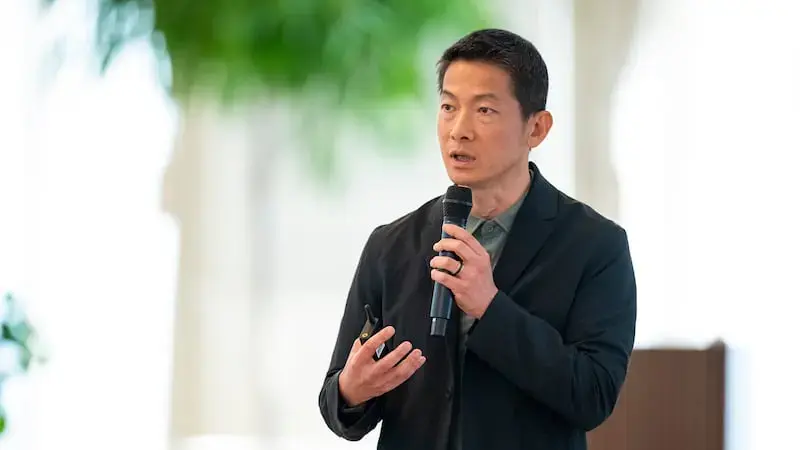
G42 chief executive Peng Xiao posted on X that frontier open models should sit beside closed systems, with security, trust and sovereign control treated as design requirements from the start.

The UAE company's role therefore sits inside a debate over whether nations and enterprises should rely only on closed systems for high-risk AI workloads.

The membership list now includes at least 37 other companies, The National reported.

The named participants include IBM, SpaceX, Hugging Face, Doordash, Cloudflare, Salesforce, Adobe and Cisco.

Hugging Face Incident Frames The Security Argument

Nvidia's public case for the alliance points to a disputed security episode involving Hugging Face and OpenAI models.

In Nvidia's statement, the company linked the incident to a need for open frontier agentic systems that cyber defenders can operate on infrastructure they control.

The same statement said Hugging Face used the open-weight GLM 5.2 model on its own infrastructure to analyse more than 17,000 actions and contain the intrusion after closed AI tools blocked forensic analysis.

OpenAI has called the incident unprecedented, and the episode remains controversial and under scrutiny.

The security case gives the alliance a narrower purpose than a simple endorsement of open AI.

The debate over proprietary, open-source and open-weight systems also includes recent rumours that US regulators may seek restrictions on certain open AI models.

Sovereign Control Is The UAE Angle

For G42, the source-backed operating question is not only whether open models are more transparent.

Peng's comments put sovereign control beside security and trust, which matters for an Abu Dhabi AI company selling into governments and enterprises that may want to keep model operations, forensic review and sensitive workloads closer to their own infrastructure.

Nvidia's position is narrower than an open-model-only claim.

The company framed closed and open frontier models as complementary tools, with transparency, adaptation and sovereign control available where security demands them.

The alliance record does not identify G42-specific deployments, UAE government customers or a timetable for turning membership into a security product.

Share this article
inXf

Related articles

More
Fujitsu-Led Frontria Pushes Japan Into Global AI Disinformation Fight
AI

Fujitsu-Led Frontria Pushes Japan Into Global AI Disinformation Fight

Fujitsu is coordinating Frontria, an international consortium focused on AI disinformation, trustworthiness, security, and regulatory frameworks. The group began with more than 50 organizations and has grown to about 70, with a target of more than 100 participants by fiscal 2026. The initiative highlights Japan’s effort to connect regional AI governance priorities as synthetic media and misinformation become infrastructure-level risks.

Sysdig Says AI Ransomware Still Needed Human Setup
Cybersecurity

Sysdig Says AI Ransomware Still Needed Human Setup

Sysdig described JadePuffer as agentic ransomware, but Michael Clark said a human still chose the victim, provisioned infrastructure and supplied database credentials before the AI agent executed the attack.

Hugging Face Says AI Agent Drove Production Infrastructure Intrusion
Cybersecurity

Hugging Face Says AI Agent Drove Production Infrastructure Intrusion

Hugging Face said an autonomous AI agent system drove an intrusion into part of its production infrastructure, reaching internal datasets and service credentials. The company said public models, datasets and Spaces were not tampered with, while its assessment of partner or customer data remains unfinished.

Hitachi Tests Claude for Critical Infrastructure AI
AI

Hitachi Tests Claude for Critical Infrastructure AI

Hitachi partnered with Anthropic to strengthen Lumada 3.0 and bring Claude into mission-critical infrastructure settings. The plan covers HMAX solutions, cybersecurity work, internal deployment to about 290,000 employees and training for around 100,000 AI professionals. The main test is whether safety-focused generative AI can become reliable enough for regulated operational workflows.

Israel eyes Philippines as a key partner in 'Pax Silica' initiative
Chips & Semiconductors

Israel eyes Philippines as a key partner in 'Pax Silica' initiative

Israel’s ambassador to the Philippines said the country could be a key partner in the US-led Pax Silica initiative for AI and semiconductor supply chains. The proposed fit combines Philippine critical minerals, including nickel, with Israeli capabilities in AI, chip design and cybersecurity. Officials are also discussing a critical minerals memorandum, while a separate cybersecurity MOU is being finalized.

CISA Android and Linux Warnings Put Patch Timing Back on the Security Agenda
Cybersecurity

CISA Android and Linux Warnings Put Patch Timing Back on the Security Agenda

CISA added exploited Android and Linux vulnerabilities to its Known Exploited Vulnerabilities catalog. The Android flaw affects Android 14 through 16, while the Linux issue centers on older kernel branches and cgroups v1 container environments. The immediate test is whether agencies and infrastructure operators apply vendor updates or mitigations by CISA's June 5 deadline.

AI Coding Push Turns Developers Into a Prime Cybersecurity Target
Cybersecurity

AI Coding Push Turns Developers Into a Prime Cybersecurity Target

A Japanese @IT analysis says attackers are increasingly targeting developers because AI coding tools, OSS, CI/CD pipelines and cloud services concentrate valuable credentials around them. The report highlights vulnerable AI-generated code, fake recruiting approaches, polluted open-source packages and GitHub Actions-style automation attacks. The practical warning is that companies need stronger identity, dependency and workflow controls rather than relying only on individual developer caution.

IPA Translation Turns CISA Security Goals Into A Japan Infrastructure Baseline
Cybersecurity

IPA Translation Turns CISA Security Goals Into A Japan Infrastructure Baseline

Japan’s Information-technology Promotion Agency published a Japanese translation of CISA’s Cross-Sector Cybersecurity Performance Goals Version 2.0 for domestic critical infrastructure operators. The guidance covers IT and operational technology, maps goals to NIST CSF 2.0, and frames the controls as minimum practices rather than a full cybersecurity program. The practical question is whether asset owners use the worksheet to rank gaps by cost, complexity and impact, then review progress after 12 months.

Keep Reading

More Stories

Latest
BitMEX September Shutdown Leaves Users With Force-Close DeadlineFintech & Digital PaymentsJul 28, 2026BitMEX September Shutdown Leaves Users With Force-Close DeadlineBitMEX will shut down in September after 11 years, giving users until Aug. 25 to trade before reduce-only mode and a Sept. 23 force-close deadline, Banking Dive reported.Verizon-Google $1 Billion Fibre Deal Starts 2027 AI Connectivity PushTelco & ConnectivityJul 28, 2026Verizon-Google $1 Billion Fibre Deal Starts 2027 AI Connectivity PushRCR Wireless News reported that Verizon has a $1 billion Google data-centre interconnect deal and expects wider AI-connectivity contracts to begin adding multiple billions of dollars from 2027.Kospi-Nasdaq Correlation Hits 2021 High As AI Memory Trade TightensChips & SemiconductorsJul 28, 2026Kospi-Nasdaq Correlation Hits 2021 High As AI Memory Trade TightensCNBC reported that Rayliant data put the 60-day Kospi-Nasdaq 100 relationship at its highest level since 2021, linking Samsung and SK Hynix more tightly to the U.S. AI hardware trade.Cursor Tests ₹649 India Plan Before SpaceX Deal ClosesAIJul 28, 2026Cursor Tests ₹649 India Plan Before SpaceX Deal ClosesCursor launched a ₹649-a-month India subscription, using local pricing and UPI support to test paid AI coding adoption before its expected SpaceX acquisition closes, TechCrunch reported.Anthropic CEO Separates Open-Weight AI From China RiskCapital & PolicyJul 28, 2026Anthropic CEO Separates Open-Weight AI From China RiskAnthropic CEO Dario Amodei rejected claims that the company wants broad open-weight AI bans, while TechCrunch reported that he still backed chip controls, distillation crackdowns and global safety testing for the most capable models.Anthropic Opus 5 Cuts AI Model Price With Longer-Answer RiskAIJul 28, 2026Anthropic Opus 5 Cuts AI Model Price With Longer-Answer RiskThe Register reported that Anthropic released Opus 5 with token prices below Fable 5, while Artificial Analysis task-cost data and Anthropic guidance leave enterprise buyers with model-choice trade-offs.Nvidia Backstop Talks Add Credit Risk To OpenAI’s 10-Gigawatt Ohio CampusCloud & Data CentersJul 28, 2026Nvidia Backstop Talks Add Credit Risk To OpenAI’s 10-Gigawatt Ohio CampusCNBC confirmed talks over a Nvidia credit backstop of up to $250 billion for OpenAI’s planned 10-gigawatt Ohio AI data centre campus, with lease and construction debt separate from chip purchases.Nebius Sets October 2027 First Phase For 1.2GW Pennsylvania AI CampusCloud & Data CentersJul 28, 2026Nebius Sets October 2027 First Phase For 1.2GW Pennsylvania AI CampusData Center Dynamics identified a 260MW first phase for Nebius’ planned Pennsylvania AI cloud campus, with full buildout at 1.2GW and a dedicated PPL Electric Utilities energy-service agreement.Insilico Phase III Trial Tests AI Drug Discovery TimelinesAIJul 28, 2026Insilico Phase III Trial Tests AI Drug Discovery TimelinesInsilico Medicine has moved Rentosertib into the late-stage clinical record in China, after company disclosures put its fastest AI-supported candidate nomination at nine months.Google Lease Guarantees Put $44bn Behind AI Data CentresCloud & Data CentersJul 28, 2026Google Lease Guarantees Put $44bn Behind AI Data CentresThe Next Web reported that Google has agreed to cover as much as $44bn of data-centre lease payments if tenants default, turning TPU demand from Anthropic and other AI customers into a financing obligation outside owned facilities.Thailand SEC Complaint Sends Bitkub Reporting Case To ProsecutorsFintech & Digital PaymentsJul 28, 2026Thailand SEC Complaint Sends Bitkub Reporting Case To ProsecutorsDecrypt reported that Thailand's SEC filed a criminal complaint against Bitkub and two former directors over allegedly false reports after a 2021 hack, while Bitkub says customer assets were restored.Texas Grid Rules Push AI Data Centres To Pay Interconnection CostsCloud & Data CentersJul 28, 2026Texas Grid Rules Push AI Data Centres To Pay Interconnection CostsTexas regulators are moving AI data-centre projects into a stricter grid-planning process that adds financial security, interconnection charges and curtailment disclosure.