MiTAC’s 52U AI Rack Shows How Dense Compute Is Becoming A Cooling Product
MiTAC used Computex 2026 to show a 52U liquid-cooled AMD Instinct MI355X rack with 96 accelerators, Broadcom 800Gbps Ethernet switching and a Nidec CDU rated to move 200kW of heat.
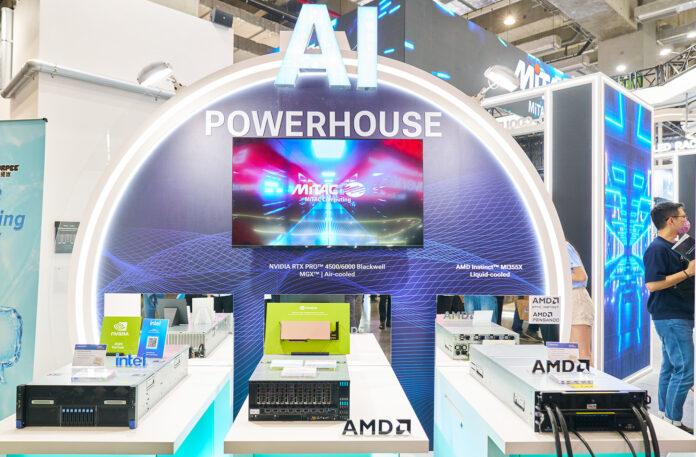
MiTAC Turns AI Density Into A Rack-Level Product
MiTAC’s Computex 2026 display shows how AI server competition is moving from individual accelerators to full rack systems with cooling, networking and delivery bundled together.
The Taiwanese server vendor showed a 52U liquid-cooled rack built around AMD Instinct MI355X accelerators.
The rack packs 12 G4826Z5 AI servers, with 8 accelerators in each server, for 96 MI355X accelerators in a single rack.
That density makes the rack more than a processor showcase.
MiTAC is selling a system that includes compute nodes, networking and coolant distribution so customers can receive a more complete unit rather than assemble each layer separately.
Cooling And Ethernet Become Part Of The Compute Spec
The rack uses Broadcom Tomahawk 5 800Gbps Ethernet switches for the network backbone.
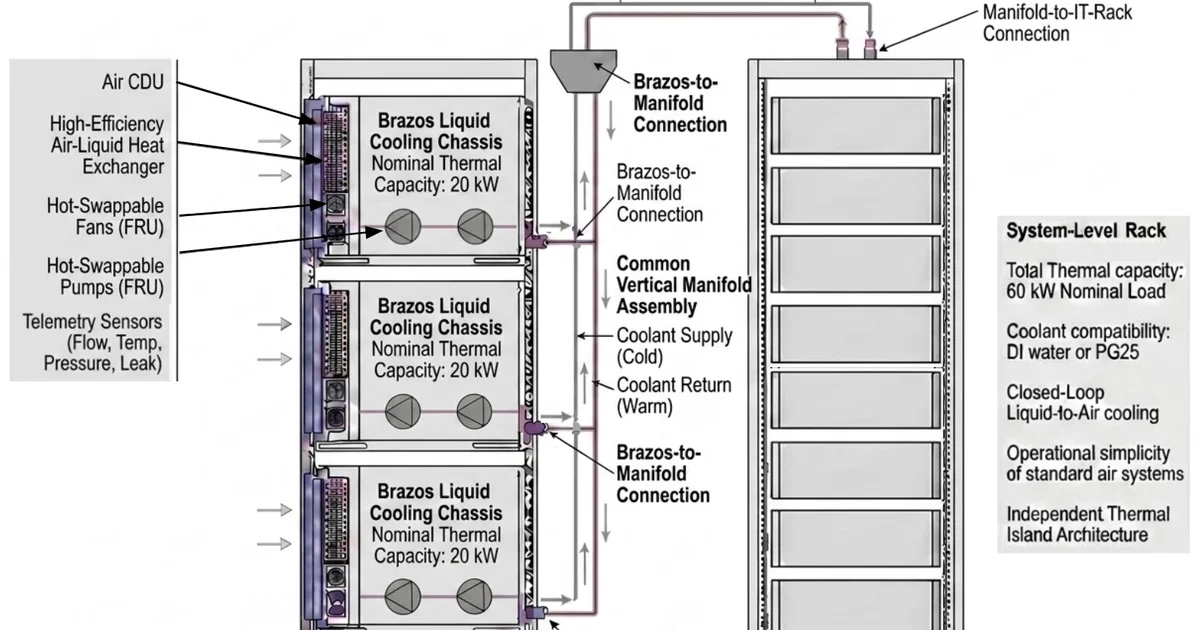
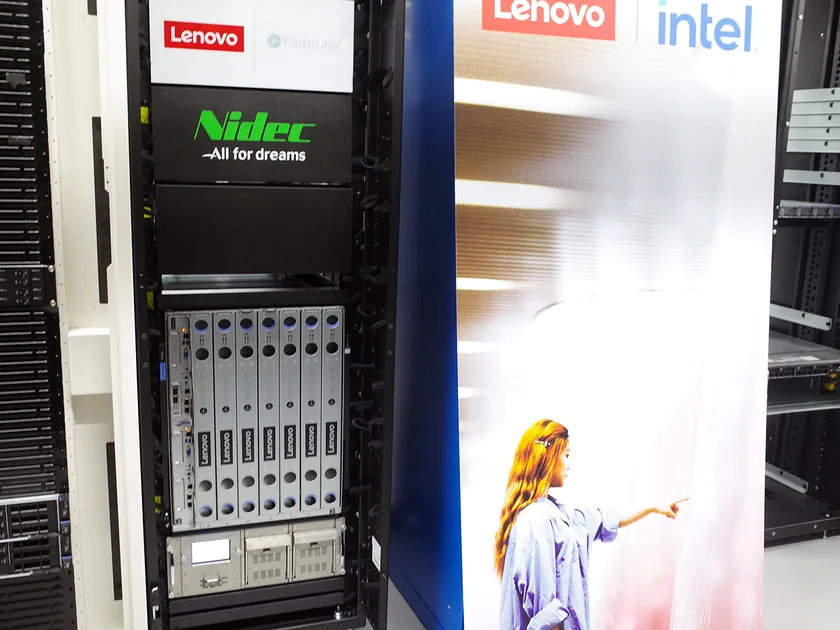
The coolant distribution unit comes from Nidec and is rated to circulate enough coolant to move 200kW of heat.
Those details matter because dense AI systems are constrained by more than accelerator availability.
Power delivery, switch bandwidth, rack height, liquid plumbing and thermal handling determine whether customers can turn hardware inventory into usable training or inference capacity.
MiTAC says the 52U design gives the rack 50% more GPU density than a standard rack.
The company attributes that to liquid cooling and the taller rack format, which creates room for additional hardware.
Diamond Cooling Points To A Hotter Chip Roadmap
MiTAC’s GPU cooling demonstration used a diamond material layer designed to improve heat transfer from high-power chips.
The demonstration fits a broader pattern across AI hardware.
As accelerators draw more power and customers deploy larger clusters, thermal design becomes a product differentiator rather than a back-end facility problem.
A vendor that can package servers, cooling and network fabric together can reduce integration work for customers under pressure to deploy capacity quickly.
The emphasis on turnkey delivery is also a signal to data-center operators.
Dense AI deployments increasingly require customers to coordinate rack delivery, coolant distribution, Ethernet fabric, service access and facility readiness before the first workload can run.
MiTAC is trying to move more of that burden into the supplier package.
Customers Still Need Deployment Proof
MiTAC also displayed storage systems, supporting equipment and server platforms built around different processor and accelerator combinations for dense AI deployments.
The company’s position has been strengthened by the AI boom, the Tyan brand and Intel’s server business becoming part of its wider server platform.
That combination makes the rack story a supply-chain story as much as a component story.
Customers buying AI capacity are not only choosing a GPU vendor; they are choosing a rack design, switch fabric, cooling supplier and service model that must work inside a constrained data-center envelope.
The commercial question is how quickly these dense rack designs move from trade-show hardware to customer deployments.
MiTAC showed the physical pieces needed for AI infrastructure at higher density; customers still have to match those racks with power, liquid-cooling operations and data-center space that can handle the heat.