Ramp's $44 Billion Valuation Turns AI Spending Into a CFO Control Problem
Ramp announced a $750 million funding round at a $44 billion valuation as companies look for tighter control over AI spending. CEO Eric Glyman said the company crossed $1 billion in annualized revenue and that AI token costs are becoming a new budget line for finance teams. The practical question is whether finance software buyers treat AI usage controls as a core spend-management requirement.

Ramp Raises Funding as AI Costs Move Into Finance Workflows
Ramp has raised $750 million at a $44 billion valuation, giving the spend-management company fresh backing as corporate finance teams try to understand how much artificial intelligence usage is adding to budgets.
Ontario Teachers' Pension Plan led the round, which marked a roughly 38% increase in Ramp's valuation.
The company also crossed $1 billion in annualized revenue and reported positive free cash flow.
CEO Eric Glyman linked part of the growth to corporate clients trying to manage AI spending, particularly the cost of tokens used to measure AI model usage.
Glyman said tokens "cost quite a bit of money" and that many CFOs did not plan for the steep growth in annual budgets.
He described AI token usage as "spending through tokens and intelligence," a new area that is not yet cleanly managed.
The signal for fintech buyers is that AI adoption is becoming a procurement and controls issue, not only a technology decision.
If token spending continues to grow inside normal business workflows, finance teams may need tools that show where usage is happening, which model choices are driving cost and whether cheaper routing can handle lower-risk tasks.
AI Usage Becomes a Spend Category
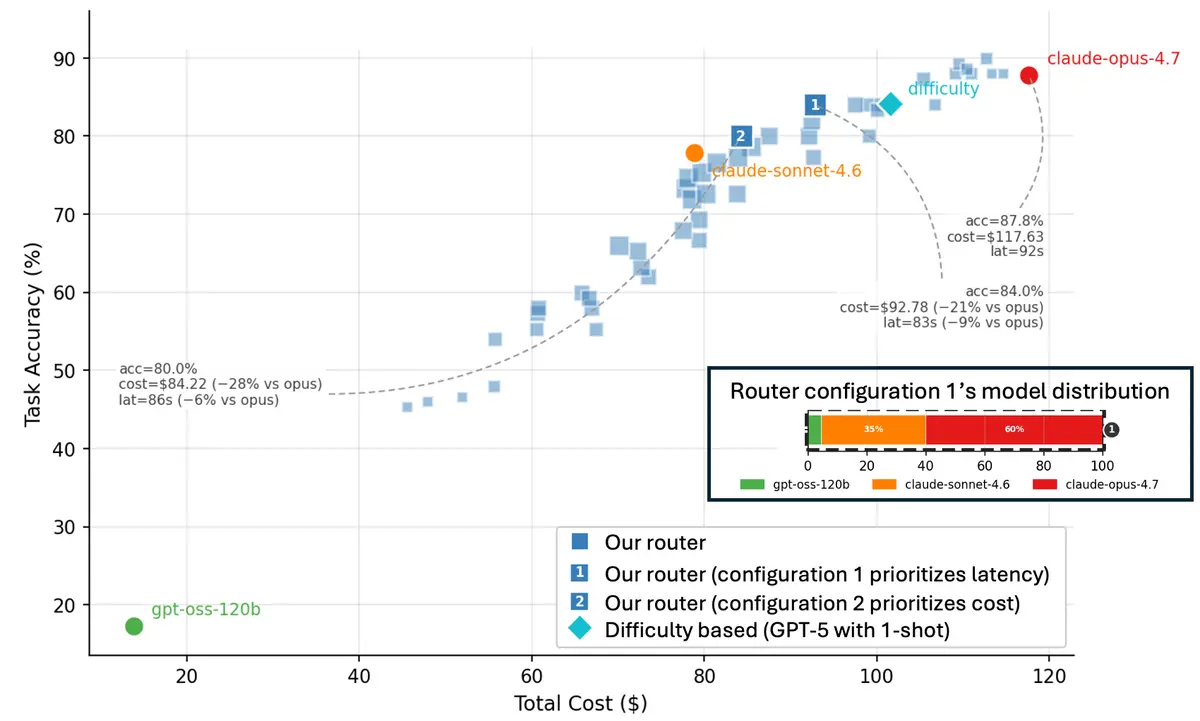
Ramp's new product is aimed at helping clients manage AI spending by routing tasks to AI models that can complete them at lower cost.
Glyman said CFOs are often surprised by the actual amount being spent, especially when companies use frontier models for routine work.
Glyman said many executives see AI as a major growth opportunity, even as it has become the fastest-growing line item.
He said companies may need advanced models for critical analysis but not necessarily for lower-risk work such as editing an email.
The return question is also becoming more visible.
Glyman said that among the 70,000 businesses using Ramp, those spending the most of their revenue on AI grew revenue by 12%, while those spending the least saw flat growth.
He also said some companies are seeing "extraordinary ROI," but tied that outcome to efficient AI spending rather than AI usage alone.
That difference changes the story for software budgets.
Glyman said Ramp has not yet seen AI spending come at the expense of software budgets, though he added that software spend continues to grow and that "the bill will come due."
Model Routing Becomes the Watchpoint
Glyman said frontier model companies such as OpenAI and Anthropic have no reason to steer users toward cheaper options when a task can be completed at lower cost.
He argued that this creates space for companies such as Ramp and AI-native firms that help route work to cost-effective models.
The company is also pushing back against "tokenmaxxing," an approach where developers use as many tokens as possible.
Glyman said some companies have treated token use as a proxy for productivity, but more tokens do not necessarily mean more value.
For corporate finance teams, the next signal is whether AI cost controls move from experimental dashboards into recurring spend-management workflows.
For AI vendors, the pressure point is whether customers begin asking not only what a model can do, but whether the task required that level of model cost in the first place.
Summary version for Medium
Ramp's $44 Billion Valuation Turns AI Spending Into a CFO Control Problem
What the announcement means beyond the headline
Quick Summary: Ramp announced a $750 million funding round at a $44 billion valuation as companies look for tighter control over AI spending. CEO Eric Glyman said the company crossed $1 billion in annualized revenue and that AI token costs are becoming a new budget line for finance teams.
The Core Signal
Ramp announced a $750 million funding round at a $44 billion valuation as companies look for tighter control over AI spending. CEO Eric Glyman said the company crossed $1 billion in annualized revenue and that AI token costs are becoming a new budget line for finance teams.
The Technical Or Market Detail
Ramp Raises Funding as AI Costs Move Into Finance Workflows Ramp has raised $750 million at a $44 billion valuation, giving the spend-management company fresh backing as corporate finance teams try to understand how much artificial intelligence usage is adding to budgets.
- Point 1: The central topic is ai, with the announcement framed around concrete operating detail.
- Point 2: Ontario Teachers' Pension Plan led the round, which marked a roughly 38% increase in Ramp's valuation.
AI deployments now depend on where models, data, approvals and operating teams meet.
Operational Impact Or Limits
Ramp announced a $750 million funding round at a $44 billion valuation as companies look for tighter control over AI spending. CEO Eric Glyman said the company crossed $1 billion in annualized revenue and that AI token costs are becoming a new budget line for finance teams.
Read the Full Deep Dive
Want to explore the complete technical analysis, enterprise trade-offs, and detailed metrics?
Read the full article originally published at SendTech Times