Romania’s 5G reset puts consolidation, spectrum and cloud latency under scrutiny
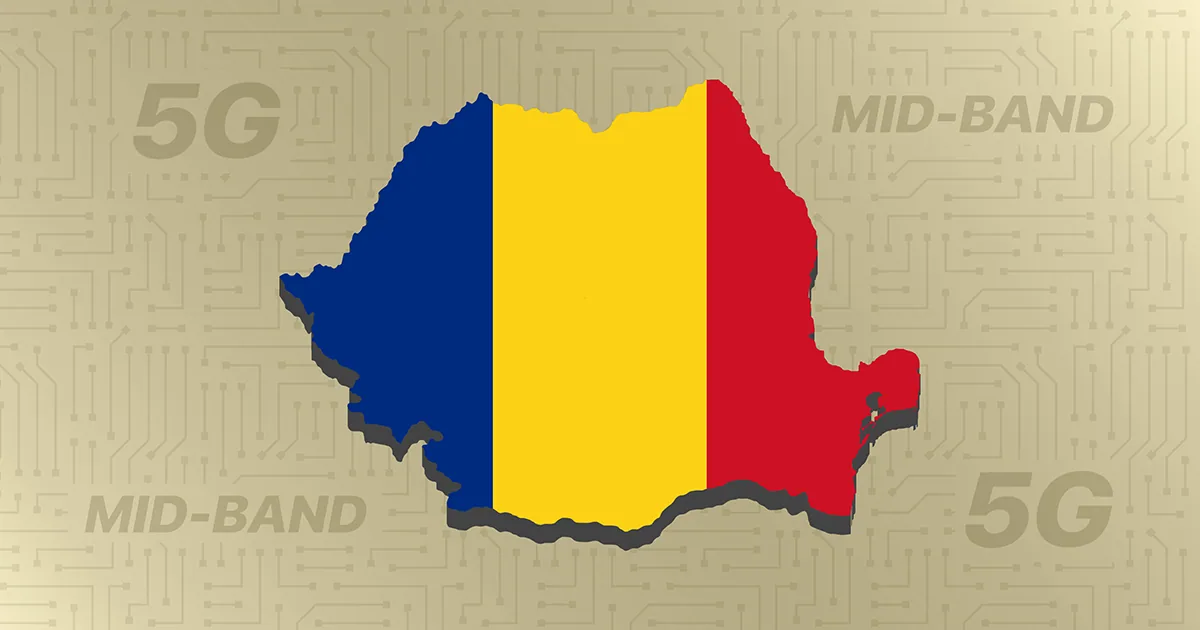
Romania’s first full quarter after the Telekom Romania Mobile split showed a three-operator market still lagging Central and Eastern European peers on mobile performance and 5G coverage. Ookla data showed 39% national 5G Availability in Q1 2026, with Orange leading on footprint, Vodafone leading on median 5G download speed, and DIGI leading on 5G upload and cloud latency. The next test is whether Vodafone, DIGI and Orange can convert consolidation, spectrum refarming and network integration into better real-world mobile quality.
What happened
Romania’s mobile market has entered its first full quarter under a three-operator structure after the 2025 division of Telekom Romania Mobile assets between Vodafone and DIGI.
Q1 2026 data showed a market that still sits behind many Central and Eastern European peers on mobile performance and 5G reach.
Ookla’s Speedtest Intelligence data put Romania’s 5G Availability at 39% in Q1 2026.
Median mobile download speed was 78.43 Mbps, the lowest figure in the peer set cited in the research.
The market now depends on how Orange, Vodafone and DIGI use different spectrum positions, network footprints and integration plans.
Orange had the widest 5G footprint, with 57% availability, and also led overall median mobile download speed at 97.70 Mbps.
Vodafone’s 5G availability was 36%, but its median 5G download speed reached 180.57 Mbps after doubling year on year.
DIGI recorded a 126.51 Mbps median 5G download speed, while leading Romanian operators on 5G upload at 33.03 Mbps and posting the lowest 5G cloud latency at 79 ms.
Why it matters
The data points to a 5G problem that goes beyond headline download rates.
For cloud applications, enterprise connectivity and consumer experience, coverage depth, upload performance and latency may be as important as peak speed.
The market changed on 1 October 2025.
Vodafone Romania bought Telekom Romania Mobile Communications from OTE for €30 million, while DIGI Romania made a separate €40 million acquisition of other assets from the same seller.
Vodafone received the company vehicle, postpaid customers and much of the spectrum portfolio.
DIGI received the prepaid customer base, remaining towers and spectrum at 900 MHz, 1800 MHz, 2100 MHz and 2600 MHz.
Who is affected
The reset matters for Romania’s three mobile network operators, business customers relying on cloud access, and regulators assessing whether consolidation can produce better network outcomes.
The Romanian Competition Council approved the transaction on 28 July 2025 with remedies covering wholesale access for MVNOs, co-location involving Orange, road-coverage commitments by DIGI and a four-year compliance trustee.
Spectrum remains a constraint.
Romania assigned 30 MHz of national 700 MHz spectrum in the 2022 5G auction, compared with a Central and Eastern European norm of about 60 MHz in the research.
The country also had the lowest assigned C-band depth below 3.7 GHz in the same peer group.
What to watch next
The next signal is execution.
Vodafone needs to turn the acquired Telekom assets into wider 5G reach.
DIGI needs to translate upload and latency strengths into broader quality gains.
Orange needs to match its coverage lead with stronger real-world cloud latency.
If refarming and network integration work, Romania could narrow its regional mobile gap, but consolidation alone would not guarantee that outcome.
Summary version for Medium
Romania’s 5G reset puts consolidation, spectrum and cloud latency under scrutiny
Why Romania’s 5G reset matter now for cloud infrastructure teams
Quick Summary: Romania’s first full quarter after the Telekom Romania Mobile split showed a three-operator market still lagging Central and Eastern European peers on mobile performance and 5G coverage. Ookla data showed 39% national 5G Availability in Q1 2026, with Orange leading on footprint, Vodafone leading on median 5G download speed, and DIGI leading on 5G upload...
What happened
Romania’s mobile market has entered its first full quarter under a three-operator structure after the 2025 division of Telekom Romania Mobile assets between Vodafone and DIGI. Q1 2026 data showed a market that still sits behind many Central and Eastern European peers on mobile performance and 5G reach.
Why it matters
The data points to a 5G problem that goes beyond headline download rates.
- Point 1: The central topic is telco-connectivity, with the announcement framed around concrete operating detail.
- Point 2: For cloud applications, enterprise connectivity and consumer experience, coverage depth, upload performance and latency may be as important as peak speed.
The useful takeaway is the operating constraint behind the announcement, not the announcement alone.
Who is affected
The reset matters for Romania’s three mobile network operators, business customers relying on cloud access, and regulators assessing whether consolidation can produce better network outcomes. The Romanian Competition Council approved the transaction on 28 July 2025 with remedies covering wholesale access for MVNOs, co-location involving Orange, road-coverage commitments by DIGI and a four-year compliance trustee.
Read the Full Deep Dive
Want to explore the complete technical analysis, enterprise trade-offs, and detailed metrics?
Read the full article originally published at SendTech Times