Community Fibre Turns UK Altnet Pressure Into a London Fiber Test Case
Community Fibre plans to expand its London fiber footprint to about 2 million premises and launch an unlimited 5G mobile offer next month. The operator says it has around 450,000 customers on a 1.4 million-premise footprint, giving it a take-up rate of roughly 33% in a difficult UK altnet market. The next test is whether its concentrated London model and VodafoneThree mobile partnership can withstand pricing pressure and consolidation.

Community Fibre Tests the Economics of UK Alternative Fiber
Community Fibre is trying to show that a UK alternative network can grow customers, not just coverage.
The London broadband operator plans to expand its fiber footprint from about 1.4 million premises to around 2 million homes and businesses, while also launching a mobile offer next month.
The signal matters because many UK altnets have struggled after years of cheap capital, duct-and-pole access and rapid fiber rollout.
INCA put average altnet take-up at 18% last year, while Nokia said 30% is needed for rollout economics to work.
Community Fibre says it has around 450,000 customers, giving it a take-up rate of roughly 33%.
That position makes the company a useful test case for whether focused urban fiber builders can remain independent operators, acquisition targets or pressure points for larger incumbents.
Why the London Model Looks Different
Community Fibre has kept its expansion concentrated in London and says its next 600,000 premises would remain in the capital.
CEO Graeme Oxby said the company wants to target dense areas, including multiple dwelling units and single residences near neighborhoods where it is already active.
The company reported 2025 revenue growth of 48% to £113 million, while adjusted earnings rose 530% to £50 million.
It expects adjusted earnings to rise to more than £100 million this year.
The source also notes that its 2024 filing showed a net loss of £118.5 million on £76 million of revenue, so the investment case still depends on whether operating momentum can outweigh earlier losses.
Oxby said Community Fibre has reduced operating expenditure and now has a gross margin of 90%.
The practical implication is that its expansion plan depends less on broad national scale and more on whether it can keep unit costs low in dense London areas.
Pressure Builds on Incumbents and Rivals
Community Fibre's growth comes as BT faces broadband connection losses.
BT has lost about 2.4 million broadband connections over the last four years, and CEO Allison Kirkby expects another 800,000 losses this fiscal year.
The competitive pressure is also moving into business connectivity.
Community Fibre has secured contracts with Starbucks, Pret a Manger, Joe the Juice and Nando's.
Oxby said its average install time for B2B connections is 30 days, compared with an average of around 60 to 90 days for Openreach.
A separate market signal is consolidation.
Nexfibre's agreed Netomnia deal was valued at £2 billion.
Netomnia has a network footprint of about 3 million premises and around 450,000 customers.
CityFibre passes around 4.7 million premises and was described as interested in Netomnia but unwilling to pay that price.
Mobile Becomes the Next Bundling Test
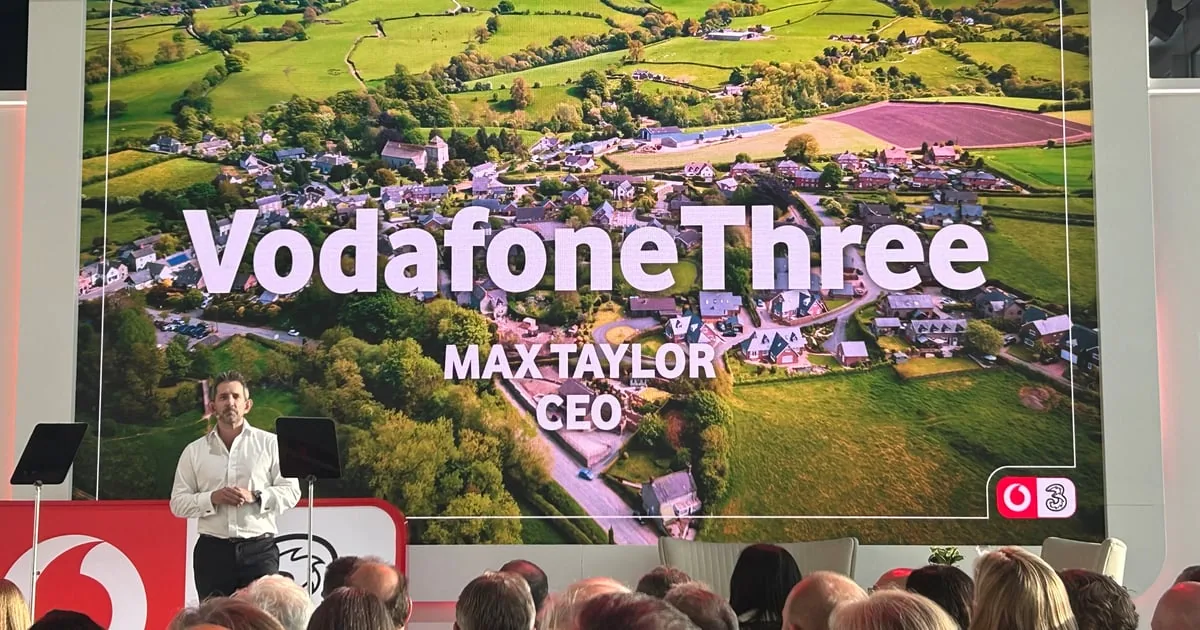
Community Fibre also plans to enter mobile as a virtual operator using a wholesale agreement with VodafoneThree.
Its unlimited 5G service will be priced at £15 a month for broadband customers and £17 for others.
The company says eSIM availability makes the launch easier.
It cites research indicating that eSIM support covers between 60% and 75% of phones currently in use, and nearly all smartphones now being sold.
Analyst Hayden Shaw said the wholesale partnership with VodafoneThree creates a sub-£50 offer for unlimited mobile and multi-gig broadband.
The question is whether Community Fibre can turn strong London take-up and low-cost expansion into durable returns as UK broadband moves from catch-up investment toward a market with more capacity and sharper pricing pressure.
Summary version for Medium
Community Fibre Turns UK Altnet Pressure Into a London Fiber Test Case
What the announcement means beyond the headline
Quick Summary: Community Fibre plans to expand its London fiber footprint to about 2 million premises and launch an unlimited 5G mobile offer next month. The operator says it has around 450,000 customers on a 1.4 million-premise footprint, giving it a take-up rate of roughly 33% in a difficult UK altnet market.
The Core Signal
Community Fibre plans to expand its London fiber footprint to about 2 million premises and launch an unlimited 5G mobile offer next month. The operator says it has around 450,000 customers on a 1.4 million-premise footprint, giving it a take-up rate of roughly 33% in a difficult UK altnet market.
The Technical Or Market Detail
Community Fibre Tests the Economics of UK Alternative Fiber Community Fibre is trying to show that a UK alternative network can grow customers, not just coverage.
- Point 1: The central topic is telco-connectivity, with the announcement framed around concrete operating detail.
- Point 2: The London broadband operator plans to expand its fiber footprint from about 1.4 million premises to around 2 million homes and businesses, while also launching a mobile offer...
The useful takeaway is the operating constraint behind the announcement, not the announcement alone.
Operational Impact Or Limits
Community Fibre plans to expand its London fiber footprint to about 2 million premises and launch an unlimited 5G mobile offer next month. The operator says it has around 450,000 customers on a 1.4 million-premise footprint, giving it a take-up rate of roughly 33% in a difficult UK altnet market.
Read the Full Deep Dive
Want to explore the complete technical analysis, enterprise trade-offs, and detailed metrics?
Read the full article originally published at SendTech Times