Apple's Memory Warning Shows AI Server Demand Reaching Consumer Devices
Apple is preparing customers for higher prices as AI data-center demand tightens memory supply, exposing how HBM demand from Nvidia-class systems can raise costs for phones, PCs and tablets.
AI Memory Demand Is Moving Into Device Prices
Apple's warning on memory costs turns the AI infrastructure boom into a consumer hardware problem.
The pressure is not only inside data centers.
It is also reaching smartphones, PCs and tablets that rely on the same limited supplier base for memory capacity.
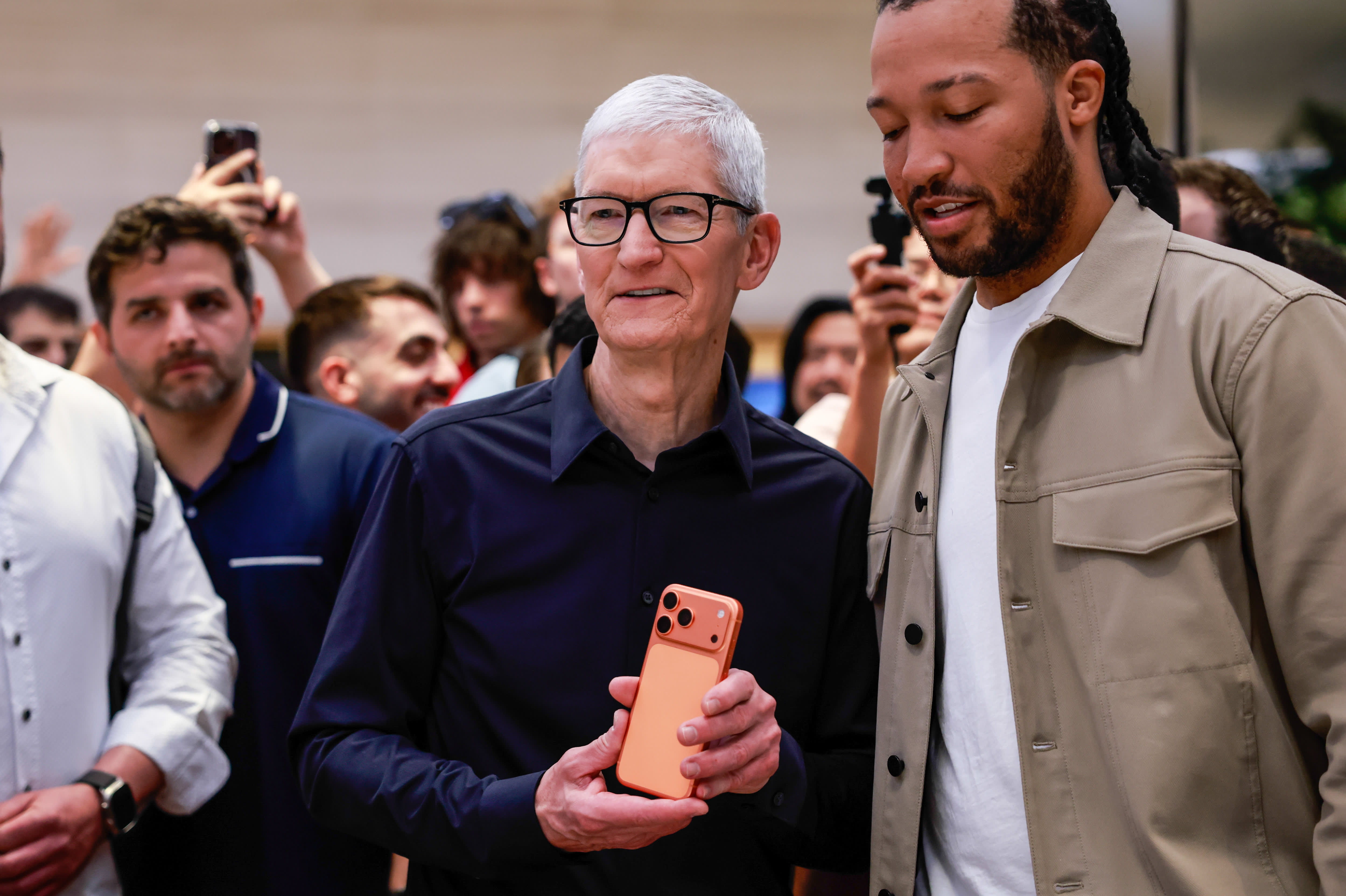
Apple CEO Tim Cook told the Wall Street Journal that product price increases are planned because of ongoing memory shortages.
He did not say when the increases would begin or which devices and models would be affected.
Apple also declined to comment to CNBC, leaving the immediate pricing map unclear.
That uncertainty is the central business tension.
Apple has usually been viewed as better protected than other device makers because of its scale, supplier relationships and pricing power.
Ranjit Atwal, an analyst at Gartner, said the situation shows the depth of the problem and that even Apple cannot fully shield itself from the shortage.
The supply squeeze begins with AI hardware.
Nvidia-class data-center chips use high-bandwidth memory, and that demand is pulling capacity toward AI servers.
Consumer device makers still need DRAM and NAND for phones, PCs and other products, but they must compete for output from the same memory industry.
The article identifies Micron, SK Hynix and Samsung as the three primary suppliers behind that capacity.
HBM Economics Create A Consumer Trade-Off
The reason this shortage is difficult to absorb is that suppliers face a production trade-off.
When Micron makes one unit of HBM, it gives up three units of more conventional smartphone memory.
HBM is also described as more profitable, so new capacity may continue to favor AI systems even as fabs are built.
That makes the memory shortage different from a normal component cycle.
Data-center AI processors rely on HBM, a faster and more power-hungry memory class than the DRAM used in phones.
One Nvidia Blackwell B200 chip carries 192GB of HBM, while large clusters can reach over 2,000 servers.
An iPhone, by contrast, uses 8GB or 12GB of DRAM, so the gap between server memory demand and handset memory needs is enormous even before supplier allocation decisions are made.
Those figures explain why consumer devices are exposed to AI buildouts even when they do not use the same memory type.
The capacity decision happens upstream.
Suppliers must decide which products receive wafers, tools and factory output, and the most profitable AI memory can crowd out conventional memory needed by handset and PC makers.
Francisco Jeronimo, an IDC analyst, framed the effect as consumers paying for AI before they receive the full benefit of on-device AI.
Apple is putting more RAM into each phone for AI features, while some newer Siri and dictation capabilities are expected to be limited to newer iPhones, iPads and Macs because older or less expensive devices cannot handle the memory-hungry options.
Apple Still Has Pricing Choices
Several Apple responses remain possible, but there is no confirmed price list.
Jeronimo expects the $999 iPhone Pro and the $1,199 iPhone Pro Max to absorb the increase pressure, with lower-end devices left unchanged.
BofA Securities analysts also expect price increases for most Mac and iPad models.
Apple could also use the shortage competitively.
It has recently targeted budget-conscious buyers with the $599 MacBook Neo and $599 iPhone 16e.
Some analysts expect Android manufacturers to cut specifications or raise prices, while IDC expects average smartphone prices to increase by 20% this year.
That creates a strategic fork.
Apple can protect margins by raising prices on premium devices, use budget models to pressure Android rivals, or spend from its balance sheet to help expand supply.
Cook said Apple is willing to use its balance sheet as part of the solution, but the source does not describe a specific supply deal.
The next test is whether memory shortages remain a data-center cost story or become a broader consumer electronics reset.
If AI server demand keeps pulling capacity toward HBM, device makers may have to explain why phones and PCs cost more before users see the promised benefits of on-device AI.