Dubai’s Agentic AI Plan Moves From Policy To Company-Level Deployment
Dubai’s higher technology committee reviewed an Agentic AI programme targeting 295,000 companies, 100 specialised AI assistants and 50 Agentic AI companies, turning the emirate’s AI agenda toward private-sector execution.

Dubai Moves The AI Agenda Into Company Operations
Dubai has shifted its Agentic AI push from high-level ambition toward a deployment plan for private-sector companies.
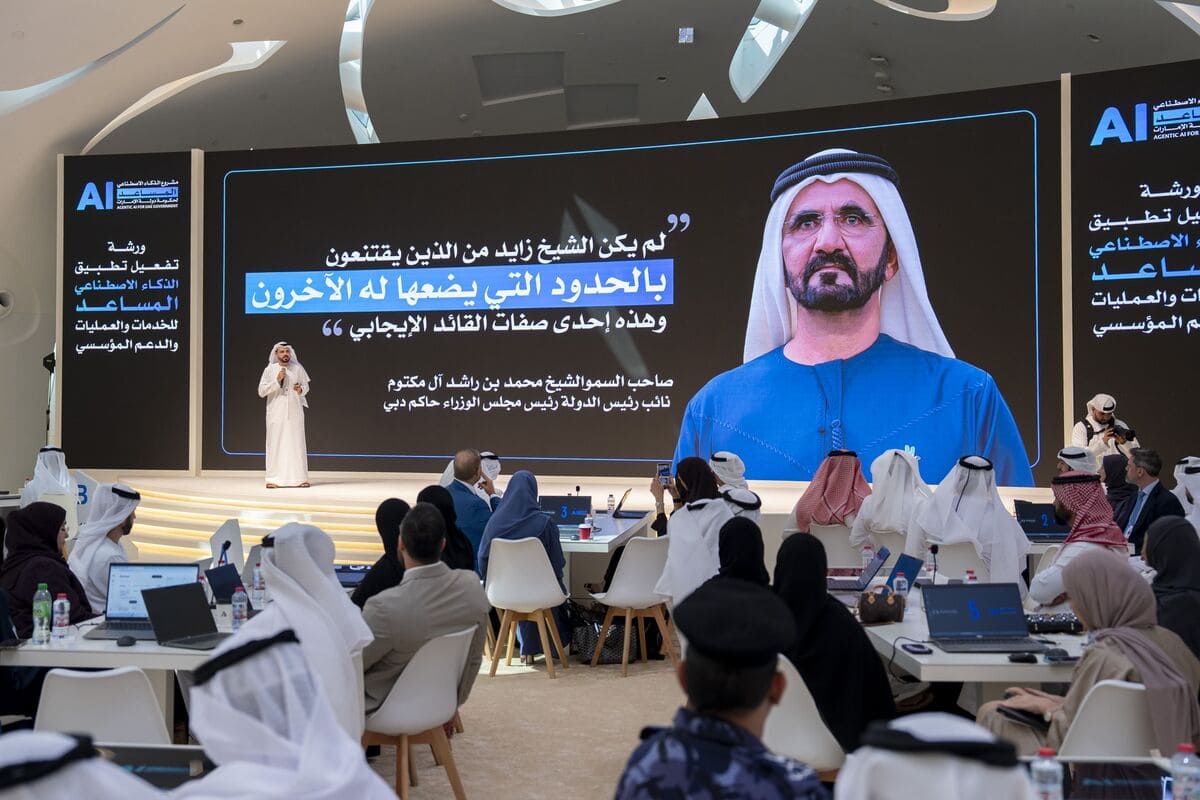
Sheikh Hamdan bin Mohammed bin Rashid Al Maktoum chaired the emirate’s higher technology and digital-economy committee, where he reviewed an executive programme intended to accelerate Agentic AI adoption and business readiness across the emirate.
The plan matters because it defines adoption through operating targets rather than broad branding.
Its targets put 295,000 companies inside the programme’s reach.
Dubai also wants 100 specialised AI assistants delivered over the next 2 years, alongside support for 50 Agentic AI companies.
For SendTech Times readers, the central signal is that Dubai is trying to make autonomous AI systems part of daily business execution, not only a government-services experiment.
Private Sector Readiness Becomes The Test
Sheikh Hamdan framed the next phase as a move beyond traditional AI tools toward systems able to execute tasks, make decisions and manage operations more efficiently.
That puts the burden on company readiness: firms need workflows, governance and staff capacity before agentic systems can safely handle decisions that affect customers, operations or compliance.
Dubai will also host the 50th International Collegiate Programming Contest World Finals.
The contest is scheduled for 16 to 20 November 2026 and is set to bring 140 teams from more than 70 countries.
In the context of Dubai’s AI plan, the programming contest is not a side event.
It supports the emirate’s talent pipeline at the same time that policy makers are asking companies to absorb more advanced AI systems.
Digital Infrastructure Gets Measurable Benchmarks
Several initiatives reviewed at the meeting show how Dubai is pairing AI policy with infrastructure and platform metrics.
Dubai Police’s Digital Twin System will begin with a pilot covering 150 cameras, using advanced digital technologies to improve monitoring, analysis and field response.
The SME digital trade support initiative with Amazon grew more than threefold and reached over 105,000 companies by May 2026, exceeding its 2026 target of 100,000.
Ignyte has more than 36,000 users and has provided over 3,000 specialised mentoring sessions for entrepreneurs and startups.
At Dubai AI Campus, the count stands at more than 400 specialised companies.
Its AI Academy has trained over 1,500 participants.
Those figures give the Agentic AI programme a broader operating base.
Dubai is not presenting the plan as a single application launch.
It is connecting company adoption, startup services, AI training, smart surveillance infrastructure and government-service platforms under one digital-economy agenda.
Sovereignty And Startup Capital Stay In Scope
The meeting also reviewed the AI Infrastructure Empowerment Platform, which has been used by 27 government entities and is designed to preserve full data sovereignty for Dubai.
That detail is important for agentic systems because autonomous workflows increase the sensitivity of data movement, model access and operational control.
Startup activity remains part of the same policy frame.
Dubai Founders HQ now counts over 1,100 members.
It has also drawn 500 startups within 9 months of launch, and companies under its umbrella raised over AED200 million in funding.
The Dubai PropTech Hub recorded 118% growth in the number of companies within one year, adding another sector-specific channel for digital-economy expansion.
What To Watch Before The November 2026 Contest
The clearest near-term watchpoint is whether Dubai’s institutions can turn the 295,000-company target into visible adoption before the ICPC World Finals in November 2026.
The programme’s credibility will depend on how the 100 AI assistants are deployed, whether the 50 Agentic AI companies become commercially active, and how the Digital Twin System pilot informs wider smart-city operations without weakening governance or data-sovereignty controls.