Google's $4.99 AI Plus Cut Turns Consumer AI Into A Bundle Fight
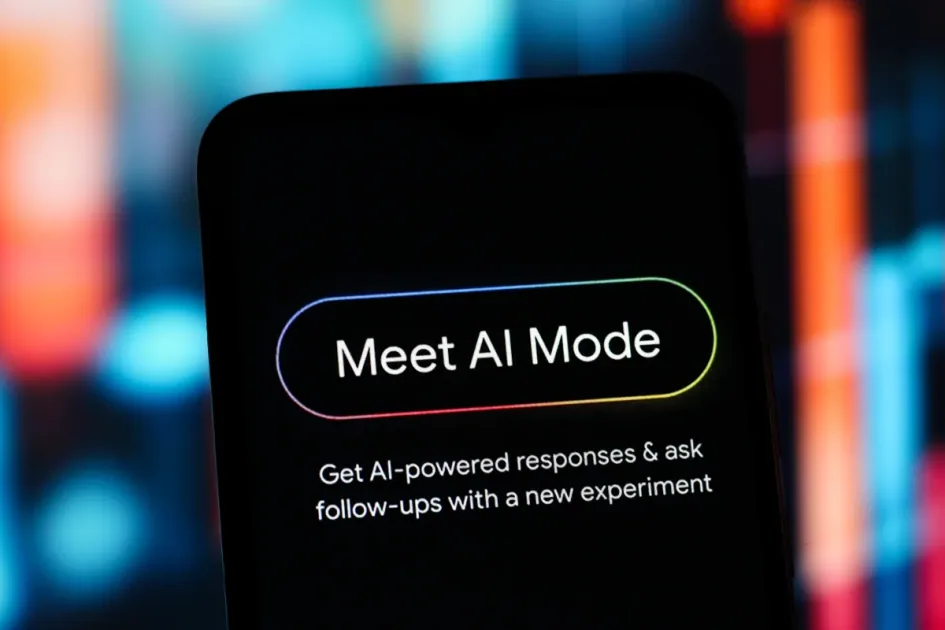
Google cut AI Plus from $7.99 to $4.99 per month and doubled included storage to 400 gigabytes, pushing U.S. consumer AI subscriptions toward lower-priced platform bundles.
Google Moves Its Budget AI Tier Into U.S. Price Competition
Google's latest AI subscription change moves a pricing battle that had been concentrated in emerging markets into the U.S. consumer market.
The company said Monday that Google AI Plus will now cost $4.99 per month instead of $7.99, and that the storage included with the plan will rise from 200 gigabytes to 400 gigabytes.
The plan is positioned below Google's higher-usage AI Pro and AI Ultra options.
Its target user is not an enterprise buyer with negotiated cloud contracts, but an individual or student weighing whether paid AI features are worth a monthly subscription.
The lower price also keeps Google AI Plus near the sub-$5 range it previously used in India.
The product package is not limited to chatbot access.
Google lists video generation through Omni Flash, Google Flow, and NotebookLM among the services tied to the plan.
That makes the price cut a bundle strategy as much as a subscription discount: Google is using storage, consumer AI tools, and distribution to make a low-cost paid tier harder for rivals to ignore.
Why The Cut Matters Beyond One Plan
The direct business signal is that AI subscription pricing is becoming a consumer acquisition tool in the United States, not only a localized tactic for faster-growing international markets.
OpenAI introduced ChatGPT Go in India in August of last year at roughly $4.60 per month, while Google followed in December with its own sub-$5 AI Plus plan for Indian users.
Google's U.S. move suggests that the same logic is now being applied at home: price lower, bundle more, and bring users into a paid AI layer before habits settle around a rival.
That matters here because consumer AI services still face a difficult proof point.
Many users test free tools, but recurring payment depends on whether the paid version feels meaningfully more useful than free access.
The change also pressures companies that do not have Google's mix of consumer distribution, cloud infrastructure, storage services, and product bundling.
A pure-play AI provider can compete on model quality, interface, or enterprise trust, but a low-priced bundle from Google changes the comparison for casual and student users.
Infrastructure Margins Enter The Conversation
The price cut connects consumer AI plans to a larger question about AI infrastructure margins.
Chi-Hua Chien of Goodwater Capital framed Monday's announcement as another step toward commoditization in the AI infrastructure layer, arguing that large platform companies with vertical integration and distribution can erode margins for more focused providers.
His comparison was to earlier technology shifts where infrastructure suppliers could be valuable for a period, then face pressure as customers cared more about the cheapest useful service than the underlying vendor.
Applied to AI, that argument reaches beyond chat subscriptions.
It touches model providers, backend components, energy, chips, and hosting.
The available disclosure does not prove that premium model companies will lose pricing power.
It does show why their valuation story may face closer scrutiny if consumer AI plans keep moving lower.
OpenAI and Anthropic are described as having confidentially filed to go public, which puts future investor attention on whether premium AI access can hold price when platform rivals subsidize or bundle aggressively.
Anthropic Becomes The Visible Holdout
Anthropic has not matched the India localization strategy or introduced a budget tier.
That absence becomes more conspicuous as Google and OpenAI test cheaper consumer pricing across markets.
A holdout position can support premium positioning if users see clear value, but it can also narrow the funnel for students and individual users who begin with the cheapest credible paid plan.
The next watchpoint is whether the U.S. AI subscription market settles into broad price matching or divides between low-cost platform bundles and premium standalone services.
Google's move gives competitors a concrete benchmark: $4.99 per month with 400 gigabytes of storage and named AI tools attached.
The market response will show whether consumer AI pricing is becoming a feature war, a bundle war, or both.
Summary version for Medium
Google's $4.99 AI Plus Cut Turns Consumer AI Into A Bundle Fight
What the announcement means beyond the headline
Quick Summary: Google cut AI Plus from $7.99 to $4.99 per month and doubled included storage to 400 gigabytes, pushing U.S. consumer AI subscriptions toward lower-priced platform bundles.
Google Moves Its Budget AI Tier Into U.S. Price Competition
Google's latest AI subscription change moves a pricing battle that had been concentrated in emerging markets into the U.S. consumer market.
Why The Cut Matters Beyond One Plan
The direct business signal is that AI subscription pricing is becoming a consumer acquisition tool in the United States, not only a localized tactic for faster-growing international markets.
- Point 1: The central topic is Google AI Plus, with the announcement framed around concrete operating detail.
- Point 2: OpenAI introduced ChatGPT Go in India in August of last year at roughly $4.60 per month, while Google followed in December with its own sub-$5 AI Plus plan for Indian users.
AI deployments now depend on where models, data, approvals and operating teams meet.
Infrastructure Margins Enter The Conversation
The price cut connects consumer AI plans to a larger question about AI infrastructure margins. Chi-Hua Chien of Goodwater Capital framed Monday's announcement as another step toward commoditization in the AI infrastructure layer, arguing that large platform companies with vertical integration and distribution can erode margins for more focused providers.
Read the Full Deep Dive
Want to explore the complete technical analysis, enterprise trade-offs, and detailed metrics?
Read the full article originally published at SendTech Times