SendTech Times
Policy
REGULATION WATCH:

China’s Tech Blacklist Fight Turns Alibaba And Baidu Into A Supply-Chain Test

Article summary

China objected after the US Defense Department added Alibaba, Baidu, BYD, Nio and solar manufacturers to a military-linked list that restricts Pentagon purchasing.
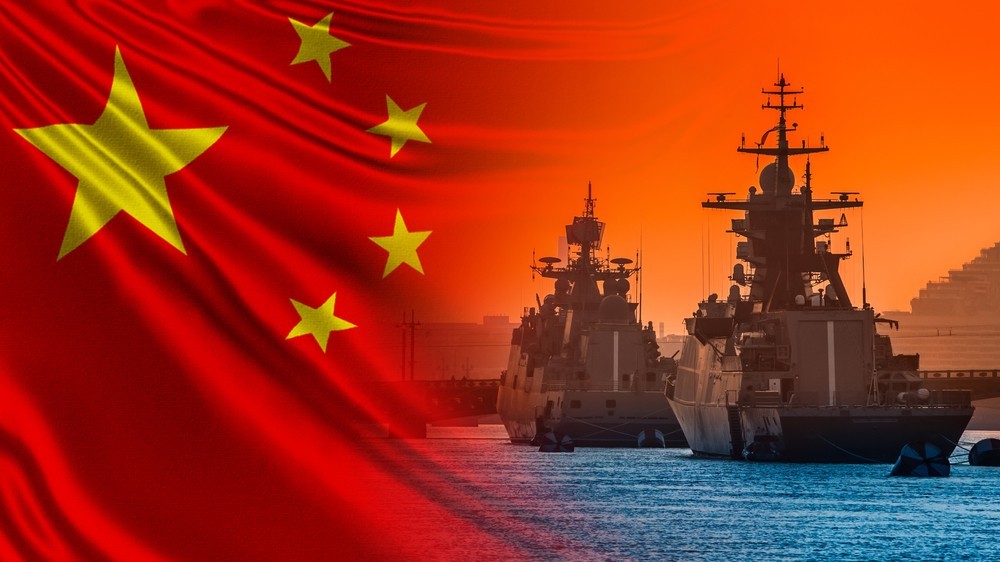
China’s Tech Blacklist Fight Turns Alibaba And Baidu Into A Supply-Chain Test
Image source: AI Times Korea

A Defense List Moves Into China’s Tech Sector

China has pushed back against a US Defense Department blacklist update that brings some of its best-known technology companies into a procurement and supply-chain dispute.

The listed companies include Alibaba, Baidu, BYD, Nio, Trina Solar and JA Solar Technology, putting internet platforms, electric vehicles and solar manufacturing inside the same security-screening frame.

The immediate action is not a consumer-market ban.

It is a government-procurement restriction tied to the US view that the companies support China’s military development.

That distinction matters because the pressure point is the Defense Department’s contracting base and the related supplier ecosystem, not every commercial transaction involving the companies.

China’s Ministry of Commerce objected on June 14 and demanded that Washington withdraw the measure.

The ministry said the move undermined understandings reached between US President Donald Trump and Chinese President Xi Jinping one month earlier.

It also warned that China would take firm countermeasures if Chinese companies do not receive fair treatment.

Procurement Rules Create The Practical Pressure

The blacklist carries two timing points for affected suppliers.

A direct-contract bar applies at the end of this month, preventing the Defense Department from making new agreements with the named companies.

From June 2027, the restriction expands to purchases routed through third parties, covering products and services that could otherwise enter Defense Department supply chains indirectly.

That timetable gives the measure its operational force.

Alibaba and Baidu are better known globally as internet and cloud-linked technology groups, while BYD and Nio sit in the electric-vehicle sector.

Trina Solar and JA Solar Technology bring solar manufacturing into the same review structure.

The common thread is not one product category; it is Washington’s concern that advanced technology, industrial capacity and supply chains can overlap with national-security risk.

The breadth of the list also changes the compliance question.

A contractor does not only have to ask whether it is buying a finished product from a named company.

It may also have to examine services, embedded components, software dependencies or equipment tied to those firms once indirect purchasing restrictions begin.

For companies on the list, the direct effect is narrower access to US government procurement.

For suppliers around them, the larger concern is diligence: whether parts, software, services or equipment connected to a named company can remain inside a Defense Department contracting chain once the third-party restriction takes effect.

Why The Response Matters For Technology Policy

Beijing framed the update as a diplomatic as well as commercial issue.

The Chinese foreign ministry opposed the decision, and the Ministry of Commerce said the Pentagon action ignored the consensus between the two leaders.

That wording places the blacklist inside the broader US-China technology contest rather than treating it as a routine procurement notice.

The current record does not show that US commercial buyers outside Defense Department channels must cut ties with the named companies.

It does show that Washington is extending security scrutiny across platform companies, electric-vehicle makers and solar manufacturers, while China is signaling that it may answer through policy tools of its own.

The affected company mix is important because it reaches beyond one obvious defense supplier category.

It links consumer internet services, mobility hardware and renewable-energy manufacturing to the same military-linked procurement framework.

The next concrete point to watch is enforcement around the two purchasing deadlines.

The direct-contract limit arrives at the end of this month, while the June 2027 third-party rule is the more complicated test for supply-chain screening.

Share this article
inXf

Related articles

More
Claude Fable 5 Turns AI Safety Controls Into A China Model-Access Test
AI

Claude Fable 5 Turns AI Safety Controls Into A China Model-Access Test

Anthropic’s Claude Fable 5 restrictions show how frontier AI providers can move safety and anti-distillation controls into the model layer, creating new friction for Chinese developers.

Saudi DISAI 2026 Turns AI Startup Support Into An Edge-Prototype Test
AI

Saudi DISAI 2026 Turns AI Startup Support Into An Edge-Prototype Test

Qualcomm, Aramco, RDIA and HUMAIN have selected ten startups for DISAI 2026, giving Saudi Arabia's AI and deep-tech accelerator a second-year test built around edge AI platforms, infrastructure access, IP training and prototype delivery.

LEAP East Turns Gulf-Asia AI Capital Flows Into A Technology Corridor Test
AI

LEAP East Turns Gulf-Asia AI Capital Flows Into A Technology Corridor Test

The Hong Kong debut of LEAP East puts Saudi Arabia’s technology-event platform between Gulf sovereign capital and Asian AI, digital infrastructure and manufacturing companies.

Pine Labs’ P3P Turns Agentic Payments Into A UPI Compliance Test
AI

Pine Labs’ P3P Turns Agentic Payments Into A UPI Compliance Test

Pine Labs’ P3P lets AI agents execute pre-approved UPI payments, but the launch also surfaces unresolved questions on mandates, user authentication, liability, privacy and stablecoin plans.

Keep Reading

More Stories

Latest
SK hynix And NVIDIA Push AI Factory Memory Into A Manufacturing TestChips & SemiconductorsJun 14, 2026SK hynix And NVIDIA Push AI Factory Memory Into A Manufacturing TestSK hynix and NVIDIA announced a multi-year partnership covering next-generation memory, AI infrastructure systems and factory digital twins for semiconductor production.Dubai’s Agentic AI Plan Moves From Policy To Company-Level DeploymentAIJun 14, 2026Dubai’s Agentic AI Plan Moves From Policy To Company-Level DeploymentDubai’s higher technology committee reviewed an Agentic AI programme targeting 295,000 companies, 100 specialised AI assistants and 50 Agentic AI companies, turning the emirate’s AI agenda toward private-sector execution.UAE Cyber Summit Puts AI Risk Inside A National Resilience PlanCybersecurityJun 14, 2026UAE Cyber Summit Puts AI Risk Inside A National Resilience PlanThe UAE’s 3rd Government Cybersecurity Summit in Abu Dhabi framed cyber defence as a national resilience issue, linking AI-enabled threats, telecom exposure, data compression and regional cooperation.Altman’s Canceled Abu Dhabi Visit Tests OpenAI’s Gulf AI TiesAIJun 14, 2026Altman’s Canceled Abu Dhabi Visit Tests OpenAI’s Gulf AI TiesSam Altman called off a planned Abu Dhabi visit as OpenAI’s UAE relationships, IPO preparations and Stargate data-center buildout place Gulf capital at the center of the company’s next scrutiny test.JPMorgan Frames China’s AI Race Around Enterprise ValueAIJun 14, 2026JPMorgan Frames China’s AI Race Around Enterprise ValueJPMorgan’s Alex Yao says China’s AI competition is moving from raw model performance toward measurable business value, with enterprise use cases carrying the larger monetisation prize.CAICT Token Cloud Plan Turns AI Inference Quality Into A Cloud BenchmarkCloud & Data CentersJun 14, 2026CAICT Token Cloud Plan Turns AI Inference Quality Into A Cloud BenchmarkCAICT launched a Token Cloud Service Quality Enhancement Evaluation Plan with major Chinese cloud and AI partners, aiming to benchmark latency, throughput, reliability and cost efficiency for token-processing infrastructure.Saidou's AIVA Tests Whether AI Can Lead Vehicle DesignAIJun 14, 2026Saidou's AIVA Tests Whether AI Can Lead Vehicle DesignSaidou Technology unveiled AIVA on June 9, 2026, presenting an AI-defined vehicle brand that starts product planning with AI models before hardware architecture.Xiaomi MiMo Code Tests Long-Horizon AI Coding Inside the TerminalAIJun 14, 2026Xiaomi MiMo Code Tests Long-Horizon AI Coding Inside the TerminalXiaomi has open-sourced MiMo Code V0.1.0, a terminal-native AI programming assistant built for long agentic software workflows. Internal testing with 576 developers and tasks exceeding 200 steps positions the release as a direct challenge to existing coding agents such as Claude Code.German Court Puts Google AI Overviews On The Hook For False ClaimsAIJun 14, 2026German Court Puts Google AI Overviews On The Hook For False ClaimsA Munich ruling treats Google AI Overviews as Google’s own answers, raising liability risk for AI search when generated summaries make unsupported claims about people or companies.Anterix And Lynk Test Satellite-To-Device Links For Utility NetworksTelco & ConnectivityJun 14, 2026Anterix And Lynk Test Satellite-To-Device Links For Utility NetworksAnterix and Lynk Global are testing whether 900 MHz private wireless spectrum can extend satellite-to-device connectivity into utilities and other critical infrastructure networks.Oracle Cloud Infrastructure Pushes Arm’s AGI CPU Into The Agentic AI StackAIJun 14, 2026Oracle Cloud Infrastructure Pushes Arm’s AGI CPU Into The Agentic AI StackOracle Cloud Infrastructure joining Arm’s AGI CPU ecosystem turns agentic AI infrastructure into a CPU-density and cloud-orchestration question, not only an accelerator race.Anthropic’s Fable 5 Suspension Turns Sovereign AI Into A Live Dependency TestAIJun 14, 2026Anthropic’s Fable 5 Suspension Turns Sovereign AI Into A Live Dependency TestAnthropic’s forced block on Claude Fable 5 and Claude Mythos 5 puts India’s sovereign AI debate on firmer ground, linking model access, export controls and startup architecture choices.