Nvidia And AWS Add Blackwell G7 GPUs To Production AI Stack
AWS is adding EC2 G7 instances with Nvidia RTX PRO 4500 Blackwell GPUs, cuVS-backed OpenSearch vector indexing and GB300 Exemplar Cloud status for AI training workloads.

AWS Adds Blackwell G7 Instances
Nvidia and Amazon Web Services are expanding the AWS AI infrastructure stack by putting Nvidia RTX PRO 4500 Blackwell Server Edition GPUs inside the EC2 G7 instance family.
The launch targets production workloads that need inference, graphics, spatial computing and GPU-accelerated analytics without customers managing their own GPU platform.
The hardware claim is specific.
At the largest configuration, a G7 instance can carry eight GPUs, 256GB of combined GPU memory, EFA networking at 700 Gbps and local NVMe SSD storage reaching 7.6TB.
AWS is offering one-, two-, four- and eight-GPU configurations, with bare metal coming soon.
Nvidia says the instances deliver up to 4.6x AI inference performance and up to 2.1x graphics performance compared with G6 instances.
The same platform is also positioned for Amazon EMR analytics workloads using the Nvidia cuDF library for Apache Spark.
Vector Search Moves Into OpenSearch
The update also changes the retrieval layer for AI applications.
Amazon OpenSearch Serverless now sets Nvidia cuVS GPU acceleration as the default path for vector indexing in vector collections.
For teams building retrieval-augmented generation, semantic search, recommendation systems and agentic AI applications, the managed OpenSearch path changes the deployment work.
Instead of treating GPU vector search as a separate optimization project, AWS is making it part of the managed OpenSearch Serverless path.
Nvidia says the customer impact is vector indexing that can run up to 10x faster while costing a quarter as much as CPU-only builds.
It also says billion-scale vector databases can be built in under an hour.
Those are vendor performance claims, but they identify the operating burden AWS is trying to reduce: moving raw enterprise data into searchable AI retrieval systems without running separate infrastructure.
The managed-service angle is as important as the speed claim.
Enterprises building AI retrieval systems often need vector search, serverless scaling and idle-time cost control in the same workflow.
AWS and Nvidia are packaging those pieces inside OpenSearch rather than asking each team to build a separate GPU indexing pipeline.
G7 also reaches more than one buyer group.
AI teams can use the instances for lower-latency inference, media teams can use the same family for high-resolution video and rendering, and data teams can apply the GPU memory, storage and networking to analytics pipelines.
That breadth is useful for procurement teams because one instance family can support several production workloads instead of a single AI pilot.
GB300 Status Targets Training Buyers
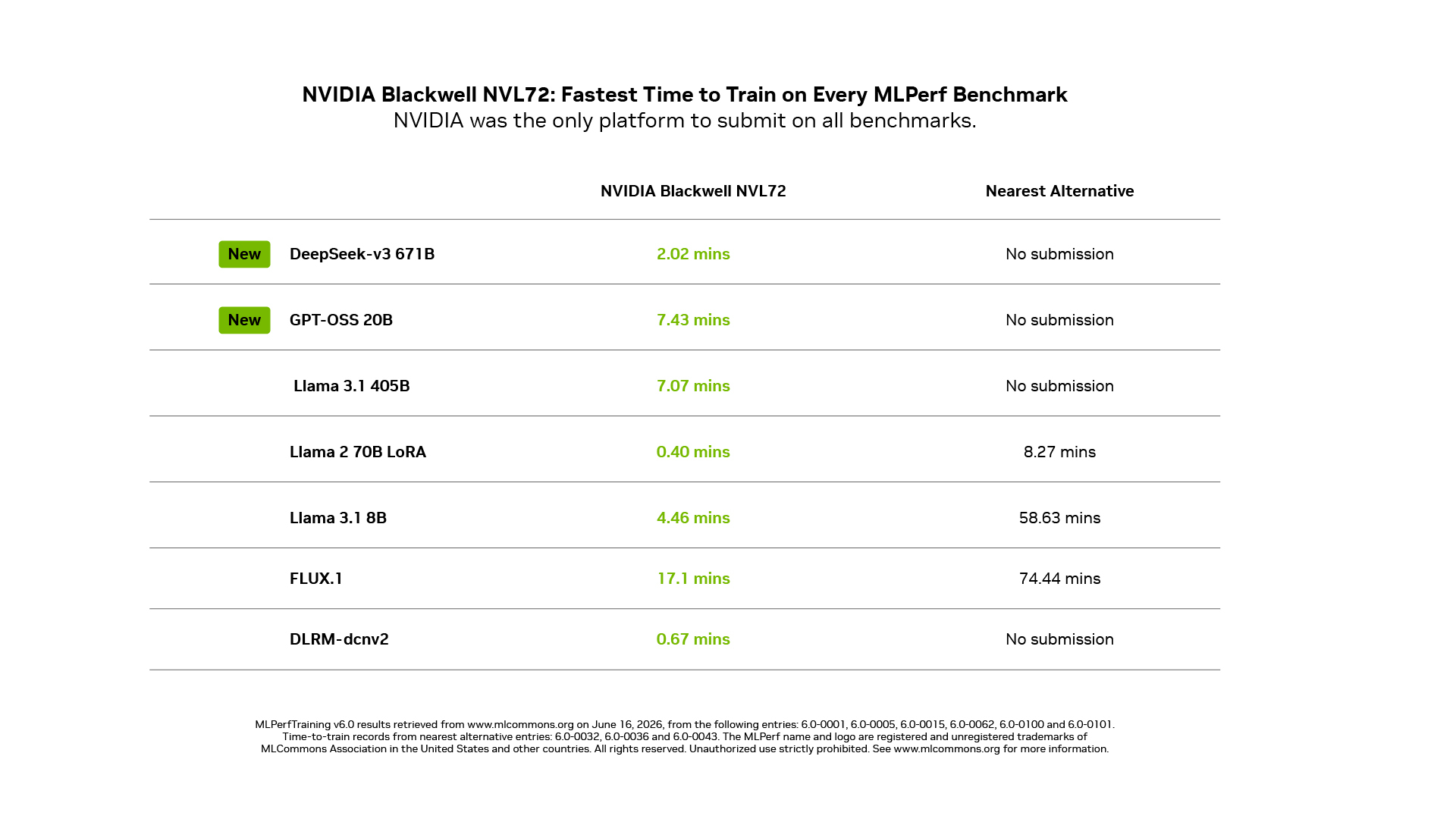
AWS has also achieved Nvidia Exemplar Cloud status on Nvidia GB300 for training workloads.
Nvidia describes the status as evidence that AWS meets the performance thresholds it uses to benchmark AI workloads against its reference architecture.
The designation is aimed at companies comparing cloud providers for large-scale training.
It does not name customer deployments or pricing, but it gives procurement and AI infrastructure teams another benchmark when they compare training performance, total cost of ownership and the move from pilots to production.
For AWS customers, the new stack now covers GPU instances, managed vector indexing and a GB300 training-performance benchmark.
Nvidia and AWS did not publish regional availability, customer adoption figures or pricing in the announcement, leaving buyers to test whether the claimed inference, search and training gains hold inside their own workloads.