Anthropic Alleges Alibaba Used 25,000 Accounts In AI Distillation Campaign
Anthropic told U.S. Senate banking leaders that operators affiliated with Alibaba carried out 28.8 million model exchanges using roughly 25,000 fraudulent accounts between April 22 and June 12.
Anthropic Sends Alibaba Claim To Senate Banking Leaders
Anthropic has moved an AI model-security dispute into Washington’s policy channel.
In a June 10 letter addressed to Sen.
Tim Scott and Sen.
Elizabeth Warren, the company accused operators affiliated with Alibaba and its AI lab of running a large distillation campaign against Anthropic models.
The company put the scale at 28.8 million model exchanges and roughly 25,000 fraudulent accounts between April 22 and June 12.
Anthropic described the activity as the largest known distillation attack against the company to date and said the accounts were used to extract AI capabilities.
The allegation matters for AI governance because distillation sits between ordinary model access, commercial competition and export-control enforcement.
Distillation can mean using outputs from one model to train or improve another system.
When a model provider believes the activity is unauthorized, the dispute becomes a question of account controls, contractual limits and whether policymakers treat AI capability extraction as a national-security issue.
Government And Industry Coordination Is The Ask
Anthropic told lawmakers that combating illicit distillation requires coordinated action between government and industry.
The company said it would continue working with Congress and the administration on the issue.
The timing links the complaint to an April White House Office of Science and Technology Policy memorandum that told federal agencies to strengthen protections around frontier AI model weights.
Anthropic’s complaint gives that policy debate a concrete company-to-company case, with Alibaba named as the accused actor and Senate banking leaders named as the audience.
For enterprise AI buyers, the case also highlights a vendor-control problem.
Model providers can sell access through accounts and APIs, but those same access points become enforcement surfaces when a customer, reseller or automated account network is suspected of using outputs to build or improve another model.
Alibaba did not immediately respond to a CNBC request for comment.
That absence leaves Anthropic’s letter as the central public account of the alleged campaign, rather than a record tested through litigation, regulator findings or a public response from Alibaba.
The Senate banking audience also matters because the committee touches financial sanctions, export controls and national-security questions that can shape how advanced AI services are accessed across borders.
Anthropic did not describe a completed enforcement action in the public material; it described a claim it wants lawmakers and the administration to treat as part of a wider distillation-risk problem.
Export Controls Add Pressure On Model Access
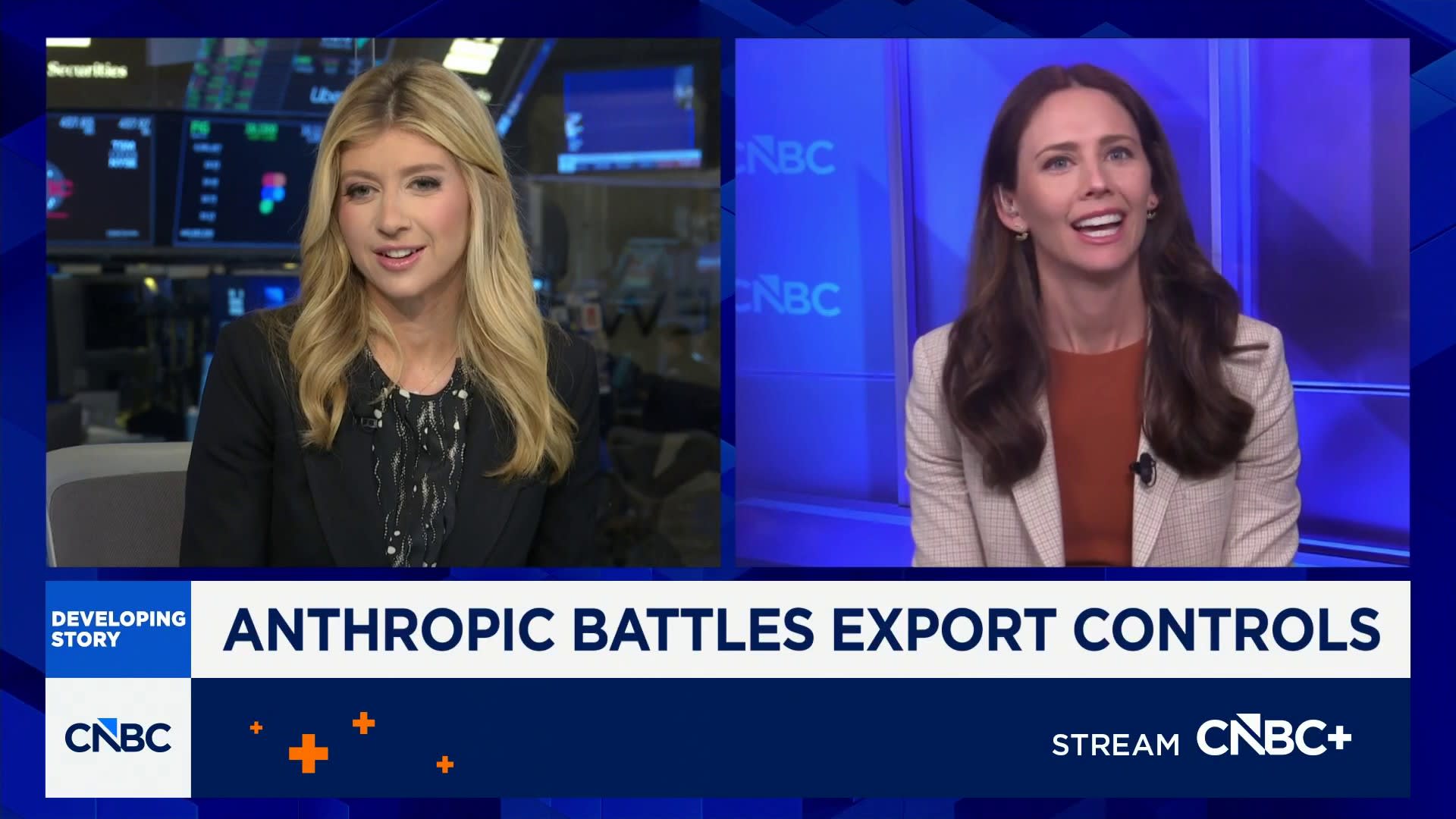
Anthropic’s policy position is complicated by its own recent export-control dispute.
Earlier this month, the company said it had received a government directive requiring it to disable access to its Fable 5 and Mythos 5 models for certain users.
The government cited national security authorities, while Anthropic said it was not told the specific concern.
In February, Anthropic said it had identified three industrial-scale distillation campaigns across different AI services.
The new Alibaba allegation is narrower and more direct: a named company, a named AI lab, a date range, an account count and a claimed volume of model exchanges.
The unresolved issue is procedural rather than technical.
Anthropic has put a 28.8 million-exchange allegation before U.S. lawmakers and tied it to roughly 25,000 fraudulent accounts, but the public record in the source does not include Alibaba’s response, a regulator finding or a court-tested account of who controlled the accounts.