Trump Threatens New Iran Strikes and Links Israel Normalisation to Nuclear Deal
US President Donald Trump warned of potential military action against Iran. He urged Gulf nations to normalise relations with Israel through the Abraham Accords. Trump emphasized that the Strait of Hormuz should remain open and not controlled by any country.
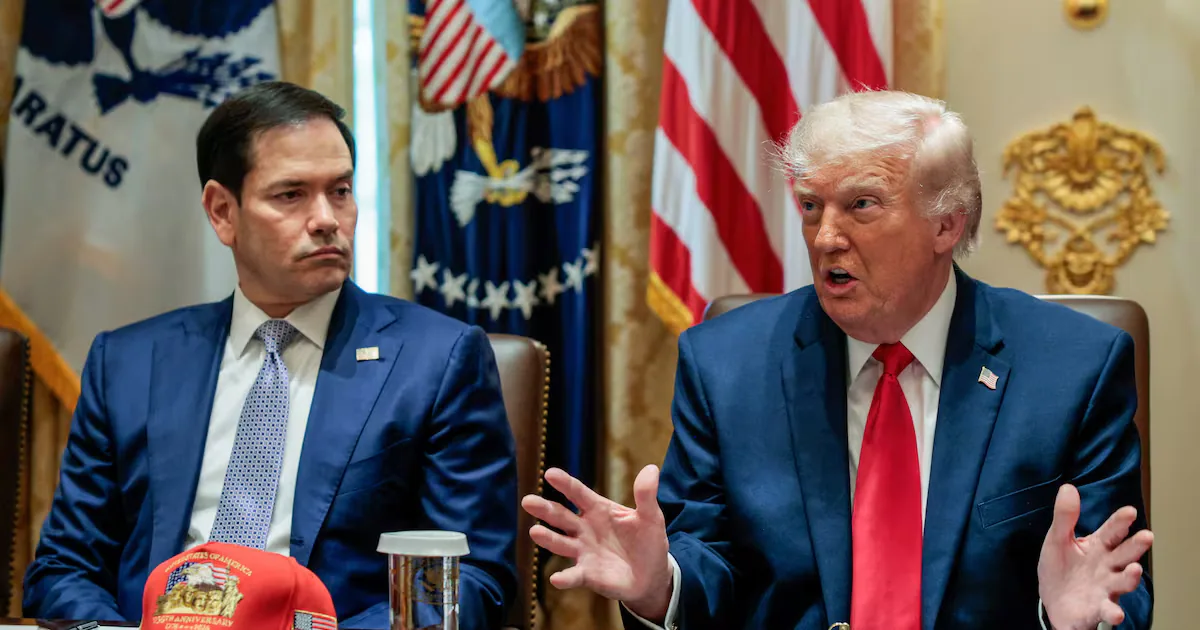
US President Donald Trump on Wednesday said Washington could resume attacks on Iran and declared that Gulf countries “owe it” to the US to join the Abraham Accords.
Threats and Expectations
Mr. Trump also appeared to threaten Oman, a key US ally and strategic partner in the Gulf, if it sought to exercise control over the Strait of Hormuz.
Speaking at a cabinet meeting at the White House, Mr. Trump stated that Iran was eager to reach a deal but had not yet met US expectations.
“Iran very much wants to make a deal,” he said.
“So far they haven’t gotten there … We’re not satisfied with it but we will be.”
Mr. Trump then issued another warning about possible military action against Tehran.
“Maybe we will go back and finish it, maybe not,” he said.
He added that under any framework deal with Tehran, the Strait of Hormuz would open immediately but would not be controlled by any country, including Oman.
“We'll watch over it but nobody's going to control it.
That's part of the negotiation that we have.
They would like to control it.
Nobody's going to control it.
It's international waters and Oman will behave just like everybody else or we'll have to blow them up,” Mr. Trump said.
Calls for Normalisation
His comments came after Iranian state television reported that it had obtained what it called a draft, 14-point preliminary agreement with the US – a claim the White House dismissed as a “complete fabrication.” Mr. Trump also expressed his desire for Gulf nations to normalise relations with Israel immediately through the Abraham Accords.
“It’ll be historic if they do it,” he said.
“I think they owe that to the US.”
He suggested that Washington should reconsider moving forward on a deal with Iran if Gulf countries refused to join the accords.
“I’m not sure we should make the deal if they don’t sign,” he said.
“We’re requesting strongly that they join.
It’ll be great.
It’d be great for Saudi Arabia, great for Qatar, Kuwait – the whole group.”
Ongoing Challenges
The Abraham Accords, brokered during Mr. Trump’s first term, established diplomatic relations between Israel and the UAE and Bahrain, with Morocco following.
The Trump administration continues to struggle to end the war, launched alongside Israel in February, and reopen the Strait of Hormuz.
Mr. Trump insisted he was not under political pressure to bring the conflict to a close, despite the war rattling global markets, driving up prices and fuelling instability across the Middle East.
“One of the things that will happen is the strait will open immediately,” he said.
“But it’s got to be perfect.
I didn’t do this to get a crumby agreement.”
The midterm elections loom in November, however, and rising costs and involvement in overseas conflicts are emerging as key political issues.
Mr. Trump said Iranian leaders wrongly believed they could simply wait him out.
“They thought they were going to outwait me,” he said, adding: “I don’t care about the midterms.” US Secretary of State Marco Rubio said there had been some progress in negotiations, but cautioned that it remained unclear whether a breakthrough was imminent.
“I think there’s been some progress and some interest,” Mr. Rubio said.
“We’ll see over the next few hours and days whether progress can be made.
Summary version for Medium
Trump Threatens New Iran Strikes and Links Israel Normalisation to Nuclear Deal
What the announcement means beyond the headline
Quick Summary: US President Donald Trump warned of potential military action against Iran. He urged Gulf nations to normalise relations with Israel through the Abraham Accords.
Threats and Expectations
Trump also appeared to threaten Oman, a key US ally and strategic partner in the Gulf, if it sought to exercise control over the Strait of Hormuz. Speaking at a cabinet meeting at the White House, Mr.
Calls for Normalisation
His comments came after Iranian state television reported that it had obtained what it called a draft, 14-point preliminary agreement with the US – a claim the White House dismissed as a “complete fabrication.” Mr.
- Point 1: The announcement adds a concrete operating detail that changes how buyers should read the story.
- Point 2: Trump also expressed his desire for Gulf nations to normalise relations with Israel immediately through the Abraham Accords.
The useful takeaway is the operating constraint behind the announcement, not the announcement alone.
Ongoing Challenges
The Abraham Accords, brokered during Mr. Trump’s first term, established diplomatic relations between Israel and the UAE and Bahrain, with Morocco following.
Read the Full Deep Dive
Want to explore the complete technical analysis, enterprise trade-offs, and detailed metrics?
Read the full article originally published at SendTech Times