IAEA Chief Warns Gulf Nuclear Sites Face Rising Conflict Risk After Barakah Strike
IAEA chief Rafael Grossi warned that attacks near nuclear plants are becoming a dangerous conflict pattern after a drone incident at Abu Dhabi’s Barakah facility. Grossi said the UAE plant returned to service within 12 hours and that the agency lacks enough proof to attribute the attack to Iran. The watchdog chief plans Gulf visits to discuss technical support, nuclear safety and cross-border risks.
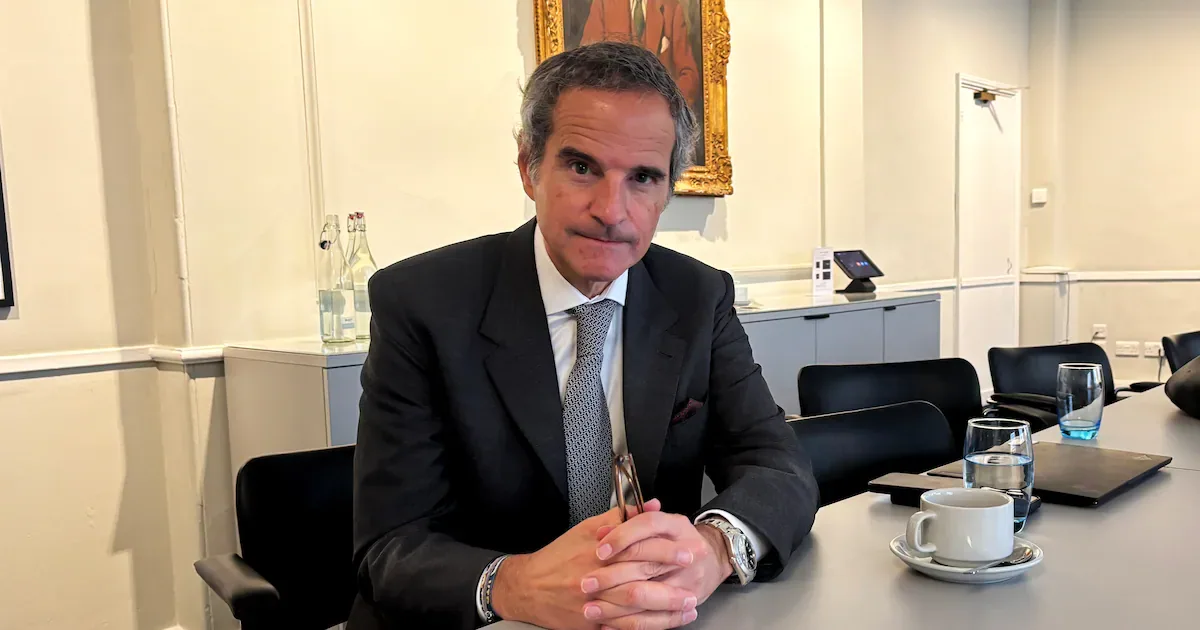
Nuclear Security Moves Up the Gulf Risk List
The International Atomic Energy Agency is warning that attacks around nuclear plants are becoming a more dangerous feature of modern conflict after a drone incident at Abu Dhabi's Barakah nuclear power station.
Rafael Grossi, the IAEA director general, told The National that any deliberate strike on a nuclear facility is extremely serious because the consequences could cross borders.
The reported May 17 incident hit a generator outside the plant's inner perimeter and caused a fire.
Grossi said Barakah's operators and UAE nuclear regulators managed the response professionally and that the station was back in service within 12 hours.
Why the Visit Matters
Grossi said the incident helped trigger a planned trip to the UAE and other Gulf countries, including Kuwait, Saudi Arabia and Qatar.
The agency is expected to discuss technical support and guidance with governments that may be exposed to regional nuclear safety risks.
The warning is not limited to the UAE.
The IAEA has been deeply involved at Ukraine's Zaporizhzhia plant and Grossi also referred to recent attacks near Iran's Bushehr facility.
His point is that nuclear-related sites are increasingly appearing near active security crises, making emergency readiness and international monitoring more important.
Attribution and Regional Sensitivity
Grossi did not blame Iran for the Barakah incident.
He said assumptions are not enough and that tangible proof would be needed before the agency could identify the origin of the attack.
That caution is significant in the Gulf, where nuclear safety, Iran tensions and energy infrastructure security are closely connected.
For the UAE, Barakah is both an energy asset and a strategic symbol.
It is the Arab world's first commercial nuclear power station and forms part of the country's wider plan to diversify electricity supply.
Even a contained incident can therefore carry diplomatic and investor significance.
Energy Transition With a Security Dimension
Grossi also linked the nuclear debate to climate and development.
He argued that poorer economies still need reliable energy and that the world should avoid a simplistic split between acceptable and unacceptable fuels.
The Barakah case shows why energy transition infrastructure also needs security planning.
Nuclear power, renewables, grids and hydrocarbons all sit inside a regional risk environment.
The immediate operational disruption in Abu Dhabi was limited, but the broader question is whether attacks near nuclear facilities become a normalized tool of conflict.
Summary version for Medium
IAEA Chief Warns Gulf Nuclear Sites Face Rising Conflict Risk After Barakah Strike
What the announcement means beyond the headline
Quick Summary: IAEA chief Rafael Grossi warned that attacks near nuclear plants are becoming a dangerous conflict pattern after a drone incident at Abu Dhabi’s Barakah facility. Grossi said the UAE plant returned to service within 12 hours and that the agency lacks enough proof to attribute the attack to Iran.
Nuclear Security Moves Up the Gulf Risk List
The International Atomic Energy Agency is warning that attacks around nuclear plants are becoming a more dangerous feature of modern conflict after a drone incident at Abu Dhabi's Barakah nuclear power station. Rafael Grossi, the IAEA director general, told The National that any deliberate strike on a nuclear facility is extremely serious because the consequences could cross borders.
Why the Visit Matters
Grossi said the incident helped trigger a planned trip to the UAE and other Gulf countries, including Kuwait, Saudi Arabia and Qatar.
- Point 1: The central topic is politics, with the announcement framed around concrete operating detail.
- Point 2: The agency is expected to discuss technical support and guidance with governments that may be exposed to regional nuclear safety risks.
The useful takeaway is the operating constraint behind the announcement, not the announcement alone.
Attribution and Regional Sensitivity
Grossi did not blame Iran for the Barakah incident. He said assumptions are not enough and that tangible proof would be needed before the agency could identify the origin of the attack.
Read the Full Deep Dive
Want to explore the complete technical analysis, enterprise trade-offs, and detailed metrics?
Read the full article originally published at SendTech Times