IMF Oil Inventory Warning Turns Gulf Energy Shock Into Growth Test
The IMF warned that global oil inventories are expected to fall to about 7.5 billion barrels by July as the Iran war disrupts energy supplies. The IEA put cumulative losses at 12.8 million barrels a day, while Fitch cut its 2026 global growth forecast to 2.4 per cent and raised its Brent forecast to $87 a barrel. The next signal is whether emergency reserves and diplomatic progress can stabilize inventories before the IMF releases its July global forecast.
Gulf Energy Shock Moves From Supply Risk to Inventory Risk
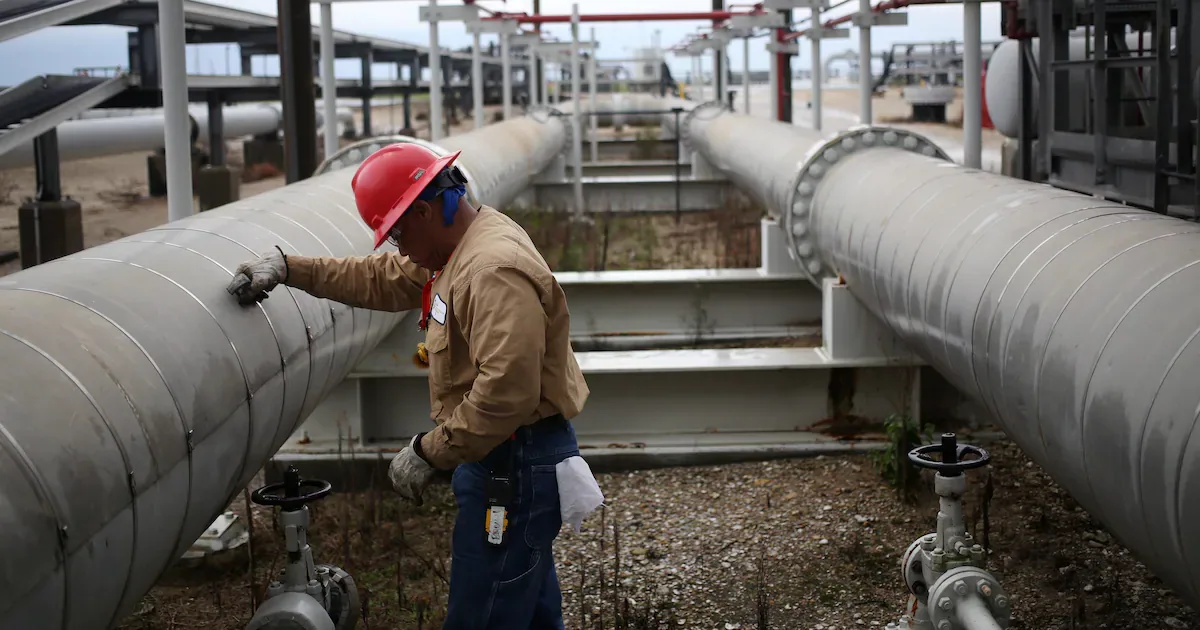
The International Monetary Fund (IMF) warning on global oil inventories turns the Gulf energy disruption into a near-term storage and inflation signal.
The fund expects inventories to move down from 8 billion barrels before the war to roughly 7.5 billion barrels in July, the weakest level in five years.
The supply pressure is tied to the Strait of Hormuz, which has been closed for nearly 100 days after the Iran war began on February 28.
The International Energy Agency (IEA) put cumulative losses at 12.8 million barrels a day, while its 32 member states said in March that they would make 400 million barrels of emergency reserves available.
For Gulf energy markets, the pressure is not limited to crude supply.
IMF spokeswoman Julie Kozack said product reserves are also weakening.
“We also are seeing that the oil price is kind of having ripple effects,” she told reporters, adding that reserves of jet fuels, refined products and petrochemicals are also reaching low levels.
Prices Ease, but Forecast Risk Stays Elevated
Oil prices retreated on Thursday after US President Donald Trump suggested talks with Tehran had progressed, while Iranian Foreign Minister Abbas Araghchi rejected the idea that tangible progress had been made.
Brent crude traded 2.56 per cent lower at $95.31 a barrel, and West Texas Intermediate traded 2.9 per cent lower at $93.24.
The pullback does not remove the wider macroeconomic pressure.
Oil prices remained about 35 per cent higher than pre-conflict levels, and Kozack said prices were about 3 per cent above the IMF's April reference forecast for the global economy.
The fund's April forecast assumed a quick end to the war and global growth of 3.1 per cent this year, with average oil prices at $82.22 a barrel in 2026 and $76 next year.
The fund has warned that a more adverse scenario could bring global growth down to 2.5 per cent this year.
The practical question is whether the next IMF global forecast in July shows the inventory shock moving from energy markets into wider growth assumptions.
Technology Spending Becomes a Cushion, Not an Offset
Fitch Ratings lowered its global growth forecast by 0.2 percentage points to 2.4 per cent this year because of the oil crisis, while raising its Brent crude forecast from $70 a barrel to $87.
Fitch chief economist Brian Coulton said the shock is increasing downside risks but that global spending on information technology is cushioning activity in the near term, particularly in Asia.
That makes the article's signal broader than oil alone.
Energy supply constraints are testing inflation, reserve management and transport-fuel availability, while technology investment is acting as a partial buffer for global activity.
The next signal is whether emergency reserves and any diplomatic progress can stabilize inventories before July, or whether Gulf-linked energy risk continues to feed into oil products, inflation assumptions and growth forecasts.
Summary version for Medium
IMF Oil Inventory Warning Turns Gulf Energy Shock Into Growth Test
What the announcement means beyond the headline
Quick Summary: The IMF warned that global oil inventories are expected to fall to about 7.5 billion barrels by July as the Iran war disrupts energy supplies. The IEA put cumulative losses at 12.8 million barrels a day, while Fitch cut its 2026 global growth forecast to 2.4 per cent and raised its Brent forecast to $87 a barrel.
The Core Signal
The IMF warned that global oil inventories are expected to fall to about 7.5 billion barrels by July as the Iran war disrupts energy supplies. The IEA put cumulative losses at 12.8 million barrels a day, while Fitch cut its 2026 global growth forecast to 2.4 per cent and raised its Brent forecast to $87 a barrel.
The Technical Or Market Detail
Gulf Energy Shock Moves From Supply Risk to Inventory Risk The International Monetary Fund (IMF) warning on global oil inventories turns the Gulf energy disruption into a near-term storage and inflation signal.
- Point 1: The central topic is oil inventories, with the announcement framed around concrete operating detail.
- Point 2: The fund expects inventories to move down from 8 billion barrels before the war to roughly 7.5 billion barrels in July, the weakest level in five years.
The useful takeaway is the operating constraint behind the announcement, not the announcement alone.
Operational Impact Or Limits
The IMF warned that global oil inventories are expected to fall to about 7.5 billion barrels by July as the Iran war disrupts energy supplies. The IEA put cumulative losses at 12.8 million barrels a day, while Fitch cut its 2026 global growth forecast to 2.4 per cent and raised its Brent forecast to $87 a barrel.
Read the Full Deep Dive
Want to explore the complete technical analysis, enterprise trade-offs, and detailed metrics?
Read the full article originally published at SendTech Times