Tokyo Uses Record-Scale SusHi Tech 2026 To Push Startup And Urban Innovation Agenda
SusHi Tech Tokyo 2026 opened at its largest scale, with projected attendance of more than 60,000 and around 10,000 expected business meetings. Tokyo Governor Yuriko Koike and Prime Minister Sanae Takaichi used the opening to frame startups as a shared national and metropolitan economic priority. The key test is whether new support programs, corporate partnerships and overseas participation translate into repeatable funding, pilots and market access.
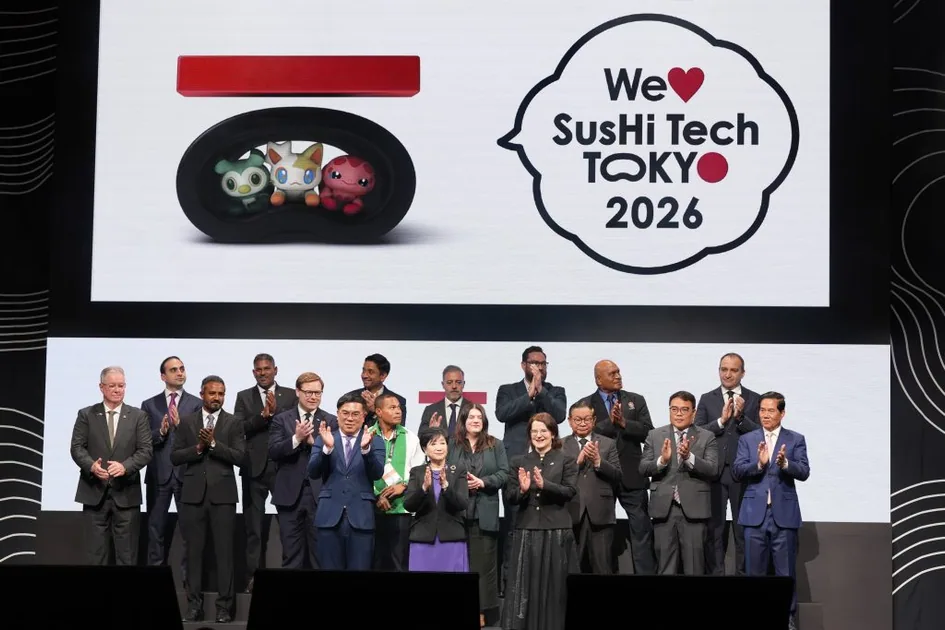
Tokyo is using SusHi Tech Tokyo 2026 to send a larger policy signal: startups are being positioned not only as exhibitors, but as part of Japan economic renewal and urban-technology strategy.
The Policy Move
The Tokyo Metropolitan Government opened SusHi Tech Tokyo 2026 at its largest scale yet, with Business Days on April 27 and 28 and a Public Day on April 29.
The event, now in its fourth year, is framed around sustainable cities through high technology and is being used as a platform to connect startups, public agencies, large enterprises and overseas partners.
The opening keynote carried unusual political weight.
Tokyo Governor Yuriko Koike appeared with Prime Minister Sanae Takaichi in a session focused on expectations for startups driving transformation and growth.
Their joint appearance signaled that Tokyo and the national government want startup policy to be read as an aligned economic priority, not only as a local innovation program.
Capital And Scale
The numbers show why the event matters.
The source reports that total attendance, including online, is projected at more than 60,000, while the venue is expected to host around 10,000 business meetings.
Exhibiting startups rose 27% year on year to 770, split between 390 international and 380 domestic companies, with participants from 60 countries and regions.
Tokyo is also adding capital and support mechanisms.
Koike reaffirmed the city 10x10x10 Innovation Vision, which aims to expand startups, unicorns and public-private collaboration projects tenfold.
She announced SusHi Tech Global for promising growth-stage companies, along with SusHi Tech Global Grants, and repeated the city plan to create a $1 billion startup investment flow through public-private partnerships by next fiscal year.
Cross-Border Market Signal
Overseas participants described Tokyo as a practical gateway into Japan.
MonaBit, a Colombia-based fintech company, is treating Japan as its starting point for Asia after building operations in the Americas and Europe.
Italian distributed-energy company Koala sees Japan as a market for local renewable-energy generation, sharing and management.
Irish private cellular core network company Druid said repeat participation helps foreign companies build familiarity with Japanese partners and investors, especially in traditional sectors.
That mix matters because the event is not limited to software startups.
The expanded Open Innovation Area brings 68 Corporate Partners together with startup collaborators, while new TIB CATAPULT clusters cover city tech, agritech and food tech, space, life sciences, entertainment and other sectors.
What To Watch
The strategic test is whether Tokyo can convert conference density into repeatable funding, pilots and procurement.
The debut SusHi Tech Global Startups pavilion gives 45 growth-stage companies priority support, while the SusHi Tech Challenge drew 820 applications and selected 18 semifinalists.
Public Day adds another layer by opening the event to residents, students and younger innovators through robotics, VR disaster preparedness, 3D-printed housing displays and the SusHi Tech Teen Challenge 2026.
If Tokyo can connect that public-facing technology agenda with its investment and corporate partnership programs, SusHi Tech could become a stronger channel for Japan urban innovation exports rather than a one-off exhibition.
Summary version for Medium
Tokyo Uses Record-Scale SusHi Tech 2026 To Push Startup And Urban Innovation Agenda
What the announcement means beyond the headline
Quick Summary: SusHi Tech Tokyo 2026 opened at its largest scale, with projected attendance of more than 60,000 and around 10,000 expected business meetings. Tokyo Governor Yuriko Koike and Prime Minister Sanae Takaichi used the opening to frame startups as a shared national and metropolitan economic priority.
The Policy Move
The Tokyo Metropolitan Government opened SusHi Tech Tokyo 2026 at its largest scale yet, with Business Days on April 27 and 28 and a Public Day on April 29. The event, now in its fourth year, is framed around sustainable cities through high technology and is being used as a platform to connect startups, public agencies, large enterprises and overseas partners.
Capital And Scale
The numbers show why the event matters.
- Point 1: The central topic is Japan startups, with the announcement framed around concrete operating detail.
- Point 2: The source reports that total attendance, including online, is projected at more than 60,000, while the venue is expected to host around 10,000 business meetings.
The important shift is not the AI label, but the operating boundary it creates for teams.
Cross-Border Market Signal
Overseas participants described Tokyo as a practical gateway into Japan. MonaBit, a Colombia-based fintech company, is treating Japan as its starting point for Asia after building operations in the Americas and Europe.
Read the Full Deep Dive
Want to explore the complete technical analysis, enterprise trade-offs, and detailed metrics?
Read the full article originally published at SendTech Times