A niche data-center game becomes a window into real infrastructure bottlenecks
An ITmedia feature examined the indie Steam game "Data Center" by having a data-center company executive play it and critique its realism from an operator’s perspective. The review found the game captures some core workflows of server deployment, but simplifies or omits major realities including layered security, redundant connectivity, cooling design, patch-panel operations, and automation. The episode matters as a signal of rising public and industry curiosity around data-center operations at a time when AI demand is pushing infrastructure into the mainstream technology conversation.
What Happened
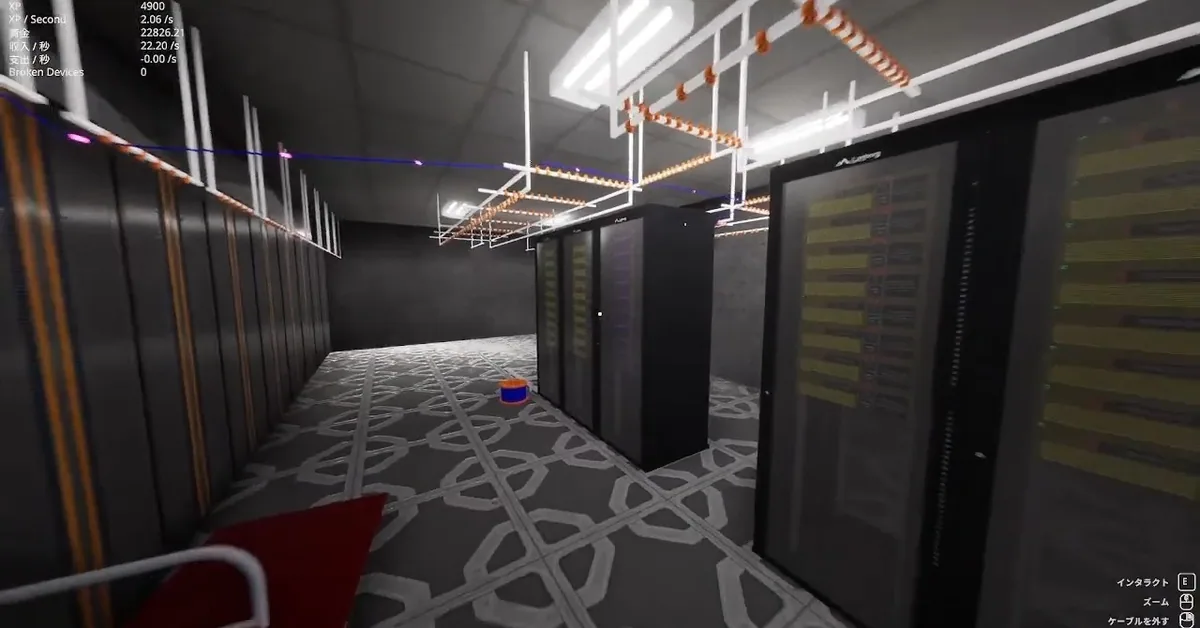
At the end of March 2026, the indie simulation game "Data Center" began distribution on Steam.
ITmedia reported that the title had already drawn interest from IT infrastructure professionals because of its unusually narrow focus: building and operating a data center.
The publication then observed a play session by an executive at a company operating data-center businesses, identified by the handle Newzone.
Company materials in the article describe Newzone as a former PC shop manager and founder of a PC parts manufacturing and sales company, as well as an avid gamer.
During the session, Newzone said the game gets some basic concepts right: players buy racks, switches, servers and cables, install and connect them, assign IP addresses, fulfill customer requests, and expand capacity over time.
But the executive also highlighted multiple gaps versus commercial facilities.
These included the lack of strict security segmentation between loading areas, kitting rooms and server rooms; unrealistically simple rack mounting; the absence of patch-panel-centric cabling workflows; no practical representation of server redundancy or IPMI management ports; and little treatment of cooling design such as hot-aisle/cold-aisle containment and blank panels.
Newzone also noted that real deployments rely far more on automation, including network boot and automatic provisioning, than the game depicts.
Why It Matters
This is less about a game review than an infrastructure signal.
A simulation centered on racks, switches, cabling and maintenance would once have been an extreme niche.
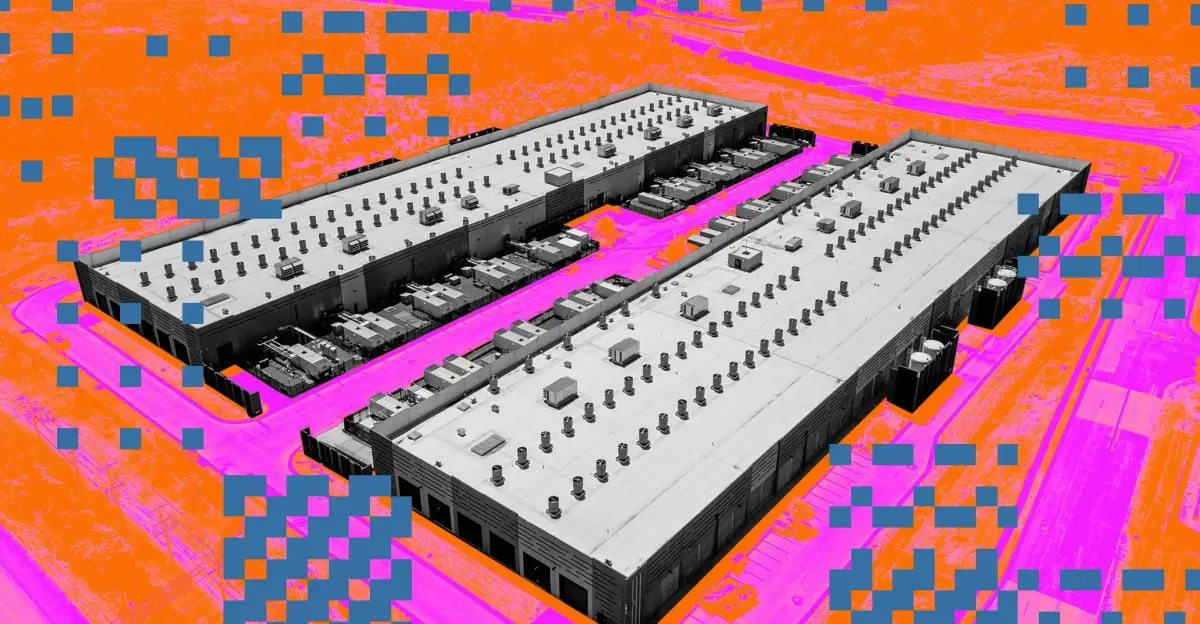
The article explicitly ties the theme to recent attention on data centers driven by AI demand, suggesting that back-end compute infrastructure is becoming culturally legible beyond specialist circles.
The executive’s comments also underscore a wider industry reality: the hard part of data centers is not only buying servers.
Operational discipline around physical security, cooling, redundancy, labeling, lifecycle handling and automation is what makes facilities usable at scale.
That difference changes the story as AI market excitement can encourage simplified narratives focused on chip supply or server counts while overlooking facility operations.
Global Context
In broader market terms, data centers have become a strategic layer in the AI stack because model training and inference depend on power, cooling, networking and uptime as much as on accelerators.
That could increase interest in tools, simulations and training content that make infrastructure workflows easier to understand.
At the same time, the gaps identified in the play session reflect how modern facilities have industrialized.
Manual cabling and one-by-one server setup may still exist in edge cases, but larger environments increasingly depend on standardized layouts, remote management and automated provisioning.
If public understanding of AI infrastructure grows through simplified software experiences, operators may see both an education opportunity and a risk of underestimating real-world complexity.
Industry Impact
For operators, vendors and workforce teams, the article points to a possible soft-demand trend: more people may want to learn how data centers actually function.
That could benefit recruiting, onboarding and technical education if simulation products evolve toward more realistic mechanics.
For game and software developers, the review provides a concrete product roadmap.
Security layers, redundant network design, cooling economics, patch-panel abstraction, automated deployment and hardware lifecycle management could all deepen realism without necessarily making gameplay inaccessible.
For enterprise buyers and policymakers watching AI infrastructure, the piece is a reminder that facility quality depends on operational maturity, not just installed hardware.
What To Watch Next
Key watch points include whether "Data Center" adds more realistic infrastructure mechanics in future updates, and whether similar simulation or training products emerge around data-center operations.
Another area to monitor is whether AI-led infrastructure attention translates into stronger demand for technician training and operational tooling, rather than only headline spending on compute hardware.
The article does not provide deployment-scale or funding metrics, so it does not yet indicate how large the game’s audience is or whether the interest is broad enough to influence training or recruiting markets.
Summary version for Medium
A niche data-center game becomes a window into real infrastructure bottlenecks
Why A niche data-center game matter now for cloud infrastructure teams
Quick Summary: An ITmedia feature examined the indie Steam game "Data Center" by having a data-center company executive play it and critique its realism from an operator’s perspective. The review found the game captures some core workflows of server deployment, but simplifies or omits major realities including layered security, redundant connectivity, cooling design,...
What Happened
At the end of March 2026, the indie simulation game "Data Center" began distribution on Steam. ITmedia reported that the title had already drawn interest from IT infrastructure professionals because of its unusually narrow focus: building and operating a data center.
Why It Matters
This is less about a game review than an infrastructure signal.
- Point 1: The announcement adds a concrete operating detail that changes how buyers should read the story.
- Point 2: A simulation centered on racks, switches, cabling and maintenance would once have been an extreme niche.
The important shift is not the AI label, but the operating boundary it creates for teams.
Global Context
In broader market terms, data centers have become a strategic layer in the AI stack because model training and inference depend on power, cooling, networking and uptime as much as on accelerators. That could increase interest in tools, simulations and training content that make infrastructure workflows easier to understand.
Read the Full Deep Dive
Want to explore the complete technical analysis, enterprise trade-offs, and detailed metrics?
Read the full article originally published at SendTech Times