AD Ports Lifts GFS Stake To 81% In $300 Million Deal
AD Ports raised its ownership of Global Feeder Shipping to 81% through a Dh1.1 billion, or $300 million, transaction as Gulf and Red Sea trade routes remain under pressure.
AD Ports Takes Deeper Control Of GFS
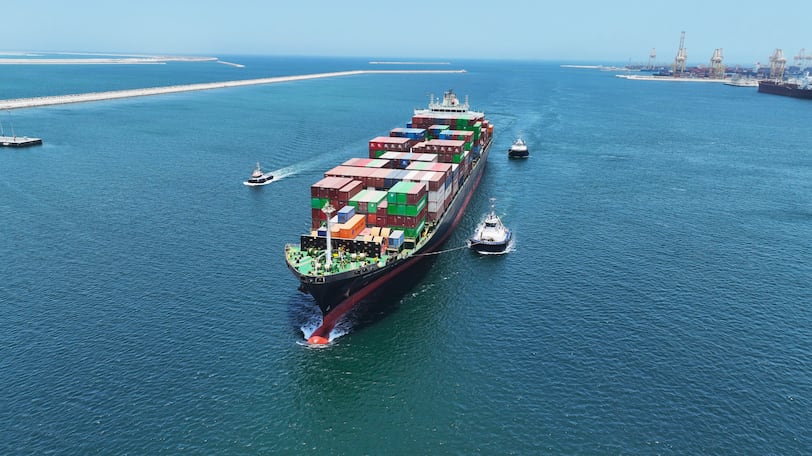
AD Ports has increased its ownership of Dubai-based Global Feeder Shipping to 81% through a Dh1.1 billion, or $300 million, transaction.
The Abu Dhabi company bought an additional 30% stake in the feeder-shipping operator and said the deal will be funded through debt and asset monetisation.
The move gives AD Ports tighter control of a business it first entered in February 2024, when it acquired 51% of GFS with an option to lift its ownership by December 2026.
AD Ports said it exercised that call option at the same Dh3.67 billion total enterprise value set in 2024.
The transaction is a Gulf capital and trade-infrastructure story rather than a soft shipping update.
AD Ports operates industrial cities and free zones, while GFS links container cargo between major hubs and smaller ports.
For Abu Dhabi, the larger stake gives the group more direct exposure to feeder routes spanning Gulf waters, the Red Sea, Asian corridors, the Mediterranean and African ports.
Route Disruption Raises The Value Of Control
The timing matters because the deal comes against trade disruption tied to the Iran war and slower movement through the Strait of Hormuz.
Hundreds of ships have been stranded at the narrow waterway, while Capt Mohamed Al Shamisi said GFS connects AD Ports to more economies across the Red Sea and the Gulf when reliable trade connectivity is most important.
GFS carried 2.8 million TEUs in 2025.
It made more than 700 voyages covering 89 ports in 54 countries.
Those figures explain why an ownership increase changes more than AD Ports' balance sheet.
The company is buying deeper control of a route network that can support UAE cargo flows when regional shipping lanes are under pressure.
The operating evidence is also financial.
Since AD Ports' initial acquisition, GFS has generated cumulative EBITDA of more than Dh1.8 billion.
AD Ports' container-feeder shipping revenue rose 17% in 2025, while revenue for the wider maritime and shipping cluster grew 33% to Dh10.7 billion.
Expansion Still Depends On Route Resilience
AD Ports is expanding outside the UAE as well.
The company started trial operations at Noatum Ports – Safaga Terminal in Egypt this month and agreed to acquire a Brazilian agricultural bulk port terminal operator in a Dh3.1 billion deal.
Those moves show a wider push to build global port and shipping exposure around the UAE group.
Control of GFS also changes how AD Ports can integrate feeder shipping with its industrial cities, free zones and maritime cluster.
The source-backed figures show a business with cargo volume, voyage reach and EBITDA contribution, but they do not show how much additional debt the group will carry after the transaction or which assets will be monetised to fund it.
The GFS stake increase therefore sits at the intersection of Gulf capital, logistics capacity and route resilience.
AD Ports has stronger control of a feeder-shipping platform with named cargo, voyage and port data.
The unresolved operating burden is whether the wider network can keep cargo moving if Strait of Hormuz disruption continues to slow ships through the Gulf.