Apple AI Architecture Puts Google And Nvidia Inside Its Privacy Test
Apple is using Google and Nvidia to support its most advanced cloud AI model while trying to keep Apple Intelligence centered on private orchestration, proprietary models and on-device context.
Apple Routes Its Strongest AI Through Partners
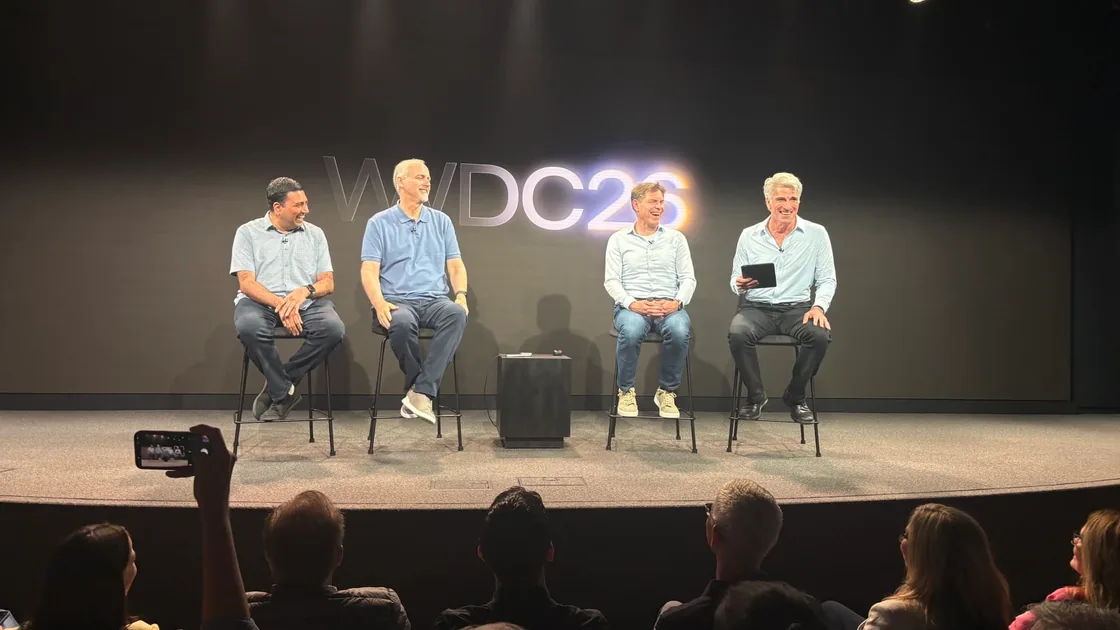
Apple used its Worldwide Developers Conference to show a redesigned Siri that can speak back and forth with users and handle multi-step personal tasks, including checking concert dates, setting a ticket reminder and giving directions to pick up a friend on the way to a venue.
The product message was convenience and privacy rather than a race to build the largest public model.
The technical architecture is more complex than that positioning suggests.
Apple executives said the company is working with Google and Nvidia for Apple Foundation Model Cloud Pro, its most advanced cloud model.
The model is described as comparable to Google Gemini frontier models and will run on Nvidia GPUs inside Apple Private Cloud Compute infrastructure.
Apple had already announced a Google partnership in January.
The new detail is that some Apple Intelligence features will officially run on Nvidia chips.
That matters here because Apple is trying to present a privacy-centered AI strategy while still using external cloud and accelerator capacity for the workloads that exceed on-device limits.
Privacy Becomes The Design Constraint
Apple software SVP Craig Federighi framed the company approach against rivals that he said are pursuing AI without enough focus on the people using it.
The operational version of that argument is the system orchestrator, a software layer that routes each AI request to the appropriate model.
A query can remain local or be sent to cloud systems when the request needs more compute or broader personal context.
Federighi called that orchestrator key to the privacy architecture.
The point is not only branding.
Apple wants to use local information such as calendar entries or text messages to personalize AI functions while limiting how much data is collected compared with web-based AI services.
Apple AI executive Amar Subramanya said the company works with Google and Nvidia to extend private cloud compute infrastructure to Nvidia GPUs in Google cloud while maintaining Apple privacy guarantees.
VP of software Sebastian Marineau-Mes said Apple wanted Nvidia latest chips configured in a more private way, so the chips could not read what was on the servers.
That requirement explains why recent Nvidia improvements are strategically relevant.
Marineau-Mes pointed to ambiguous confidential compute as a technology that helped Apple and Google build a system meeting Apple standards.
The commercial signal is that confidential computing is becoming part of the AI product stack, not only an enterprise security feature.
Google Helps Build, But Apple Keeps The Model Layer
The Google role is narrower than a simple Gemini outsourcing story.
Federighi said Apple Intelligence uses Apple own models rather than the public Google Gemini service.
He also said Apple is not using Google off-the-shelf cloud infrastructure.
Google technology was used to help build Apple own models, including third-generation AFM cloud models announced on Monday.
Subramanya said the discussed models, including AFM Core, Core Advanced Cloud and Cloud Image, were made for Apple Silicon, used proprietary training data and reinforcement learning, and were refined with outputs from Gemini frontier models.
That arrangement gives Apple a middle path.
It can use frontier-model output and Nvidia hardware without making Apple Intelligence look like a reskinned version of another consumer chatbot.
The limitation is also clear: the strongest experience still depends on partner infrastructure and the successful routing of tasks between device, Apple cloud systems and third-party cloud capacity.
The Next Test Is Siri Delivery
The next signal is whether the new Siri can turn the architecture into visible product reliability.
The demonstration showed a more conversational assistant able to combine personal context with task execution.
The harder test will be whether users see that behavior consistently across real requests, not only in controlled examples.
For AI infrastructure suppliers, the story shows that even a company emphasizing privacy and on-device intelligence may still need Nvidia GPUs and cloud partnerships for advanced functions.
For consumer-device competitors, Apple is drawing a line around private orchestration, proprietary models and selective use of frontier-model help.
The practical question is whether that line produces a better assistant before rivals make cloud-first AI feel easier to use.
Summary version for Medium
Apple AI Architecture Puts Google And Nvidia Inside Its Privacy Test
What the announcement means beyond the headline
Quick Summary: Apple is using Google and Nvidia to support its most advanced cloud AI model while trying to keep Apple Intelligence centered on private orchestration, proprietary models and on-device context.
Apple Routes Its Strongest AI Through Partners
Apple used its Worldwide Developers Conference to show a redesigned Siri that can speak back and forth with users and handle multi-step personal tasks, including checking concert dates, setting a ticket reminder and giving directions to pick up a friend on the way to a venue. The product message was convenience and privacy rather than a race to build the largest public model.
Privacy Becomes The Design Constraint
Apple software SVP Craig Federighi framed the company approach against rivals that he said are pursuing AI without enough focus on the people using it.
- Point 1: The central topic is Apple Intelligence, with the announcement framed around concrete operating detail.
- Point 2: The operational version of that argument is the system orchestrator, a software layer that routes each AI request to the appropriate model.
AI deployments now depend on where models, data, approvals and operating teams meet.
Google Helps Build, But Apple Keeps The Model Layer
The Google role is narrower than a simple Gemini outsourcing story. Federighi said Apple Intelligence uses Apple own models rather than the public Google Gemini service.
Read the Full Deep Dive
Want to explore the complete technical analysis, enterprise trade-offs, and detailed metrics?
Read the full article originally published at SendTech Times