Emaar’s Dh200 Billion Dubai District Turns Property Growth Into An Infrastructure Test
Emaar’s planned Dh200 billion Dubai megaproject would house nearly 150,000 people and test whether a five-zone, 20-minute-city model can match the emirate’s still-strong property cycle.
Emaar Places A Dh200 Billion Marker On Dubai’s Next District
Emaar Properties is preparing to unveil a Dh200 billion ($55 billion) Dubai megaproject designed to house nearly 150,000 people.
The plan is large enough to matter beyond a single launch: it adds another major private-sector test of whether Dubai’s property cycle can keep turning land, transport links and lifestyle infrastructure into durable urban demand.
The master plan spans more than 4.5 million square metres and is expected to include residential towers, villas, mansions, Grade-A offices, shops, luxury hospitality and community amenities.
Emaar has not yet disclosed the location.
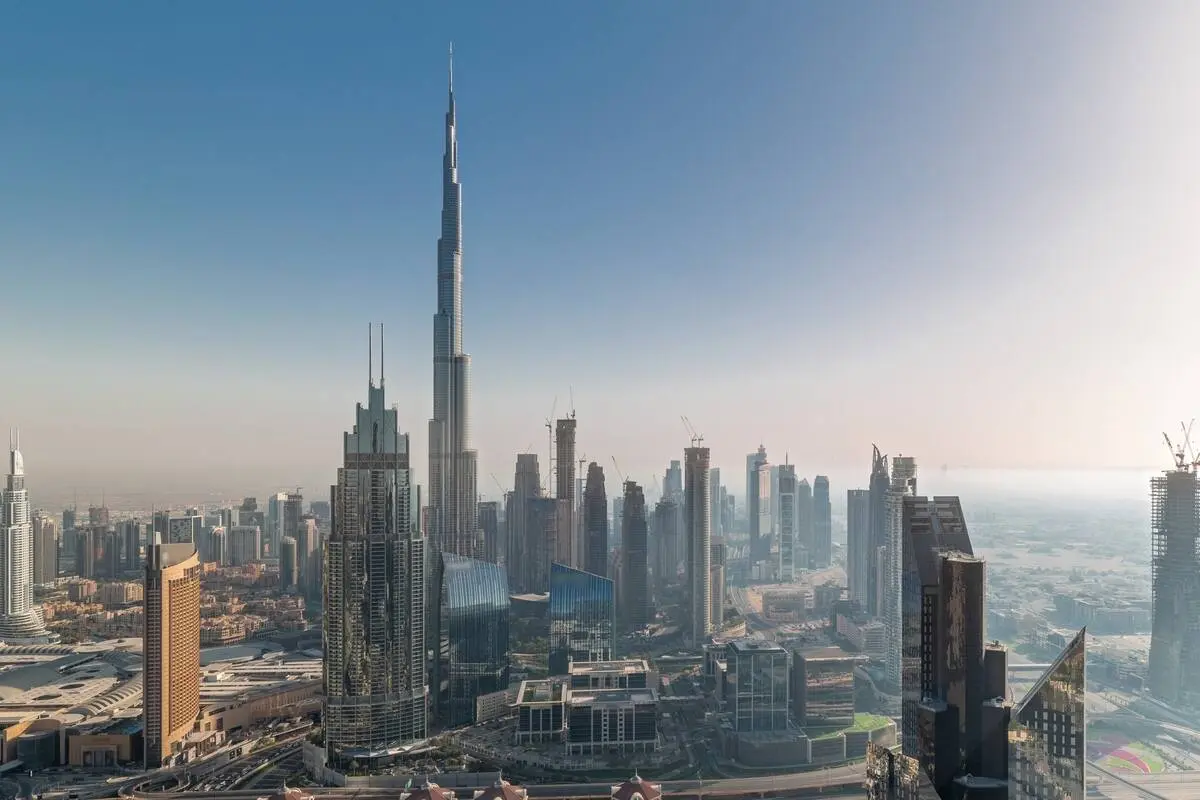
It has said the development will offer views of Burj Khalifa, Burj Al Arab and Palm Jumeirah, which points to a premium positioning rather than a purely volume-led housing project.
The Design Pitch Is A Self-Contained City
The project is being framed as a 20-minute city, with the layout divided into five zones.
Emaar lists those zones as a business hub, an urban district, a young-family cluster, a family living area and a gated villa enclave.
The disclosed feature list includes potential Metro connectivity, smart mobility infrastructure, intelligent building systems and digital connectivity, alongside schools, healthcare facilities, mosques and cultural venues.
That makes the launch a real-estate infrastructure story as much as a residential sales story.
A district of this size has to prove that offices, retail, transport access, family services and public-realm amenities can support each other.
If the project leans too heavily on luxury housing without enough daily-use infrastructure, the 20-minute-city claim will remain a marketing promise rather than an operating model.
Dubai’s Property Cycle Gives Emaar A Strong Backdrop
The timing is supported by a market that has continued to post heavy transaction volumes.
Dubai property transactions reached Dh252 billion in the first quarter of this year, up 31 per cent annually, with 60,303 transactions signed during the period.
Emaar also entered the launch window with stronger first-quarter numbers: profit rose near 35 per cent to about Dh5 billion, revenue increased 23 per cent to Dh12.4 billion, and sales reached Dh22.4 billion, up 16 per cent.
The backlog is another important signal.
Emaar’s revenue backlog stood at about Dh163.4 billion by March 31, up 29 per cent year-on-year.
The company also lists a master-plan land bank of about 600 million square feet of mixed-use development options, including about 317 million square feet in the UAE.
Those figures show that the new district is being added to an already deep development pipeline, not launched from a weak balance of projects.
The Watchpoint Is Execution, Not Announcement Scale
The immediate questions are practical: where the site is, how Metro connectivity will be handled, and how quickly Emaar can convert the disclosed master plan into phased delivery.
The project’s size gives it headline force, but the market test will come from absorption, infrastructure timing and whether the five-zone format attracts both residents and commercial tenants.
Emaar’s shareholder structure also gives the launch a wider Dubai-economy context.
After a 22.27 per cent stake purchase from the Investment Corporation of Dubai, Dubai Holding moved into the top shareholder position at Emaar Properties and raised its total stake to 29.73 per cent.
The next Emaar launch will therefore be watched not only as a developer announcement, but as a signal of how Dubai wants large-scale urban growth to be financed, staged and connected to public infrastructure.
Summary version for Medium
Emaar’s Dh200 Billion Dubai District Turns Property Growth Into An Infrastructure Test
Why Emaar’s Dh200 Billion Dubai District matter now for cloud infrastructure teams
Quick Summary: Emaar’s planned Dh200 billion Dubai megaproject would house nearly 150,000 people and test whether a five-zone, 20-minute-city model can match the emirate’s still-strong property cycle.
Emaar Places A Dh200 Billion Marker On Dubai’s Next District
Emaar Properties is preparing to unveil a Dh200 billion ($55 billion) Dubai megaproject designed to house nearly 150,000 people. The plan is large enough to matter beyond a single launch: it adds another major private-sector test of whether Dubai’s property cycle can keep turning land, transport links and lifestyle infrastructure into durable urban demand.
The Design Pitch Is A Self-Contained City
The project is being framed as a 20-minute city, with the layout divided into five zones.
- Point 1: The central topic is Dubai real estate, with the announcement framed around concrete operating detail.
- Point 2: Emaar lists those zones as a business hub, an urban district, a young-family cluster, a family living area and a gated villa enclave.
The useful takeaway is the operating constraint behind the announcement, not the announcement alone.
Dubai’s Property Cycle Gives Emaar A Strong Backdrop
The timing is supported by a market that has continued to post heavy transaction volumes. Dubai property transactions reached Dh252 billion in the first quarter of this year, up 31 per cent annually, with 60,303 transactions signed during the period.
Read the Full Deep Dive
Want to explore the complete technical analysis, enterprise trade-offs, and detailed metrics?
Read the full article originally published at SendTech Times