Infineon Opens €5 Billion Dresden Fab Three Months Early Without Customer Names
Infineon Technologies opened its €5 billion Module 4 smart power fab in Dresden three months ahead of schedule. The 300-mm plant adds European capacity for power semiconductors and analogue/mixed-signal devices, but Infineon did not name customers, order volumes or utilisation targets.
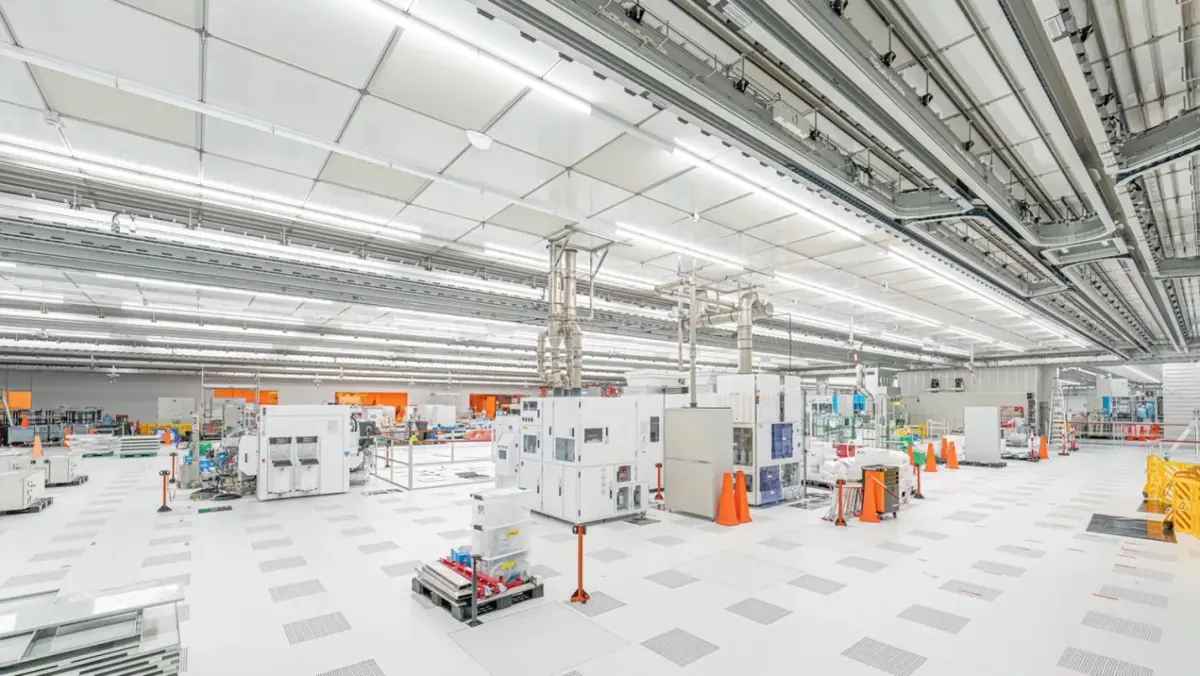
Infineon Opened Module 4 Three Months Early
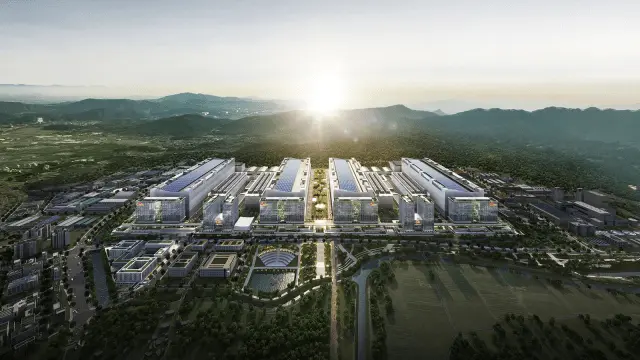
Infineon Technologies has opened its €5 billion Module 4 smart power fab in Dresden three months ahead of schedule, adding a European power-semiconductor plant aimed at AI data centres, software-defined vehicles and renewable-energy systems.
Infineon said the opening took place on July 2 after the company broke ground in May 2023.
Infineon described the site as a 300-mm fab and said it will become the company's largest facility for intelligent power semiconductor systems, larger than comparable Infineon sites in Asia and the U.S.
Infineon is adding capacity for power semiconductors and analogue/mixed-signal devices rather than announcing another data-centre software layer.
Those components sit below AI servers, vehicle electronics and industrial power systems, where power conversion and management determine how efficiently electricity reaches chips, motors and sensors.
The disclosed product list keeps the coverage tied to manufacturing capacity rather than broader AI demand claims.
Gorski Cites One Virtual Fab Model
Alexander Gorski, Infineon's chief operations officer, said the company used a one virtual fab model across Villach in Austria, Kulim in Malaysia and Dresden in Germany.
He said the sites run on the same tools, processes and software, with digital twins used to mirror operations and speed equipment qualification.
Gorski said that common operating model helped Infineon deliver the Dresden project ahead of schedule.
He also said the blueprint lets the company ramp capacity twice as fast as before by applying experience from existing tools and equipment to identical systems in a new fab.
The model also keeps Infineon's manufacturing network global rather than purely local.
Gorski said Infineon has both front-end and back-end facilities and uses hybrid outsourcing depending on the product.
He said a higher proportion of control and connectivity products is manufactured through outsourcing than analogue and sensing products or power devices.
That operating point narrows what the Dresden opening proves.
It shows Infineon can copy tools, software and process discipline across a global manufacturing base, but it does not make Dresden a fully self-contained supply chain.
The company is still describing a coordinated network in which German, Austrian and Malaysian sites share a production model while outsourcing remains part of product manufacturing.
Dresden Fab Targets Power Devices And Robotics SoCs
Gorski said the Dresden 300-mm fab will manufacture standard power switches such as MOSFETs, complex analogue/mixed-signal power-management ICs and SoCs for humanoid robotics.
Infineon CEO Jochen Hanebeck said the plant is adding capacity for energy supply to AI data centres, software-defined vehicles and renewable energies.
Hanebeck said the opening strengthens Infineon's position in power semiconductors and analogue/mixed-signal technologies.
Gorski also said the fab could bring about €5 billion in additional revenue when fully loaded, although the disclosed material did not name a specific utilisation date for that full-load condition.
Gorski said the €5 billion revenue estimate applies when the plant is fully loaded.
Infineon described the equipment and product mix, but the public opening material did not give the timing of full utilisation or the first commercial allocation.
German officials treated the opening as an industrial-policy milestone.
Infineon's opening material said Chancellor Friedrich Merz addressed about 400 people from the Silicon Saxony ecosystem by video.
Saxony Minister-President Michael Kretschmer said the project showed that major industrial projects can be implemented securely and swiftly when the prerequisites are in place.
Customer And Ramp Details Remain Undisclosed
The strongest disclosed proof is the physical plant: a named Dresden site, a €5 billion investment, a 300-mm manufacturing line, an opening date and identified product categories.
The weaker part is commercial evidence.
Infineon and the officials described future capacity and strategic supply-chain value, but the disclosed material did not name initial customers or order volumes.
The factory targets power devices used around compute and industrial systems, not GPUs or memory.
It adds European semiconductor capacity, but it does not by itself prove near-term customer pull-through from AI data-centre operators.
Infineon did not disclose named customers, order volumes, production ramp dates beyond the opening, utilisation targets for Module 4 or signed supply commitments for AI data-centre power devices.
Summary version for Medium
Infineon Opens €5 Billion Dresden Fab Three Months Early Without Customer Names
Why this hardware shift matters for AI and compute buyers
Quick Summary: Infineon Technologies opened its €5 billion Module 4 smart power fab in Dresden three months ahead of schedule. The 300-mm plant adds European capacity for power semiconductors and analogue/mixed-signal devices, but Infineon did not name customers, order volumes or utilisation targets.
Infineon Opened Module 4 Three Months Early
Infineon Technologies has opened its €5 billion Module 4 smart power fab in Dresden three months ahead of schedule, adding a European power-semiconductor plant aimed at AI data centres, software-defined vehicles and renewable-energy systems. Infineon said the opening took place on July 2 after the company broke ground in May 2023.
Gorski Cites One Virtual Fab Model
Alexander Gorski, Infineon's chief operations officer, said the company used a one virtual fab model across Villach in Austria, Kulim in Malaysia and Dresden in Germany.
- Point 1: The central topic is chips-semiconductors, with the announcement framed around concrete operating detail.
- Point 2: He said the sites run on the same tools, processes and software, with digital twins used to mirror operations and speed equipment qualification.
The important shift is not the AI label, but the operating boundary it creates for teams.
Dresden Fab Targets Power Devices And Robotics SoCs
Gorski said the Dresden 300-mm fab will manufacture standard power switches such as MOSFETs, complex analogue/mixed-signal power-management ICs and SoCs for humanoid robotics. Infineon CEO Jochen Hanebeck said the plant is adding capacity for energy supply to AI data centres, software-defined vehicles and renewable energies.
Read the Full Deep Dive
Want to explore the complete technical analysis, enterprise trade-offs, and detailed metrics?
Read the full article originally published at SendTech Times