Japan's H3 Rocket Review Turns A Successful Flight Into A Data Test
JAXA and Mitsubishi Heavy Industries say Japan's H3 No. 6 flight met key mission goals after video showed an object near the first-stage engine, but telemetry and imagery still have to determine whether the 30 configuration needs follow-up action.
A Clean Mission Still Leaves An Engineering Question
Japan's H3 Launch Vehicle No. 6 achieved its main flight objectives, but the post-launch review now has a specific engineering item to resolve.
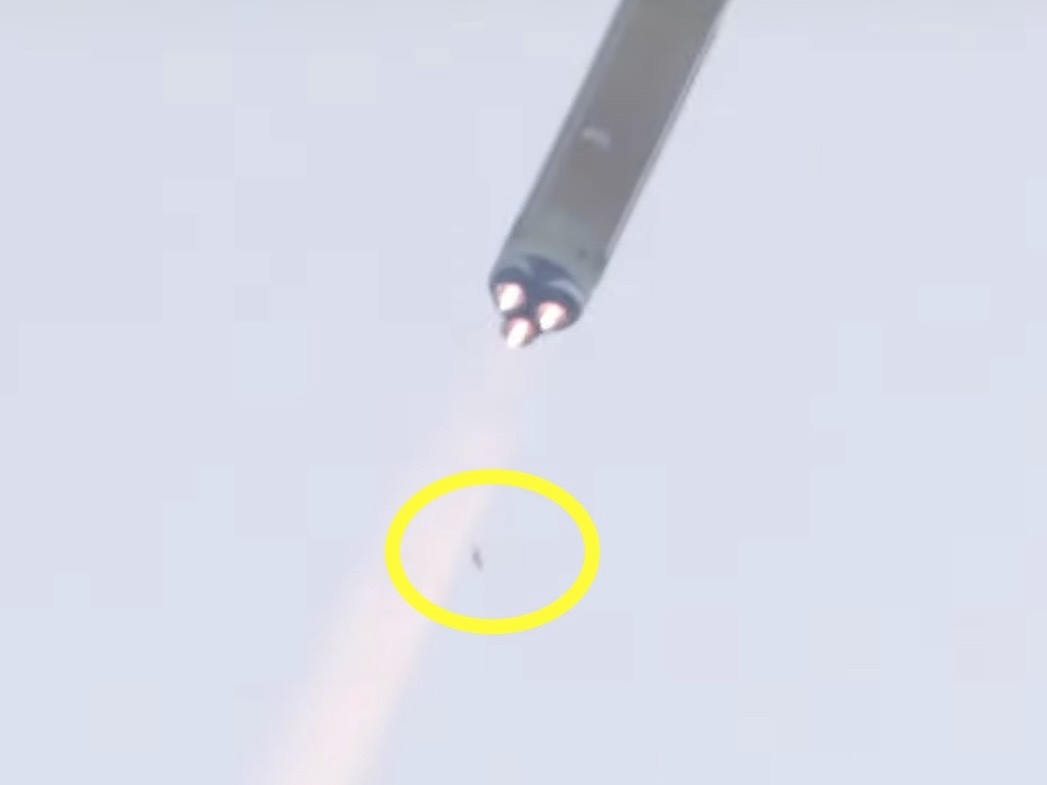
During the June 12 broadcast, video showed movement near the first-stage engine shortly after liftoff and an object-like shape appearing to separate from the engine area about 43 seconds after launch.
JAXA did not frame the event as a confirmed failure at the post-launch press conference.
Makoto Arita, the H3 project manager in JAXA's Space Transportation Technology Directorate, said the relevant area had been identified in imagery, while emphasizing that the team was still at the image-review stage.
His explanation pointed to hardware around the engine rather than to a confirmed propulsion problem.
The possible source is a thermal protection component.
Arita said the engine cover sits around the white area near the engine, with three LE-9 engines beneath it.
Because those engines can gimbal, they are protected by a soft cloth-like thermal blanket.
JAXA's initial view is that the blanket may have fluttered or that something may have separated from that area.
Telemetry Matters More Than The Broadcast Image
The important counterweight is flight data.
JAXA's current assessment rests on two points: the first-stage burn duration was close to plan, and the orbit result was highly accurate.
On that basis, the agency does not currently see evidence that the event changed first-stage engine performance.
Mitsubishi Heavy Industries gave a similar reading.
Osamu Kitayama, H3 project manager in MHI's Defense and Space Segment, Space Systems Division, said MHI had reviewed the imagery as well.
Because LE-9 burn duration matched the plan, MHI's view is that the observed situation did not alter the flight outcome.
That does not close the issue, but it narrows the immediate concern from mission failure to post-flight engineering verification.
The next work is analytical rather than rhetorical.
Kitayama said the team would move into flight evaluation analysis, comparing video with telemetry and deciding whether any response is required.
For a launch vehicle program, that process is central because visually dramatic events can be either harmless shedding or indicators of hardware behavior that needs design or operating attention.
Why The 30 Configuration Raises The Stakes
The flight was not a routine H3 launch.
Vehicle No. 6 was the first flight of the 30 configuration, a version that does not use solid rocket boosters.
That makes the mission relevant to Japan's effort to broaden H3's operating envelope and potentially support lower-cost missions.
The launch also marked H3's return to flight after the failed launch of Vehicle No. 8 in December 2025.
Against that backdrop, the successful insertion of the VEP-5 performance verification payload and separation of six microsatellites are material achievements.
They show that the mission objectives were met even as engineers still need to understand the engine-area imagery.
That distinction matters.
The source does not support treating the object as a proven safety failure, nor does it support ignoring it because the payload reached orbit.
The factual position is narrower: the flight succeeded, the burn timing and orbital result look strong, and JAXA and MHI still need to complete detailed analysis.
What To Watch In The Review
The next signal will be how JAXA classifies the event after comparing video and telemetry.
Arita said JAXA has not yet determined the handling of the issue, and the implications for future 30-configuration plans remain unclear.
That makes the review important for schedule confidence as much as for technical diagnosis.
If analysis confirms harmless thermal-blanket behavior, the mission will reinforce confidence in the boosterless H3 variant.
If it identifies a component or installation issue, the response will matter because the 30 configuration is meant to be a practical part of Japan's launch lineup.
For now, the strongest conclusion is disciplined: H3 No. 6 completed its mission, but the program still has to turn visible flight behavior into verified engineering evidence.