Sateliot Seeks €150 Million For Satellite-To-Phone 5G By 2028
Sateliot is seeking up to EUR150 million to expand from satellite IoT links toward direct-to-smartphone 5G service, with 16 more low-Earth orbit satellites planned before larger spacecraft in 2028.
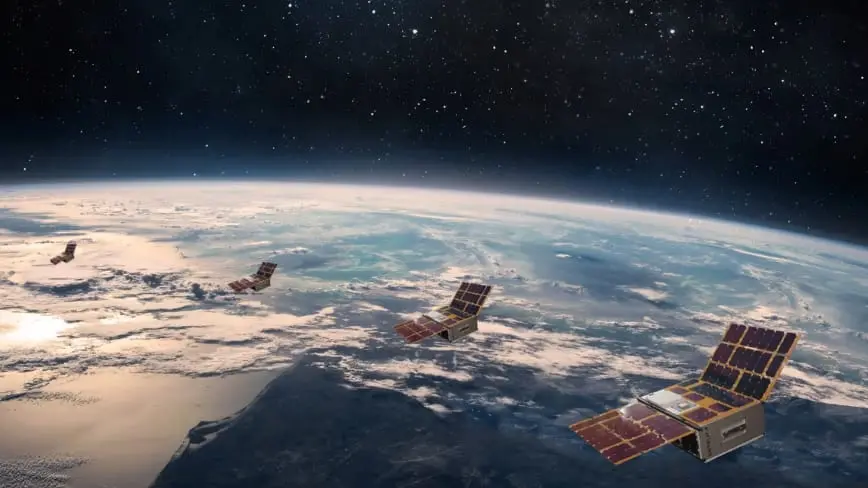
Sateliot is seeking up to EUR150 million ($172 million) to move its satellite network from industrial IoT links toward direct 5G service for ordinary smartphones, TNW reported.
TNW described the target as 50 percent larger than the EUR100 million financing Sateliot announced in April and reported that the company is still looking for a lead investor.
The financing plan covers 16 more low-Earth orbit satellites over the next year before larger spacecraft are due in early 2028.
Those later satellites are intended to beam 5G data, voice and video directly to standard smartphones rather than only to dedicated IoT devices.
Sateliot already serves internet-of-things uses such as shipping trackers and utility sensors.
The smartphone plan changes the operating requirement.
Consumer handsets need broader coverage, spectrum coordination and carrier integration, so the service has to look like an extension of mobile networks rather than a separate industrial satellite link.
Chief executive Jaume Sanpera told Bloomberg that the opportunity is integrating 5G within a satellite, according to TNW.
Telefonica is named as a technology partner for direct-to-device connections, while other network operators are positioned around remote-area coverage.
European policy is shaping the opening.
TNW reported that the European Space Agency is deploying EUR22 billion over three years, while a European Commission proposal would reserve domestic-player spectrum for direct-to-device satellite communication.
That spectrum proposal could affect who gets the best regulatory position.
Vodafone and AST SpaceMobile are pursuing a similar direct-to-phone service through Satellite Connect Europe, but TNW wrote that the joint venture's eligibility for reserved European spectrum is unclear because AST SpaceMobile holds a 50 percent stake.
For IRIS², the European project led by Eutelsat, SES and Hispasat starts with broadband service rather than direct-to-device coverage, according to TNW.
Sateliot is trying to sit between sovereign European connectivity goals and carriers that want remote-area coverage without replacing existing mobile service.
Sateliot expects up to half of the financing to come from public co-financing and has described another EUR50 million as debt that could be raised, TNW reported.
The practical proof now is whether the company can close the financing, launch the planned satellites and convert spectrum policy into carrier-grade direct-to-device coverage.
Summary version for Medium
Sateliot Seeks €150 Million For Satellite-To-Phone 5G By 2028
What the announcement means beyond the headline
Quick Summary: Sateliot is seeking up to EUR150 million to expand from satellite IoT links toward direct-to-smartphone 5G service, with 16 more low-Earth orbit satellites planned before larger spacecraft in 2028.
The Core Signal
Sateliot is seeking up to EUR150 million to expand from satellite IoT links toward direct-to-smartphone 5G service, with 16 more low-Earth orbit satellites planned before larger spacecraft in 2028.
The Technical Or Market Detail
Sateliot is seeking up to EUR150 million ($172 million) to move its satellite network from industrial IoT links toward direct 5G service for ordinary smartphones, TNW reported.
- Point 1: The central topic is telco-connectivity, with the announcement framed around concrete operating detail.
- Point 2: TNW described the target as 50 percent larger than the EUR100 million financing Sateliot announced in April and reported that the company is still looking for a lead investor.
The headline matters only if the approval path, compliance burden and operating limits line up.
Operational Impact Or Limits
Sateliot is seeking up to EUR150 million to expand from satellite IoT links toward direct-to-smartphone 5G service, with 16 more low-Earth orbit satellites planned before larger spacecraft in 2028.
Read the Full Deep Dive
Want to explore the complete technical analysis, enterprise trade-offs, and detailed metrics?
Read the full article originally published at SendTech Times