SendTech Times
Cloud & Data CentersExplainer|June 1, 2026 at 12:25 PM
CAPACITY TEST:

SoftBank’s €75 Billion France Plan Signals Europe’s AI Infrastructure Race

Article summary

SoftBank plans to invest up to €75 billion in AI data centres in France, with initial sites expected to come online in five years. The first phase includes €45 billion for 3.1 GW of capacity in Hauts-de-France by 2031, including locations in Dunkirk’s Loon-Plage, Bosquel and Bouchain. The plan could strengthen Europe’s AI infrastructure base, but questions remain over financing, regulatory approvals and what technological sovereignty means when a Japanese group leads the buildout.
SoftBank’s €75 Billion France Plan Signals Europe’s AI Infrastructure Race
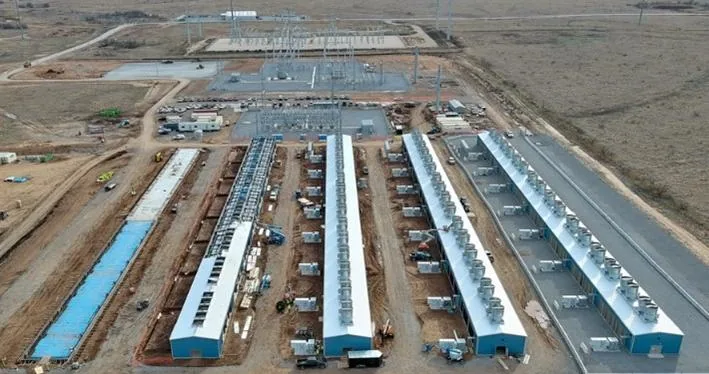
Image source: Telecoms.com

What happened

SoftBank has laid out a plan to invest as much as €75 billion in AI data centres in France, positioning the country as a major European location for high-capacity AI infrastructure.

The announcement was made alongside the 2026 Choose France summit, an investment-focused event hosted by French President Emmanuel Macron.

The first phase of the programme would put €45 billion into 3.1 GW of AI data centre capacity in the Hauts-de-France region by 2031.

SoftBank identified Dunkirk’s Loon-Plage, Bosquel and Bouchain as part of that initial buildout, with other French sites planned later.

The broader plan targets 5 GW of data centre capacity over the coming years.

In Bouchain, EDF has selected SoftBank as the preferred bidder to develop a 400 MW data centre on the site of a former thermal power plant under a construction lease.

EDF said due diligence is under way, including a preliminary construction lease agreement, while a final lease would follow required regulatory approvals.

Why it matters

The plan is a large infrastructure signal for Europe’s AI market.

AI workloads are increasing demand for power, data centre capacity and lower-latency computing locations, and France is trying to attract investment that could support local industrial and digital priorities.

SoftBank is framing the project as support for European technological sovereignty and French AI infrastructure.

That framing matters because the assets would be located in France, while financing and operation would be led by a Japanese company.

The practical meaning of sovereignty may therefore depend on local partnerships, regulation, supply chains and where future AI customers are served.

Who is affected

The affected groups include AI infrastructure users, cloud and content platforms, enterprise customers, equipment suppliers and energy-linked industrial sites in northern France.

The project also links SoftBank to EDF at Bouchain and to Schneider Electric at the Port of Dunkirk, where the companies are planning an industrial production cluster.

That cluster would include one SoftBank Group facility to manufacture enclosures and one Schneider Electric facility to integrate data centre power modules.

For Bosquel, SoftBank and Sesterce plan a 1 GW AI data centre campus.

The site is being presented as useful for reaching nearby European business and technology hubs, including Paris, Brussels, Amsterdam, London and Frankfurt, while supporting low-latency AI workloads.

What to watch next

The next test is execution.

Readers should watch whether the Bouchain regulatory process clears, whether SoftBank discloses more detail on partner financing, and how quickly the first phase can move toward the 2031 capacity target.

Another watchpoint is whether the French sites attract sustained enterprise and AI workload demand after construction begins.

Share this article
inXf

Related articles

More
KAIST Simulator Tests LLM Infrastructure Before AI Server Buildouts
Cloud & Data Centers

KAIST Simulator Tests LLM Infrastructure Before AI Server Buildouts

KAIST researchers developed LLMServingSim 2.0 to test LLM serving infrastructure before large deployments. The simulator models GPUs, NPUs, PIM devices, memory behavior, routing, power use and serving policies. The team plans to open-source the tool and validate it with real LLM serving frameworks.

Acronis Targets Japan Post-VMware Cloud Gap With Partner-Led HCI Push
Cloud & Data Centers

Acronis Targets Japan Post-VMware Cloud Gap With Partner-Led HCI Push

Acronis Japan introduced Acronis Cyber Frame, an HCI-based IaaS platform aimed at service providers and hosting partners. The move is positioned around demand for VMware alternatives, data sovereignty, local hosting options and stronger managed security services. Acronis also outlined AI automation, MDR, identity-threat detection and GenAI protection plans for Japanese partners and mid-market customers.

Lenovo opens Japan liquid cooling lab as AI data centers face power pressure
Cloud & Data Centers

Lenovo opens Japan liquid cooling lab as AI data centers face power pressure

Lenovo Japan opened Neptune Lab for liquid cooled AI infrastructure testing inside MC Digital Realty NRT12 data center in Chiba. The project targets rising AI power density and cooling constraints as Japan AI investment and data center electricity demand grow. The lab lets customers test servers, coolant distribution, racks, networking and monitoring before production deployments.

CAS Star’s Photonics Bet Turns Into an AI Infrastructure Test
Cloud & Data Centers

CAS Star’s Photonics Bet Turns Into an AI Infrastructure Test

CAS Star founder Mi Lei says the AI boom has validated a decade-long investment thesis around photonics and other hard-tech fields. The firm has more than 200 photonics-related companies among roughly 600 portfolio companies, spanning sensing, communications, computing, storage and display. The next test is whether optical links, laser chips and photonic computing companies can turn AI data-centre demand into durable commercial scale.

Keep Reading

More Stories

Latest
Starlink Business Opportunity Narrows Around Coverage Gaps and Backup ConnectivityTelco & ConnectivityJun 1, 2026Starlink Business Opportunity Narrows Around Coverage Gaps and Backup ConnectivityStarlink strongest business role appears to be coverage gaps and backup connectivity. Recon Analytics found 72% of large businesses would consider ISP coverage extended with Starlink. Carrier offers from T-Mobile and Comcast Business may scale the model but keep Starlink in an infrastructure role.MiniMax M3 turns long-context AI into an agent platform testAIJun 1, 2026MiniMax M3 turns long-context AI into an agent platform testMiniMax launched M3 on June 1, 2026, combining long-context, agentic, coding and native multimodal capabilities in one model line. The API supports up to 1 million tokens of context, with a guaranteed minimum of 512K tokens, and includes M3 and M3-highspeed versions. MiniMax plans to open-source M3 on HuggingFace and GitHub, while early pricing offers a 50% discount for the first seven days.Japan’s AI Suitcase Turns Assistive Mobility Into a Robotics Test CaseAIJun 1, 2026Japan’s AI Suitcase Turns Assistive Mobility Into a Robotics Test CaseCAAMP, a consortium that includes university research institutes and IBM Japan, has developed the AI Suitcase to guide visually impaired users with sensors, cameras, motors and AI. The suitcase is being tested at locations including Miraikan, New Chitose Airport and Tokyo’s Nihonbashi district, where 39 visually impaired participants completed a monthlong indoor trial without collisions. An updated indoor-and-outdoor model is planned for Expo 2025 in Osaka, with CAAMP aiming to collect feedback from 2,000 to 3,000 people without visual disabilities.Anthropic’s Conway Points Claude Toward Always-On AI AgentsAIJun 1, 2026Anthropic’s Conway Points Claude Toward Always-On AI AgentsAnthropic is preparing a Claude expansion that includes Conway, Orbit, Operon, memory upgrades and multilingual voice mode. The move signals a shift from chat-based AI toward persistent assistants that can connect with external services and manage workspaces. Enterprises, developers and research teams could be affected if Claude becomes a broader agent platform.Huawei's Tau scaling puts architecture at the center of China's AI-chip pushChips & SemiconductorsJun 1, 2026Huawei's Tau scaling puts architecture at the center of China's AI-chip pushHuawei proposed Tau scaling, a framework focused on shorter signal paths rather than only smaller transistors. LogicFolding is planned for Kirin chips in fall and winter 2026, with Huawei claiming a density jump to 238 million transistors per square millimeter. The test is whether architecture-led gains can be validated in commercial chips amid export-control limits on advanced tools.FuriosaAI and Broadcom Target the Next Layer of AI Inference InfrastructureChips & SemiconductorsJun 1, 2026FuriosaAI and Broadcom Target the Next Layer of AI Inference InfrastructureFuriosaAI said it will work with Broadcom on a next-generation AI inference platform built around its TCP architecture and Broadcom networking and packaging technologies. The planned third-generation accelerator will use a 2-nanometer compute die, HBM4/HBM4E memory and multi-die packaging, with sampling planned for the first half of 2028. The deal points to AI infrastructure competition shifting from single-chip performance toward memory, networking, power efficiency and rack-level system design.AIVEX Brings Physical AI Into Korean Battery-Plant Packaging WorkAIJun 1, 2026AIVEX Brings Physical AI Into Korean Battery-Plant Packaging WorkAIVEX said its AIbot platform automated a crucible packaging-removal process at a leading Korean battery-materials company. The system combines AI vision, 3D optics, 6D pose estimation and automatic path planning to handle irregular ropes and wrapping film. The deployment points to physical AI moving into factory tasks that are repetitive but too variable for simple fixed automation.Dubai RTA Digital Revenue Shows Smart Mobility Moving Into Daily UseEconomyJun 1, 2026Dubai RTA Digital Revenue Shows Smart Mobility Moving Into Daily UseRTA said digital-channel revenue reached AED5.3 billion in 2025, up 20.6 percent from 2024. The authority reported more than 628 million digital transactions and 96 percent digital adoption. The next test is whether AI, WhatsApp and government-platform integrations make mobility services simpler.Grep Adds LLM Agent To Monito As Online Proctoring Shifts Toward Context ReviewAIJun 1, 2026Grep Adds LLM Agent To Monito As Online Proctoring Shifts Toward Context ReviewGrep said its Monito online proctoring product now uses an LLM agent to analyze context around suspected cheating events. The company cited internal tests showing more than 30 percent shorter post-exam review time and nearly 20 percent fewer false alerts. The key issue is whether agent-based proctoring can improve review efficiency while preserving human final judgment and candidate fairness.Nvidia Pushes AI PC Strategy With RTX Spark Superchip for Windows DevicesChips & SemiconductorsJun 1, 2026Nvidia Pushes AI PC Strategy With RTX Spark Superchip for Windows DevicesNvidia is entering the Windows PC market with the RTX Spark Superchip for laptops and desktops expected this autumn. The chip combines a microprocessor and graphics processor, was built with help from MediaTek, and will run Microsoft Windows for Arm. The key test is whether AI-ready PCs can deliver useful local model, creative software and gaming features without software or battery-life trade-offs.Om AI Bets on Edge Multimodal Models as China AI Startups Move Toward DeploymentAIJun 1, 2026Om AI Bets on Edge Multimodal Models as China AI Startups Move Toward DeploymentOm AI Technology is focusing on compact edge-side multimodal vision models for PCs, cameras, robots and other devices rather than very large cloud models. At BEYOND Expo 2026, the company showed OttoBox AI Studio, a local-AI content tool for video analysis, asset matching, script generation and fast production. The next test is whether its VLX edge multimodal model can improve video understanding and decision-making while keeping operating costs lower.AT&T and Comcast Frame AI as the Next Telecom Network TestTelco & ConnectivityJun 1, 2026AT&T and Comcast Frame AI as the Next Telecom Network TestAT&T and Comcast described AI as a network workload that changes traffic direction, operations and edge infrastructure. AT&T says AI handles about 700000 daily network changes, while Comcast points to 200 edge compute centers and automated fault handling. The commercial test is whether carriers can turn AI-enabled network capabilities into services households and small businesses understand.