Los Alamos Picks NVIDIA Vera CPUs As Scientific AI Moves Into Supercomputers
Los Alamos National Laboratory plans Mission, Vision and Veritas systems with HPE and NVIDIA hardware, using Vera CPUs to support scientific AI agents and simulation workloads.
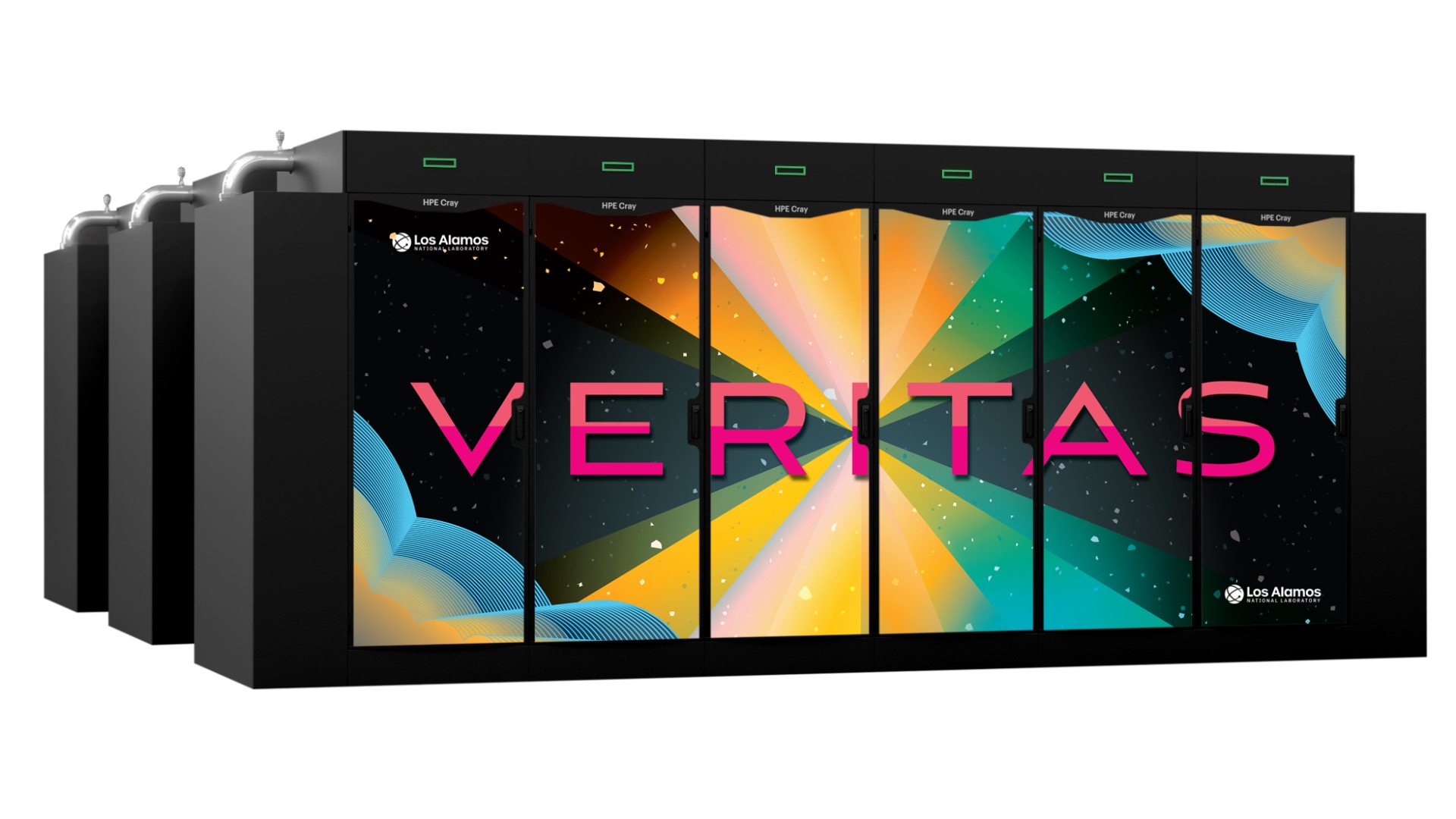
LANL Adds Vera CPUs To New Supercomputers
Los Alamos National Laboratory is preparing three new supercomputers with HPE and NVIDIA, using NVIDIA Vera CPUs as part of a push to bring agentic AI into scientific computing rather than keeping AI separate from simulation workloads.
Mission, Vision and Veritas are being built on HPE’s Cray GX5000 supercomputing line and NVIDIA’s Vera Rubin platform.
The hardware stack brings together Vera CPUs, Rubin GPUs and Quantum-X800 InfiniBand networking.
Mission’s planned CPU pool includes 2,300 standalone Vera processors on the HPE Cray GX240 blade, while Veritas is slated to add about 1,150 standalone Vera processors beside Vera Rubin nodes.
The hardware plan is important because LANL is not describing the systems as benchmark machines alone.
The laboratory is testing whether a codesigned CPU, GPU and networking stack can support scientific agents that form hypotheses, choose tools, run simulations, analyze outputs and refine the next step.
URSA Puts Agentic AI Into Research Workflow
URSA, short for Universal Research and Scientific Agent, gives the Vera deployment its clearest software anchor at LANL.
The framework is described as modular and feedback-driven, with functions for hypothesis work, experiment planning, simulation runs and result analysis.
NVIDIA says URSA is already running on Venado and will run on Mission and Vision.
The claim keeps the story tied to a real research workflow: scientists want systems that can manage simulation and analysis loops, not only train generic models.
On URSA workloads, Vera posted a 7x performance result against the CPUs in the Crossroads x86 supercomputer, according to LANL’s demonstration cited by NVIDIA.
Branson testing, using an open source Monte Carlo heat-transfer simulation tool, showed Vera ahead of the Crossroads CPUs by over 3x.
NVIDIA’s single-CPU comparison also gives Vera more than a 3x lead over a single-socket x86-based CPU.
The same comparison claims a per-core memory advantage above 4x and a per-node memory advantage of 6x.
Those figures are vendor and lab performance claims, but they explain why LANL is tying CPU design to scientific AI workloads.
Mission And Vision Carry Different Workloads
Mission is expected to be operational in 2027.
Within the National Nuclear Security Administration’s Advanced Simulation and Computing program, it is planned as the fifth Advanced Technology System and the replacement for Crossroads on classified national security workloads.
Vision is also expected to be operational in 2027.
Its remit is broader scientific access: materials research, nuclear science, energy modeling, biomedical research and AI, giving more scientists a place to test methods, train models and explore ideas before higher-consequence work.
Veritas is scheduled to come in with the other two systems and support the Laboratory Directed Research and Development program.
NVIDIA says it will help test technologies for larger systems being built at LANL.
LANL now has to show that codesigned CPUs, GPUs, networking and agent software can turn simulation-heavy scientific workflows into repeatable research gains, not only strong early workload results.