NVIDIA’s 45-Degree Cooling Push Turns AI Factories Into A Water Test
NVIDIA says its Rubin-generation AI infrastructure can run closed-loop liquid cooling at up to 45 degrees Celsius, cutting the need for chillers and water as denser AI factories put facility design under pressure.
Rubin Cooling Moves The Constraint Into The Facility
NVIDIA is pushing liquid cooling deeper into AI factory design, saying its Rubin-generation infrastructure can run cooling liquid at up to 45 degrees Celsius, or 113 degrees Fahrenheit.
The company describes Rubin as the first NVIDIA AI infrastructure generation to use 100% liquid cooling.
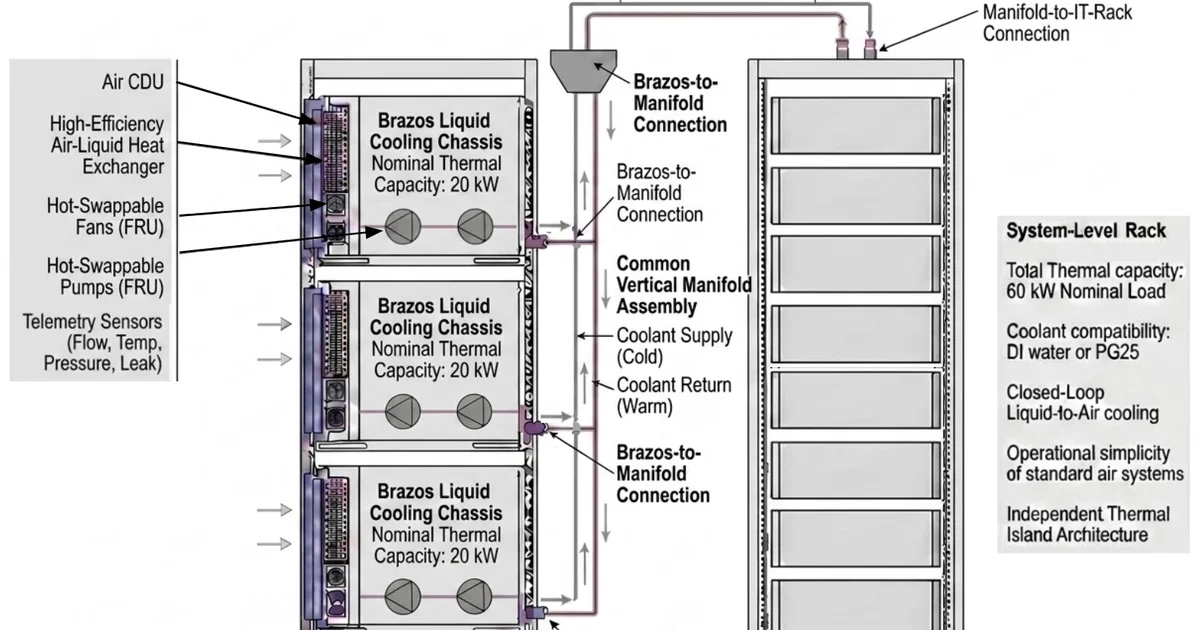
NVIDIA says chips and networking hardware in the system move heat into a closed liquid loop, removing the need for fans inside the platform.
The design is part of NVIDIA DSX, the company’s AI factory reference design for building and operating dense compute facilities.
For data-center operators, the claim is not only about colder servers.
Warmer liquid lets a facility reject heat at a higher temperature, which can reduce dependence on chillers and evaporative cooling.
That changes the operating model for AI sites where power, cooling and water access increasingly decide whether compute capacity can scale.
Dry Coolers Carry The Water Claim
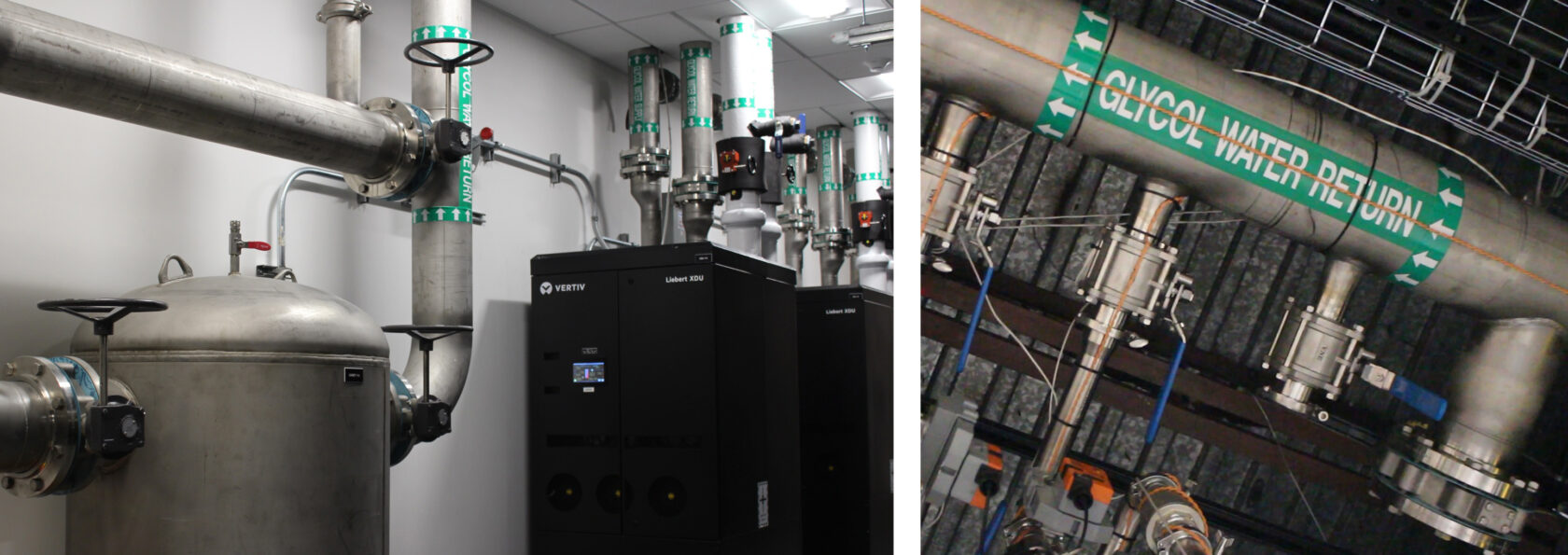
NVIDIA says the DSX reference design for AI factories has zero water consumption under a dry-cooler-based closed loop.
Ali Heydari, NVIDIA’s director of data center cooling and infrastructure, said chillers may be needed only in about 1% of the year in some climates.
NVIDIA’s facility-cost argument starts with cooling’s share of demand: the company says cooling has accounted for up to 40% of electricity use in data centers.
NVIDIA also cited industry estimates that each one-degree rise in chiller plant temperature can cut cooling energy costs by about 4%.
At hyperscale, small efficiency changes become large operating numbers.
NVIDIA says the annual saving for a 50-megawatt site can exceed $4 million once cooling energy and water costs are counted under a liquid-cooled design.
Higher Temperatures Change Site Economics
The water figure is the sharper infrastructure claim.
In favorable climates, NVIDIA says 45-degree liquid cooling can allow chiller-less operation with dry coolers.
Its comparison puts conventional cooling-tower demand at roughly 2.6 million gallons per megawatt per year and says the dry-cooler approach can bring that figure close to zero.
That is presented as up to a 100% reduction in water use.
The source-backed limit is important: NVIDIA’s example depends on climate and facility design, not only on the server rack.
Traditional air-cooled data centers move large volumes of cooled air across IT equipment.
NVIDIA’s warm-liquid approach moves heat directly from chips and networking hardware into the liquid loop, allowing the facility to reject that heat at a higher temperature.
Builders Still Need To Redesign Around The Rack
The article does not list customer deployment volumes or give rollout timing for individual Rubin liquid-cooling projects.
That leaves the operational burden with data-center builders, not only chip buyers.
AI factories using denser racks must line up power delivery, networking, commissioning, maintenance procedures and site cooling around the same thermal design.
NVIDIA has put a clear efficiency claim on the table, but operators still have to prove that higher-temperature liquid cooling can be installed quickly enough to keep pace with AI capacity demand.