Tencent’s Canghai V2 Chip Pushes Video Encoding Into Its Cloud Infrastructure Stack
Tencent Cloud says its self-developed Canghai V2 video encoding chip has entered mass production after leading MSU hardware encoding benchmarks. The company is positioning the chip as a way to cut bandwidth and compute costs for AI video, live streaming and cloud media workloads. The next test is whether benchmark leadership turns into wider deployment across Tencent Cloud services and external customers.
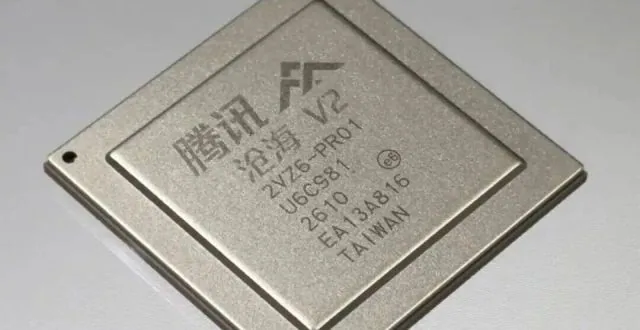
Tencent Cloud is moving its Canghai V2 video encoding processor from benchmark proof point to production hardware, giving the Chinese internet group a more direct role in the chips that support cloud media and AI video workloads.
Technology Promise
The company said Canghai V2 has entered mass production after leading the Moscow State University hardware video encoding competition across speed tiers from 30 to 240 frames per second.
Tencent said the processor ranked first on SSIM, PSNR and VMAF measures, ahead of competing products from AMD, Nvidia, Intel and other vendors in that test set.
The central claim is compression efficiency.
Tencent said H.266 performance is about 30% better than the previous generation, while AV1 optimization targets short-video distribution and live-streaming scenarios.
For cloud providers, those gains matter because video traffic can create both bandwidth expense and server load.
Cloud Infrastructure Signal
Canghai V2 is a cloud infrastructure story rather than a consumer-device chip story.
Tencent is using its own silicon to tune video processing for workloads it already runs across games, social platforms, enterprise cloud and media services.
The source also points to an internal deployment path.
Tencent said the chip has been used in major video scenarios including WeChat Channels, Tencent Video and Tencent Cloud Live.
That gives the company a test environment before it sells the capability more widely through cloud services.
Competitive Landscape
The benchmark result gives Tencent a proof point against global chip suppliers, but it does not by itself prove a durable semiconductor advantage.
Video encoding chips are judged by quality, speed, power efficiency, software support and deployment economics.
The strategic value is that Tencent can reduce dependence on general-purpose processors for a workload where it controls both demand and software integration.
If AI-generated video and real-time media keep expanding, specialized encoding hardware could become a larger part of the cloud cost equation.
What To Watch
The next question is scale.
Tencent needs to show that Canghai V2 can deliver lower operating costs in production, not only win benchmark categories.
External customer adoption through Tencent Cloud would be the clearer signal that the chip is becoming a commercial platform rather than an internal optimization project.
Summary version for Medium
Tencent’s Canghai V2 Chip Pushes Video Encoding Into Its Cloud Infrastructure Stack
Why Tencent’s Canghai V2 Chip matter now for cloud infrastructure teams
Quick Summary: Tencent Cloud says its self-developed Canghai V2 video encoding chip has entered mass production after leading MSU hardware encoding benchmarks. The company is positioning the chip as a way to cut bandwidth and compute costs for AI video, live streaming and cloud media workloads.
Technology Promise
The company said Canghai V2 has entered mass production after leading the Moscow State University hardware video encoding competition across speed tiers from 30 to 240 frames per second. Tencent said the processor ranked first on SSIM, PSNR and VMAF measures, ahead of competing products from AMD, Nvidia, Intel and other vendors in that test set.
Cloud Infrastructure Signal
Canghai V2 is a cloud infrastructure story rather than a consumer-device chip story.
- Point 1: The central topic is Tencent, with the announcement framed around concrete operating detail.
- Point 2: Tencent is using its own silicon to tune video processing for workloads it already runs across games, social platforms, enterprise cloud and media services.
The important shift is not the AI label, but the operating boundary it creates for teams.
Competitive Landscape
The benchmark result gives Tencent a proof point against global chip suppliers, but it does not by itself prove a durable semiconductor advantage. Video encoding chips are judged by quality, speed, power efficiency, software support and deployment economics.
Read the Full Deep Dive
Want to explore the complete technical analysis, enterprise trade-offs, and detailed metrics?
Read the full article originally published at SendTech Times